
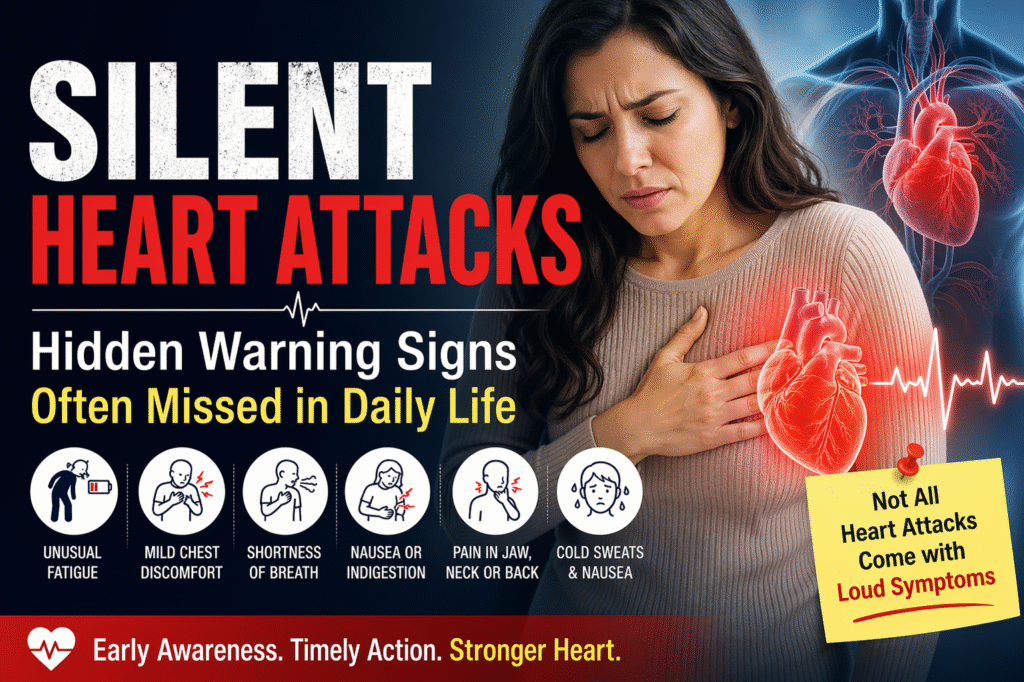
Introduction: The Heart Attack You Never Felt
Imagine feeling unusually tired for days, brushing it off as stress, lack of sleep, or a busy routine. No sharp chest pain. No dramatic collapse. Just subtle discomfort.
What if that wasn’t just fatigue—but your heart quietly signaling danger?
This is exactly what happens in a Silent Myocardial Infarction, commonly known as a silent heart attack. Unlike typical heart attacks, these occur without obvious symptoms, making them easy to ignore—and extremely dangerous.
In today’s fast-paced lifestyle, recognizing these hidden warning signs can literally save lives.
What is a Silent Heart Attack?
A silent heart attack is a type of heart attack that occurs without the classic symptoms like intense chest pain. The heart muscle still suffers damage due to reduced blood flow, but the warning signs are so mild or vague that they often go unnoticed.
Key Differences:
- Typical heart attack: Severe chest pain, sweating, panic
- Silent heart attack: Mild discomfort, fatigue, or no symptoms
Many people only discover they’ve had a silent heart attack during routine medical tests like an ECG.
Studies suggest that a significant percentage of heart attacks are actually silent, making awareness crucial.
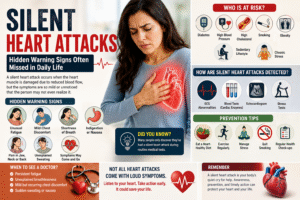
Hidden Warning Signs You Might Miss
Silent heart attack symptoms are often mistaken for everyday issues. Here are the most common signs you should never ignore:
🔹 Unusual Fatigue
Persistent tiredness without a clear reason—especially if it interferes with daily activities—can be an early sign. This is particularly common in women.
🔹 Mild Chest Discomfort
Instead of sharp pain, you may feel:
- Pressure
- Tightness
- A slight squeezing sensation
Many people dismiss this as acidity or muscle strain.
🔹 Shortness of Breath
Feeling breathless after minimal activity (like climbing stairs) could indicate reduced heart efficiency.
🔹 Indigestion or Nausea
Symptoms like bloating, acidity, or stomach discomfort may actually be heart-related.
🔹 Pain in Jaw, Neck, or Back
This is a classic but overlooked sign—especially in women. The pain may be dull and intermittent.
🔹 Unexplained Sweating
Cold sweats or clammy skin without exertion can be a warning signal.
Important: These symptoms may come and go, making them easy to ignore.
Silent Heart Attack Symptoms in Women vs Men
Silent heart attacks don’t look the same for everyone.
Women:
- Extreme fatigue
- Nausea or vomiting
- Back or jaw pain
- Shortness of breath
Men:
- Mild chest discomfort
- Fatigue
- Lightheadedness
Women are more likely to experience atypical symptoms, which is why their condition is often misdiagnosed.
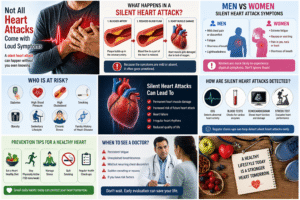
Who is at Risk?
Certain individuals are more prone to silent heart attacks:
- People with Type 2 Diabetes Mellitus
- High blood pressure (hypertension)
- High cholesterol levels
- Smokers
- Obesity
- Sedentary lifestyle
- Chronic stress
Why diabetes increases risk:
Diabetes can damage nerves, reducing the ability to feel pain—meaning a heart attack may occur without noticeable symptoms.
Why Silent Heart Attacks Are Dangerous
The biggest danger lies in delayed diagnosis.
Without treatment, silent heart attacks can lead to:
- Permanent heart muscle damage
- Increased risk of a major heart attack
- Heart failure
- Irregular heart rhythms
Many people continue their normal routine, unaware that their heart has already been compromised.
How Are Silent Heart Attacks Detected?
Since symptoms are subtle, diagnosis often happens accidentally during routine check-ups.
Common diagnostic tools:
- Electrocardiogram (ECG): Detects abnormal heart activity
- Blood tests: Identify cardiac enzymes
- Echocardiogram: Shows heart function and damage
- Stress tests: Evaluate heart performance under exertion
Regular health screenings are key to early detection.
Prevention Tips for Silent Heart Attacks
Prevention is your strongest defense.
✅ Maintain a Healthy Diet
- Reduce salt and sugar
- Avoid trans fats
- Include fruits, vegetables, and whole grains
✅ Stay Physically Active
Aim for at least 150 minutes of moderate exercise per week.
✅ Manage Stress
Incorporate yoga, meditation, or breathing exercises into your routine.
✅ Quit Smoking
Smoking significantly increases cardiovascular risk.
✅ Regular Health Check-Ups
Monitor:
- Blood pressure
- Blood sugar
- Cholesterol levels
Prevention is especially important if you have risk factors.
When Should You See a Doctor?
Don’t ignore these warning signs:
- Persistent fatigue
- Unexplained breathlessness
- Mild but recurring chest discomfort
- Sudden sweating or nausea
If you have risk factors, even mild symptoms should prompt medical consultation.
Conclusion: Listen to Your Heart—Even When It’s Quiet
Not all heart attacks come with dramatic symptoms. Some are silent, subtle, and dangerously easy to ignore.
A silent heart attack is your body’s quiet cry for help. Recognizing the hidden warning signs and taking proactive steps can prevent severe complications—or even save your life.
Your health is your responsibility—don’t wait for loud symptoms to take action.
Frequently Asked Questions (FAQs)
Q1. Can a person have a heart attack without chest pain?
Yes, silent heart attacks often occur without noticeable chest pain, making them harder to detect.
Q2. How common are silent heart attacks?
A large number of heart attacks are silent and go undiagnosed until later medical evaluations.
Q3. Are silent heart attacks more common in women?
Yes, women are more likely to experience atypical symptoms like fatigue and nausea.
Q4. Can silent heart attacks be prevented?
Yes, through lifestyle changes, regular exercise, and routine health check up.