
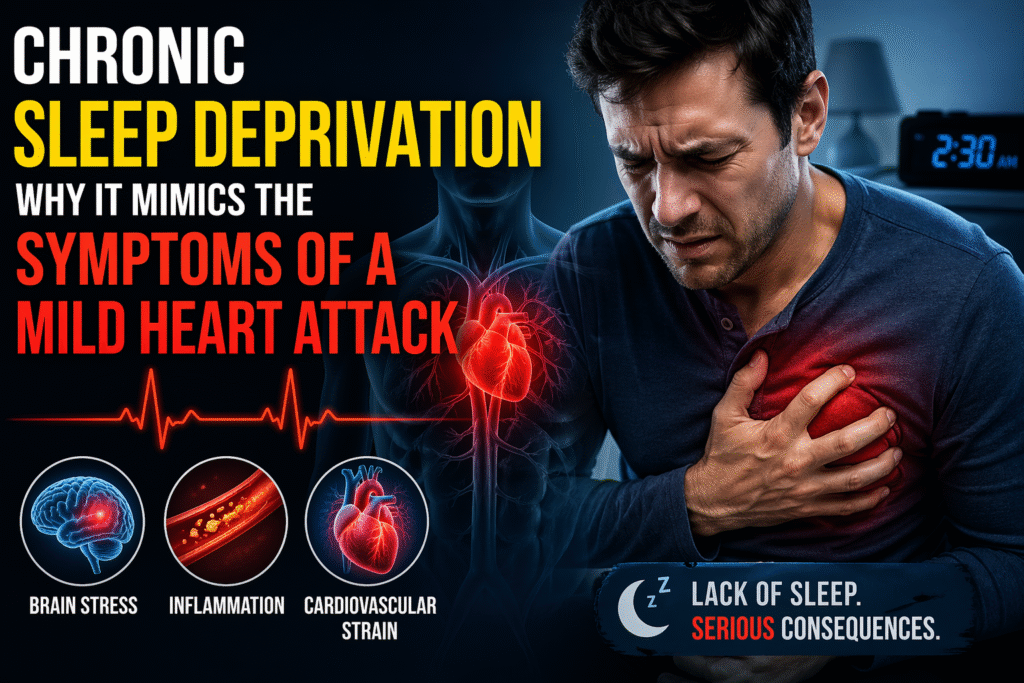

Introduction: The Hidden Danger of Sleep Loss
Sleep deprivation silently damages the body over time. Many people ignore its warning signs daily. However, chronic sleep loss triggers alarming physical symptoms. These symptoms often resemble a mild heart attack.
Moreover, the body enters a stressed biological state. As a result, hormonal imbalance and inflammation rise rapidly. Consequently, individuals may experience chest tightness and palpitations. These signs can easily cause panic and confusion.
Therefore, understanding this connection becomes essential for prevention and awareness.
How Sleep Deprivation Disrupts the Body’s Balance


Chronic sleep deprivation disrupts normal physiological balance. The body struggles to maintain internal stability. As sleep reduces, cortisol levels begin to rise sharply. Consequently, the stress response remains constantly activated.
In addition, the nervous system becomes overactive. This leads to increased heart rate and blood pressure. Furthermore, the body fails to repair damaged cells efficiently. Over time, this creates systemic stress.
Meanwhile, inflammation spreads throughout the body. This inflammation directly impacts cardiovascular function. Therefore, even without heart disease, symptoms begin to appear.
The Role of Cortisol and Stress Hormones
Sleep loss triggers excessive cortisol production. Cortisol acts as the primary stress hormone. However, prolonged elevation becomes harmful.
As cortisol rises, blood vessels constrict. This increases blood pressure significantly. Additionally, the heart works harder to pump blood.
Moreover, adrenaline levels increase alongside cortisol. This combination creates a constant “fight or flight” state. Consequently, the body behaves as if facing an emergency.
As a result, individuals may feel:
- Rapid heartbeat
- Chest discomfort
- Shortness of breath
These symptoms closely resemble cardiac distress signals.

Inflammation: The Silent Trigger Behind Symptoms

Chronic sleep deprivation fuels systemic inflammation. This inflammation affects blood vessels and heart tissues. Consequently, circulation becomes less efficient.
Furthermore, inflammatory markers increase in the bloodstream. These markers irritate the cardiovascular system. As a result, chest tightness becomes more noticeable.
In addition, inflammation disrupts normal heart rhythm. This leads to irregular heartbeats or palpitations. Therefore, individuals may feel sudden pounding in the chest.
These sensations often mimic early heart attack symptoms.

[smartslider3 slider=”9″]
Brain Exhaustion and Cardiovascular Stress
The brain requires sleep for restoration. Without it, cognitive function declines rapidly. However, the effects extend beyond the brain.
A sleep-deprived brain sends distress signals. These signals activate the cardiovascular system excessively. Consequently, the heart enters a hyperactive state.
Moreover, the autonomic nervous system becomes imbalanced. This imbalance disrupts heart rhythm control. As a result, irregular beats and discomfort occur.
Additionally, oxygen regulation becomes inefficient. This may cause a feeling of breathlessness. Therefore, individuals may mistake these signs for cardiac events.
Why Chest Pain Occurs Without Heart Disease
Chest pain does not always indicate a heart attack. In sleep deprivation, multiple factors cause discomfort.
First, muscle tension increases due to stress. This tension affects chest muscles directly. Consequently, tightness and pain develop.
Second, acid reflux becomes more common. Poor sleep disrupts digestion significantly. This can cause burning chest sensations.
Third, shallow breathing patterns emerge. These patterns reduce oxygen supply. As a result, discomfort intensifies.
Therefore, these combined factors mimic cardiac pain effectively.


Heart Rhythm Disturbances and Palpitations
Sleep deprivation interferes with heart rhythm regulation. The heart depends on stable neural signals. However, fatigue disrupts these signals.
As a result, individuals experience palpitations. These feel like skipped or rapid heartbeats. Additionally, the rhythm may become irregular.
Furthermore, electrolyte imbalance may occur. This worsens heart rhythm instability. Consequently, symptoms become more noticeable at night.
Moreover, anxiety amplifies these sensations. This creates a cycle of fear and discomfort. Therefore, individuals often suspect serious heart conditions.

The Emergency State of the Body
When sleep deprivation persists, the body enters survival mode. This state resembles a physiological emergency.
The heart pumps faster to compensate for stress. Blood pressure remains elevated continuously. Additionally, breathing becomes rapid and shallow.
Meanwhile, the brain struggles to function efficiently. It misinterprets normal signals as threats. Consequently, symptoms intensify further.
Therefore, the body behaves as if facing a cardiac crisis. However, the root cause remains sleep deprivation.
Distinguishing Sleep Deprivation from Heart Attack

Although symptoms overlap, key differences exist. Recognizing them helps reduce unnecessary panic.
Sleep deprivation symptoms often include:
- Gradual onset of discomfort
- Symptoms worsening with fatigue
- Relief after rest or sleep
- Associated irritability and brain fog
In contrast, heart attack symptoms typically involve:
- Sudden intense chest pain
- Pain spreading to arm or jaw
- Severe sweating and nausea
- Persistent discomfort without relief

However, medical evaluation remains essential when in doubt.
Long-Term Effects on Heart Health
Chronic sleep deprivation increases long-term cardiovascular risk. Over time, persistent stress damages blood vessels.
Additionally, high blood pressure becomes more common. This condition strains the heart continuously. Furthermore, inflammation contributes to plaque formation.
As a result, the risk of heart disease rises significantly. Therefore, ignoring sleep deprivation can lead to serious complications.
Moreover, metabolic health also declines. This increases the likelihood of obesity and diabetes. Consequently, overall health deteriorates.

How to Restore Balance and Protect Your Heart
Improving sleep quality restores physiological balance. Small changes can create significant benefits.
First, maintain a consistent sleep schedule daily. This stabilizes the body’s internal clock. Additionally, reduce screen exposure before bedtime.
Moreover, create a calm sleeping environment. A dark and quiet room promotes better rest. Furthermore, avoid caffeine in the evening.
Regular physical activity also improves sleep quality. However, avoid intense exercise before bedtime. Instead, choose relaxing activities like stretching.
Most importantly, manage stress effectively. Techniques like meditation and deep breathing help significantly.

Conclusion: Sleep Is Not Optional
Chronic sleep deprivation triggers serious physical symptoms. These symptoms closely mimic a mild heart attack. However, the underlying cause remains physiological stress.
Therefore, prioritizing sleep becomes essential for overall health. Proper rest stabilizes hormones and reduces inflammation. Additionally, it protects the cardiovascular system.
Ignoring sleep can lead to long-term consequences. However, consistent sleep habits restore balance effectively.
Ultimately, sleep is not a luxury. It is a biological necessity for survival and well-being.

FAQs
1. Can sleep deprivation really cause chest pain?
Yes, sleep deprivation can cause chest discomfort due to stress, muscle tension, and inflammation.
2. Why do I feel heart palpitations when I lack sleep?
Sleep loss increases stress hormones, which can trigger irregular heartbeats and palpitations.
3. How can I tell the difference between sleep deprivation and a heart attack?
Sleep-related symptoms improve with rest, while heart attack symptoms are intense and persistent.
4. Does lack of sleep increase heart disease risk?
Yes, chronic sleep deprivation raises blood pressure and inflammation, increasing heart disease risk.
5. How many hours of sleep are needed to prevent these symptoms?
Adults typically need 7–9 hours of quality sleep for optimal health.
6. Can anxiety from sleep loss mimic a heart attack?
Yes, anxiety and fatigue can cause symptoms like chest tightness and shortness of breath.
7. What is the fastest way to recover from sleep deprivation?
Prioritize consistent sleep, reduce stress, and maintain a healthy bedtime routine.
[smartslider3 slider=”10″]