
Is Your Child Always Tired, Pale, or Struggling to Concentrate?
Imagine your child comes home from school exhausted every day. They no longer enjoy outdoor games, seem irritable, and often complain about feeling weak. You might think they’re simply tired from a busy schedule, but there could be a hidden health issue behind these changes.
One of the most common nutritional problems in children worldwide is iron deficiency anemia. It develops gradually and often goes unnoticed until symptoms begin affecting a child’s growth, learning, energy levels, and overall well-being.
The good news is that iron deficiency anemia is preventable and treatable when detected early. Understanding the warning signs and knowing how to provide iron-rich nutrition can make a significant difference in your child’s health.
In this complete guide, we’ll explore everything parents need to know about iron deficiency anemia in kids, including symptoms, causes, diagnosis, treatment, prevention, and practical dietary tips.
What Is Iron Deficiency Anemia?
Iron deficiency anemia occurs when the body does not have enough iron to produce adequate amounts of hemoglobin.
Hemoglobin is a protein found in red blood cells that carries oxygen from the lungs to all parts of the body.
When iron levels become too low:
- Fewer healthy red blood cells are produced
- Oxygen delivery decreases
- Energy levels drop
- Growth and development may be affected
Children are particularly vulnerable because their bodies need more iron during periods of rapid growth.
Why Is Iron Important for Children?
Iron plays several critical roles in a child’s development.
It helps:
- Produce healthy red blood cells
- Carry oxygen throughout the body
- Support brain development
- Strengthen immunity
- Improve concentration and memory
- Promote healthy growth
Without enough iron, children may struggle physically, mentally, and emotionally
How Common Is Iron Deficiency Anemia in Children?
Iron deficiency remains one of the most common nutritional deficiencies worldwide.
It is particularly common among:
- Infants
- Toddlers
- Preschool children
- Adolescents
- Children with poor diets
- Premature babies
Because children grow rapidly, their iron requirements are often higher than adults.

Understanding the Development of Iron Deficiency
Iron deficiency usually develops in stages.
Stage 1: Iron Stores Decrease
The body begins using stored iron.
No obvious symptoms appear.
Stage 2: Iron Levels Become Low
Iron stores continue to decline.
Red blood cell production starts becoming less efficient.
Stage 3: Iron Deficiency Anemia Develops
Hemoglobin levels fall.
Symptoms become noticeable.
Early detection is important because the condition often progresses slowly.
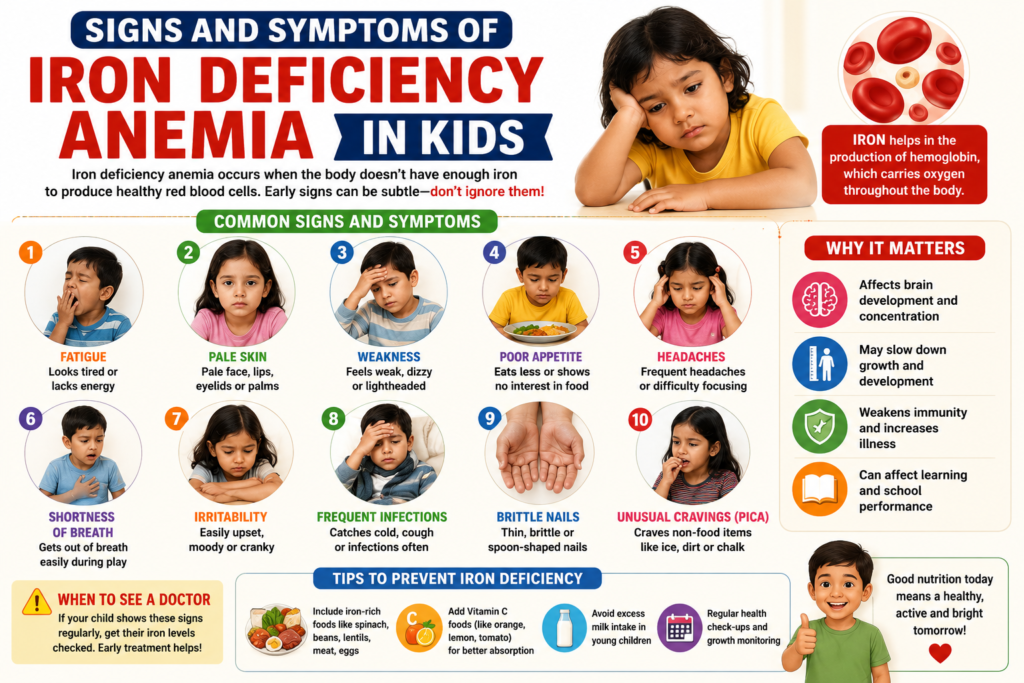
Signs and Symptoms of Iron Deficiency Anemia in Kids
Many symptoms can be subtle initially.
1. Persistent Fatigue
One of the most common symptoms is tiredness.
Children may:
- Feel exhausted easily
- Avoid physical activity
- Prefer resting instead of playing
Low oxygen delivery reduces energy production throughout the body.
2. Pale Skin
Paleness often develops gradually.
Parents may notice:
- Pale face
- Pale lips
- Pale gums
- Pale inner eyelids
This occurs because reduced hemoglobin affects blood color.
3. Weakness
Children with anemia may struggle with activities they previously enjoyed.
They may:
- Tire quickly during sports
- Have difficulty climbing stairs
- Need frequent breaks
4. Poor Concentration
Iron supports healthy brain function.
Deficiency may lead to:
- Difficulty focusing
- Reduced attention span
- Poor academic performance
- Forgetfulness
Teachers are sometimes the first to notice these changes.
5. Irritability
Children with iron deficiency may become:
- Easily frustrated
- Moody
- Less cooperative
- More emotional than usual
Behavioral changes often improve once iron levels are corrected.
6. Frequent Infections
Iron contributes to a healthy immune system.
Low iron levels may increase susceptibility to:
- Colds
- Respiratory infections
- Other illnesses
7. Shortness of Breath
As anemia becomes more severe, children may experience:
- Breathlessness during exercise
- Difficulty keeping up with peers
- Rapid breathing
8. Dizziness
Some children report:
- Feeling lightheaded
- Difficulty standing quickly
- Occasional headaches
These symptoms occur because the brain receives less oxygen.
9. Poor Appetite
Iron deficiency can reduce appetite.
This creates a cycle where children eat less and receive even fewer nutrients.
10. Unusual Cravings (Pica)
Some children develop cravings for non-food items such as:
- Ice
- Clay
- Chalk
- Dirt
- Paper
This condition is known as pica and is often associated with iron deficiency.
Causes of Iron Deficiency Anemia in Kids
Understanding the causes helps parents prevent the condition.
Inadequate Dietary Iron
Many children simply do not consume enough iron-rich foods.
Common dietary issues include:
- Excessive junk food consumption
- Limited variety in meals
- Low intake of iron-rich foods
Excessive Cow’s Milk Consumption
Toddlers who drink large amounts of cow’s milk may develop iron deficiency because:
- Milk contains very little iron
- It may reduce appetite for iron-rich foods
- Excessive intake can interfere with iron absorption
Rapid Growth Periods
Children require more iron during growth spurts.
This is especially common during:
- Infancy
- Early childhood
- Adolescence
Premature Birth
Babies born prematurely often have lower iron stores at birth.
They may require closer monitoring.
Blood Loss
Chronic blood loss can reduce iron levels.
Possible causes include:
- Intestinal parasites
- Gastrointestinal disorders
- Heavy menstrual bleeding in adolescents
Poor Iron Absorption
Certain medical conditions affect nutrient absorption.
Examples include:
- Celiac disease
- Inflammatory bowel disease
- Chronic digestive disorders
Which Children Are Most at Risk?
Some children have a higher likelihood of developing iron deficiency anemia.
High-Risk Groups
- Infants born prematurely
- Low birth weight babies
- Toddlers drinking excessive milk
- Picky eaters
- Vegetarian children with poorly planned diets
- Adolescents experiencing growth spurts
- Girls with heavy menstrual bleeding
Regular health monitoring is especially important for these groups.
How Iron Deficiency Affects Child Development
Iron is crucial for brain growth.
Long-term deficiency may impact:
Learning Ability
Children may experience:
- Slower learning
- Reduced comprehension
- Difficulty solving problems
Memory
Low iron levels may affect:
- Short-term memory
- Recall ability
- Information processing
Behavior
Deficiency may contribute to:
- Irritability
- Reduced social interaction
- Lack of motivation
Physical Growth
Severe or prolonged anemia may affect healthy growth patterns.
How Doctors Diagnose Iron Deficiency Anemia
Healthcare providers use several methods.
Medical History
Doctors ask about:
- Diet
- Symptoms
- Growth patterns
- Family history
Physical Examination
They check for:
- Pallor
- Growth concerns
- Signs of nutritional deficiencies
Blood Tests
Tests may include:
- Hemoglobin level
- Hematocrit
- Serum ferritin
- Iron studies
Blood testing provides the most accurate diagnosis.
Treatment of Iron Deficiency Anemia
Treatment depends on severity and underlying causes.
Iron-Rich Diet
Many mild cases improve with dietary changes.
Foods rich in iron include:
Animal Sources (Highly Absorbable)
- Lean beef
- Chicken
- Turkey
- Fish
- Liver
Plant Sources
- Lentils
- Beans
- Chickpeas
- Spinach
- Tofu
Iron Supplements
Doctors may prescribe iron supplements.
Parents should:
- Follow dosage instructions carefully
- Keep supplements out of children’s reach
- Continue treatment for the recommended duration
Improvement often takes several weeks.
Treating Underlying Causes
If absorption problems or blood loss are contributing factors, those conditions must also be addressed.
Best Iron-Rich Foods for Kids
Breakfast Options
- Iron-fortified cereals
- Oatmeal with nuts
- Whole-grain toast with peanut butter
Lunch Ideas
- Bean wraps
- Chicken sandwiches
- Lentil soup
Dinner Options
- Fish and vegetables
- Chicken curry
- Lentil-based dishes
Healthy Snacks
- Raisins
- Dried apricots
- Roasted chickpeas
- Nuts and seeds
Foods That Improve Iron Absorption
Vitamin C significantly enhances iron absorption.
Pair iron-rich foods with:
- Oranges
- Lemons
- Strawberries
- Tomatoes
- Bell peppers
- Guava
- Kiwi
For example, adding lemon juice to lentils can increase iron absorption.
Foods That May Reduce Iron Absorption
Some foods may interfere with iron absorption when consumed in excess.
Examples include:
- Tea
- Coffee
- Large amounts of dairy products
These should not replace balanced meals.
How Parents Can Prevent Iron Deficiency Anemia
Offer Balanced Meals
Include a variety of:
- Proteins
- Fruits
- Vegetables
- Whole grains
Avoid Excessive Milk Intake
Most toddlers should not rely heavily on milk as their primary source of nutrition.
Encourage Healthy Eating Habits
Introduce iron-rich foods early and repeatedly.
Children often need multiple exposures before accepting new foods.
Attend Regular Health Checkups
Growth monitoring helps detect nutritional issues before symptoms become severe.
Follow Medical Advice
Children at higher risk may require screening or supplementation.
When Should Parents Seek Medical Attention?
Contact a healthcare professional if your child:
- Appears unusually pale
- Is constantly tired
- Has poor growth
- Experiences frequent infections
- Shows learning difficulties
- Develops pica
- Has unexplained weakness
Early treatment prevents complications.
Myths About Iron Deficiency Anemia
Myth 1: Only Thin Children Get Anemia
Reality: Children of any body size can develop iron deficiency.
Myth 2: Drinking More Milk Prevents Anemia
Reality: Excessive milk may actually increase the risk.
Myth 3: Iron Deficiency Always Causes Severe Symptoms
Reality: Many children have mild symptoms initially.
Myth 4: Supplements Alone Are Enough
Reality: A healthy diet remains essential.
Myth 5: Anemia Is Not Serious
Reality: Untreated anemia can affect growth, learning, and overall health.
Conclusion
Iron deficiency anemia is one of the most common yet preventable nutritional problems affecting children today. Because symptoms often develop gradually, parents may overlook early warning signs such as fatigue, pale skin, poor concentration, irritability, and reduced appetite. Left untreated, iron deficiency can impact a child’s growth, brain development, academic performance, and immune health.
The good news is that iron deficiency anemia can usually be prevented through balanced nutrition, regular health checkups, and timely medical care. By including iron-rich foods in daily meals and recognizing symptoms early, parents can help ensure their children grow stronger, healthier, and more energetic throughout childhood.
Frequently Asked Questions (FAQs)
1. What is the most common symptom of iron deficiency anemia in children?
Persistent fatigue and low energy are among the most common symptoms.
2. Can iron deficiency affect school performance?
Yes. Low iron levels can reduce concentration, memory, and learning ability.
3. Which foods contain the most iron?
Lean meat, fish, poultry, lentils, beans, spinach, and iron-fortified cereals are excellent sources.
4. Why are toddlers at risk of iron deficiency?
Rapid growth and excessive cow’s milk consumption can increase risk.
5. Can anemia cause behavioral changes?
Yes. Children may become irritable, moody, or less interested in activities.
6. How is iron deficiency anemia diagnosed?
Doctors typically diagnose it through blood tests and clinical evaluation.
7. Are iron supplements safe for children?
Yes, when prescribed and monitored by a healthcare professional.
8. How long does treatment take?
Many children improve within weeks, but treatment may continue for several months.
9. Does vitamin C help with iron absorption?
Yes. Vitamin C significantly improves iron absorption from food.
10. Can iron deficiency anemia be prevented?
In most cases, yes. Balanced nutrition and regular health monitoring are highly effective preventive measures.
Additional Images for the Article
