
Introduction
Imagine having a serious health condition… but feeling absolutely normal.
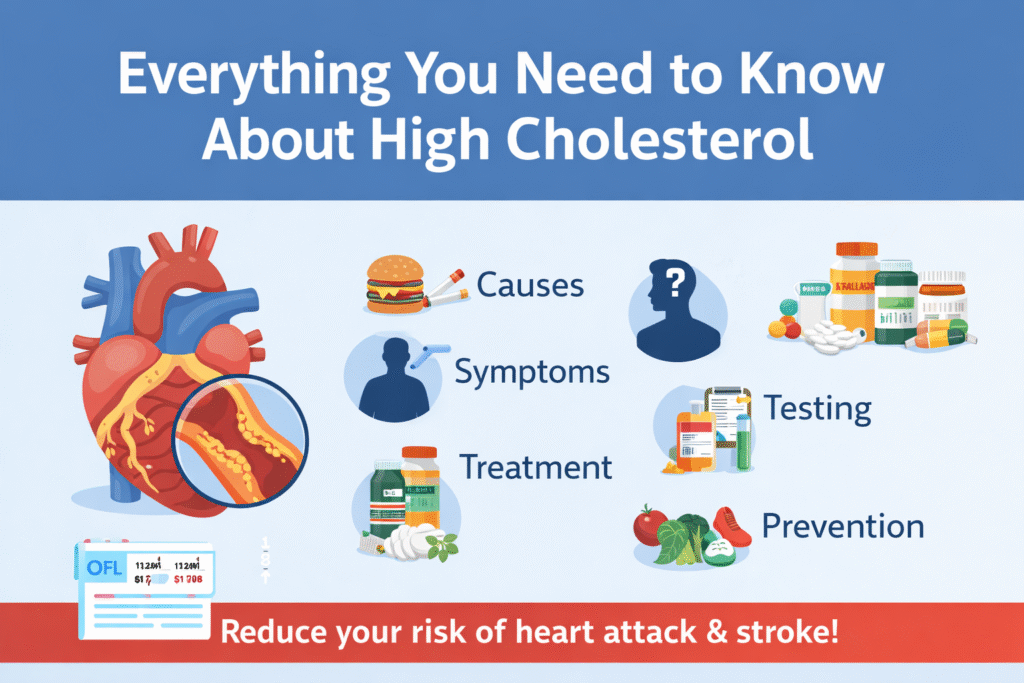
That’s exactly what happens with high cholesterol—a silent yet dangerous condition that affects millions of people worldwide. It quietly damages your blood vessels over time and often goes unnoticed until it leads to life-threatening complications like heart attack or stroke.
The reality is simple:
You may have high cholesterol and not even know it.
But the good news? It’s preventable, manageable, and even reversible with the right approach.

What is Cholesterol?
Cholesterol is a fat-like substance (lipid) produced by your liver. It plays an essential role in your body, helping to:
- Build healthy cells
- Produce hormones
- Generate Vitamin D
However, cholesterol doesn’t travel alone in your bloodstream. It is carried by lipoproteins, which determine whether it’s harmful or helpful.
Types of Cholesterol
Understanding cholesterol types is key to protecting your heart:
LDL (Low-Density Lipoprotein) – “Bad Cholesterol”
- Carries cholesterol to arteries
- Can form plaque buildup
- Increases risk of heart disease
HDL (High-Density Lipoprotein) – “Good Cholesterol”
- Removes excess cholesterol from blood
- Sends it back to the liver
- Protects against heart disease
Triglycerides
- A type of fat used for energy
- High levels increase heart risk
Symptoms of High Cholesterol
Here’s the most dangerous part:
High cholesterol usually has NO symptoms
You won’t feel pain, fatigue, or warning signs in most cases. Many people only discover it after developing:
- Chest pain
- Heart attack
- Stroke
This is why regular screening is absolutely essential.
From Research To Final Draft- All Done for You
Causes and Risk Factors
High cholesterol doesn’t happen overnight—it builds up due to a combination of lifestyle and genetic factors.
Unhealthy Diet
- High intake of fried foods
- Saturated and trans fats
- Processed and junk food
Sedentary Lifestyle
- Lack of exercise lowers HDL (good cholesterol)
Smoking
- Damages blood vessels
- Reduces good cholesterol
[smartslider3 slider=”9″]
Obesity
- Increases LDL and triglycerides
Genetics
- Family history can increase risk
- Conditions like familial hypercholesterolemia
Medical Conditions
- Diabetes
- Hypothyroidism
From Research To Final Draft- All Done for You
Why High Cholesterol is Dangerous
When LDL cholesterol builds up in your arteries, it forms plaque, leading to a condition called atherosclerosis.
Over time, this can:
- Narrow your arteries
- Reduce blood flow
- Cause blood clots
Possible Complications:
- Heart attack
- Stroke
- High blood pressure
- Peripheral artery disease
This is why cholesterol control is crucial for long-term health.
Normal Cholesterol Levels
Here’s a quick guideline:
- Total Cholesterol: Less than 200 mg/dL
- LDL (Bad): Less than 100 mg/dL
- HDL (Good):
- Men: Above 40 mg/dL
- Women: Above 50 mg/dL
- Triglycerides: Less than 150 mg/dL
[smartslider3 slider=”15″]
How is Cholesterol Tested?
A lipid profile blood test measures your cholesterol levels.
When to Test:
- Every 4–6 years for adults
- More frequently if at risk
Early detection can prevent serious complications.
From Research To Final Draft- All Done for You
How to Lower Cholesterol Naturally
Managing cholesterol starts with your daily habits.
1. Improve Your Diet
- Eat more fruits, vegetables, and whole grains
- Increase fiber intake (oats, legumes)

- Add omega-3 rich foods (fish, flaxseeds)

- Avoid fried and processed foods

2. Exercise Regularly


- At least 30 minutes daily
- Boosts good cholesterol (HDL)
3. Maintain Healthy Weight
- Even small weight loss improves cholesterol levels

4. Quit Smoking
- Improves HDL levels
- Protects blood vessels
5. Limit Alcohol
- Excess alcohol increases triglycerides
Medical Treatment
If lifestyle changes aren’t enough, doctors may prescribe:
- Statins (most common)
- Cholesterol absorption inhibitors
- PCSK9 inhibitors
- Bile acid sequestrants
Always follow medical advice before starting treatment.
Natural Remedies (Use with Caution)

Some commonly suggested remedies include:
- Garlic
- Flaxseed
- Psyllium husk
- Plant sterols
Note: Scientific evidence varies. Consult your doctor first.
How to Prevent High Cholesterol
Prevention is always better than cure.
- Eat a balanced, low-fat diet
- Stay physically active
- Maintain a healthy weight
- Avoid smoking
- Limit alcohol intake
- Get regular health checkups
[smartslider3 slider=”14″]
Final Takeaway
High cholesterol may be silent—but its effects are not.
It slowly damages your body and increases your risk of serious diseases. But with the right lifestyle choices, awareness, and regular testing, you can take full control of your health.
Start today. Your heart will thank you.
FAQs About High Cholesterol
1. Can high cholesterol be cured?
It can be controlled and even reversed with proper lifestyle changes.
2. What is the fastest way to lower cholesterol?
Diet changes, exercise, and medications (if needed).
3. Can young people have high cholesterol?
Yes, especially due to poor lifestyle or genetics.
4. Is high cholesterol dangerous?
Yes, it increases the risk of heart attack and stroke.
5. Which foods should I avoid?
Fried foods, processed snacks, red meat, and trans fats.
[smartslider3 slider=”3″]