
Introduction
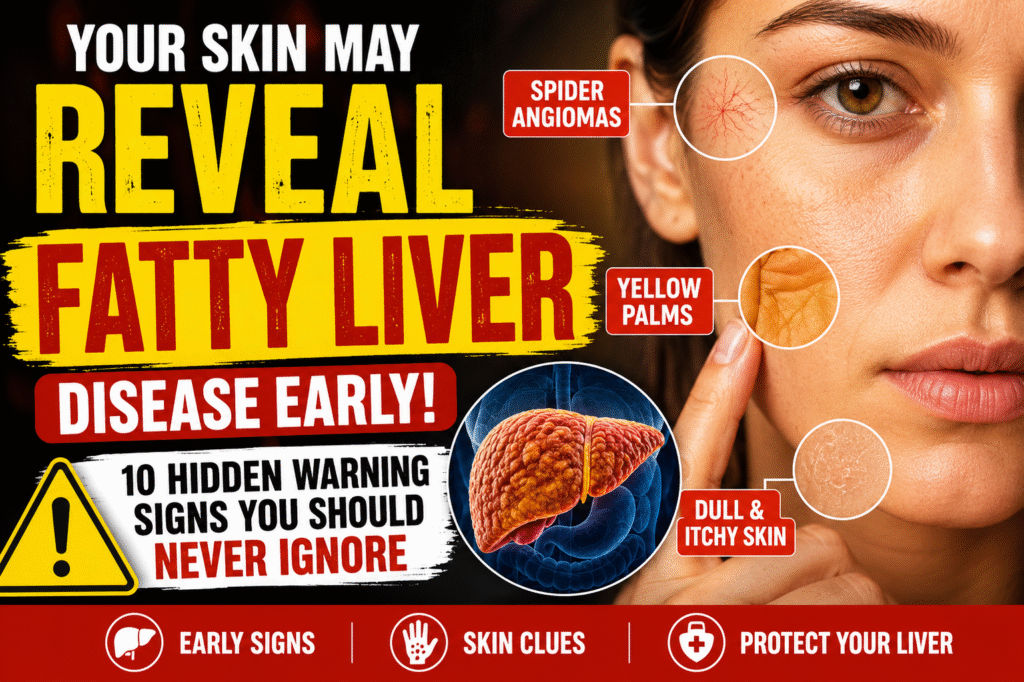
Fatty liver disease is often called a “silent” condition because many people do not realize they have it until significant damage has already occurred. However, while blood tests and scans may sometimes miss early-stage liver dysfunction, your skin can quietly reveal warning signs long before doctors officially diagnose the condition.
Many people ignore persistent itching, yellowish palms, unusual red veins, dark patches, or dull skin texture, assuming these are simple cosmetic issues. But in reality, these skin changes can sometimes reflect deeper metabolic problems happening inside the liver.
In recent years, experts have increasingly linked visible skin symptoms to early-stage non-alcoholic fatty liver disease (NAFLD) — a condition now affecting millions worldwide due to obesity, poor diet, diabetes, stress, and sedentary lifestyles.
The liver plays a major role in detoxification, hormone regulation, fat metabolism, and blood purification. When it becomes overloaded with fat, toxins and inflammatory chemicals may start affecting the skin, circulation, and immune system. This is why dermatologists and liver specialists often say that “the skin is a mirror of internal health.”
In this detailed guide, we explore the surprising connection between skin health and liver disease, the early warning signs your body may show, and what you can do to protect your liver naturally.
What Is Fatty Liver Disease?
Fatty liver disease occurs when excess fat builds up inside liver cells. While small amounts of fat are normal, too much accumulation can trigger inflammation and damage over time.
There are two major types:
1. Alcoholic Fatty Liver Disease
Caused by excessive alcohol consumption.
2. Non-Alcoholic Fatty Liver Disease (NAFLD)
Occurs in people who drink little or no alcohol. This is now one of the most common liver disorders globally.
NAFLD is closely linked with:
- Obesity
- Diabetes
- High cholesterol
- Insulin resistance
- Poor diet
- Lack of exercise
- Chronic stress
If left untreated, fatty liver disease may progress to:
- Liver inflammation
- Fibrosis
- Cirrhosis
- Liver failure
- Liver cancer
The scary part is that many patients show no obvious symptoms initially. But subtle skin changes may begin much earlier.
Why Skin Changes Happen in Liver Disease
The liver is responsible for filtering toxins, processing hormones, and regulating metabolism. When it becomes damaged or overloaded:
- Toxins may accumulate in the bloodstream
- Bile acids can build up
- Hormonal balance gets disrupted
- Blood vessels may dilate abnormally
- Nutrient deficiencies may appear
- Inflammation increases throughout the body
All these factors can directly affect the skin.
That is why unexplained skin symptoms should never be ignored, especially if they occur alongside fatigue, weight gain, poor digestion, or abdominal discomfort.
1. Persistent Itching Could Signal Liver Dysfunction

One of the earliest and most overlooked symptoms of liver disease is chronic itching, medically known as pruritus.
Unlike ordinary dry skin itching, liver-related itching may:
- Persist for weeks or months
- Worsen at night
- Affect palms and soles
- Not improve with moisturizers
- Occur without visible rash
Why Does It Happen?
When liver function slows down, bile acids may accumulate in the bloodstream. These compounds can irritate nerve endings beneath the skin, causing intense itching.
Many people mistakenly treat this symptom as allergies or eczema, delaying proper diagnosis.
2. Spider Angiomas: Tiny Red Veins That May Warn of Liver Stress
Spider angiomas are small, spider-like blood vessels visible beneath the skin surface. They usually appear on:
- Face
- Neck
- Chest
- Arms

These lesions have a central red dot with tiny branching veins extending outward.
[ninja_form id=’3′]
Why Are They Linked to Liver Disease?
Liver dysfunction can affect hormone metabolism, especially estrogen regulation. Elevated estrogen levels may cause blood vessels to dilate abnormally, leading to spider angiomas.
While a few spider angiomas can occur normally, multiple lesions may indicate underlying liver stress.
3. Yellowing Palms and Skin Changes
Yellowish discoloration of the skin or palms can sometimes indicate problems with bile metabolism and liver function.
This symptom may occur due to:
- Bilirubin buildup
- Impaired detoxification
- Fat metabolism disturbances
People may notice:
- Yellow palms
- Yellow eyes
- Pale skin tone
- Uneven complexion
Although jaundice usually appears in advanced disease, subtle color changes may occur earlier in fatty liver conditions.
4. Dull, Lifeless Skin Texture

Many people with metabolic dysfunction complain that their skin suddenly becomes:
- Dry
- Dull
- Rough
- Lifeless
- Unresponsive to skincare products
This may happen because liver dysfunction affects:
- Nutrient absorption
- Collagen production
- Blood circulation
- Hormonal balance
No expensive cream can fully restore skin glow if internal inflammation continues unchecked.
5. Dark Patches Around Neck and Armpits
Dark velvety skin patches, especially around:
- Neck
- Underarms
- Groin
may indicate insulin resistance, which is strongly associated with fatty liver disease.
This condition, called acanthosis nigricans, often develops when excess insulin stimulates abnormal skin cell growth.
Since insulin resistance is one of the biggest drivers of NAFLD, these skin changes can serve as an important metabolic warning sign.
6. Easy Bruising and Fragile Skin
The liver helps produce proteins needed for blood clotting. When liver function declines:
- Bruising may occur easily
- Skin becomes thinner
- Minor injuries heal slowly
This symptom may become more noticeable in advanced disease stages.
7. Red Palms May Indicate Liver Stress
A condition called palmar erythema causes unusual redness in the palms, especially near the thumb and little finger.
This occurs because liver dysfunction may alter circulation and hormone metabolism.
The redness is usually painless but persistent.
8. Acne and Hormonal Imbalance
The liver plays a major role in hormone detoxification. When overwhelmed:
- Excess hormones may circulate longer
- Oil production increases
- Inflammation rises
This can trigger:
- Adult acne
- Oily skin
- Breakouts around jawline
People with fatty liver disease often experience chronic low-grade inflammation that affects both internal organs and skin.
9. Puffy Eyes and Facial Swelling
Fluid retention can occur when liver function becomes impaired.
Some people develop:
- Puffy eyes
- Facial swelling
- Bloating
This happens because protein balance and circulation become disrupted.
10. Skin Tags and Metabolic Syndrome
Skin tags are small harmless growths commonly seen on:
- Neck
- Eyelids
- Underarms
Though usually benign, multiple skin tags may indicate:
- Insulin resistance
- Obesity
- Metabolic syndrome
All of these are closely connected with fatty liver disease.
| [ninja_form id=2] |
Why Doctors Sometimes Miss Early Fatty Liver Disease
One reason fatty liver disease progresses silently is because standard liver enzyme tests may remain “normal” in early stages.
Many patients assume they are healthy because:
- Blood reports appear normal
- Symptoms seem minor
- No pain is present
However, metabolic dysfunction may already be affecting:
- Skin
- Hormones
- Energy levels
- Digestion
- Sleep
This gap between internal dysfunction and detectable laboratory abnormalities is sometimes called a metabolic lag.
Risk Factors You Should Not Ignore
You may be at higher risk for fatty liver disease if you have:
- Belly fat
- Diabetes
- PCOS
- High triglycerides
- Sedentary lifestyle
- High sugar intake
- Sleep problems
- Chronic stress
- Family history of metabolic disease
Even teenagers and young adults are increasingly being diagnosed with fatty liver disease due to modern dietary habits and screen-based lifestyles.
Can Fatty Liver Be Reversed?
The good news is that early-stage fatty liver disease is often reversible with lifestyle modifications.
1. Lose Excess Weight Gradually
Even a 5–10% reduction in body weight can significantly improve liver fat.
2. Reduce Sugar Intake
Avoid:
- Sugary drinks
- Refined carbohydrates
- Processed foods
- Excess fructose
3. Exercise Regularly
Aim for:
- Walking
- Strength training
- Yoga
- Cycling
- Cardio workouts
4. Improve Sleep Quality
Poor sleep worsens insulin resistance and liver inflammation.
5. Eat Liver-Friendly Foods
Include:
- Leafy greens
- Nuts
- Seeds
- Fruits
- Fiber-rich foods
- Omega-3 sources
6. Avoid Alcohol and Smoking
Both can worsen liver inflammation.
When Should You See a Doctor?
Seek medical evaluation if you experience:
- Persistent itching
- Yellowing skin
- Multiple spider angiomas
- Sudden skin discoloration
- Fatigue
- Unexplained weight gain
- Abdominal discomfort
Your doctor may recommend:
- Liver function tests
- Ultrasound
- FibroScan
- Blood sugar tests
- Lipid profile
Early diagnosis can prevent serious complications.
The Growing Global Fatty Liver Crisis
Fatty liver disease is rapidly becoming one of the biggest global health concerns.
Experts estimate that millions of adults now have some degree of fatty liver disease, often without realizing it.
Modern lifestyle factors driving this epidemic include:
- Ultra-processed foods
- Excessive sugar intake
- Sedentary jobs
- Chronic stress
- Poor sleep
- Screen addiction
Children and adolescents are also increasingly affected.
Final Thoughts
Your skin may sometimes reveal what routine blood tests fail to detect in the early stages of liver disease. Persistent itching, spider angiomas, dull skin, yellow palms, and dark neck patches should never be dismissed as “just cosmetic issues.”
While these symptoms do not always confirm liver disease, they can act as important warning signals that your metabolism and liver health need attention.
The earlier fatty liver disease is identified, the better the chances of reversing it naturally through healthy lifestyle changes.
Listening to your body — and your skin — may help you detect problems before they become dangerous.
Frequently Asked Questions (FAQs)
1. Can fatty liver disease cause itchy skin?
Yes. Bile acid buildup due to impaired liver function may trigger persistent itching.
2. What are spider angiomas?
Spider angiomas are small red blood vessels visible beneath the skin that may appear due to liver dysfunction or hormonal imbalance.
3. Can skin discoloration indicate liver problems?
Yes. Yellowing skin, pale complexion, or dark patches around the neck may sometimes be linked to liver or metabolic disorders.
4. Is fatty liver disease reversible?
In many early cases, yes. Lifestyle changes such as weight loss, healthy eating, exercise, and better sleep can significantly improve liver health.
5. Can young people develop fatty liver disease?
Yes. Sedentary lifestyles, obesity, poor diet, and excessive sugar intake are causing rising fatty liver cases among young adults and teenagers.
6. Do normal liver tests rule out fatty liver disease?
Not always. Some people may have fatty liver despite normal liver enzyme levels.
7. Which foods are good for liver health?
Fiber-rich foods, leafy vegetables, fruits, nuts, seeds, and omega-3-rich foods support liver function.
8. Should I worry about skin tags and dark neck patches?
These may indicate insulin resistance and metabolic syndrome, which are associated with fatty liver disease.
Disclaimer
This article is for informational and educational purposes only and should not be considered medical advice. Always consult a qualified healthcare professional for diagnosis, treatment, or concerns related to liver disease or skin symptoms.
Also Read: