
Introduction: When Public Meltdowns Feel Overwhelming
You’re standing in a grocery store. Your toddler suddenly drops to the floor, crying, screaming, and refusing to move. People start staring. You feel embarrassed, frustrated, and unsure what to do next.
If this sounds familiar, you’re not alone.
Toddler tantrums—especially in public—are one of the most challenging parts of parenting. But here’s the truth: tantrums are not bad behavior. They are a normal part of child development.
In this guide, you’ll learn:
- Why toddlers have tantrums
- How to handle tantrums in public calmly
- Proven strategies to prevent them
- Long-term techniques to build emotional control
What Are Toddler Tantrums?
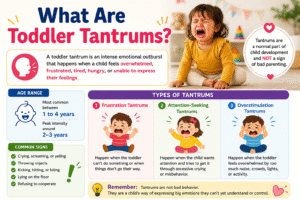
A tantrum is an emotional outburst that happens when a toddler feels overwhelmed, frustrated, or unable to express themselves.
Common Characteristics:
- Crying, screaming, or yelling
- Throwing objects
- Kicking or hitting
- Lying on the floor
- Refusing to cooperate
Age Range:
- Most common between 1 to 4 years
- Peak intensity around 2–3 years
Types of Tantrums:
- Frustration tantrums – When they can’t do something
- Attention-seeking tantrums – To gain focus from parents
- Overstimulation tantrums – Due to noise, crowd, or fatigue
Understanding the type helps you respond more effectively.
Why Do Toddlers Have Tantrums?
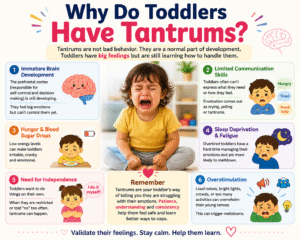
Tantrums are rooted in brain development, not intentional misbehavior.
1. Immature Brain Development
Toddlers’ prefrontal cortex (responsible for decision-making and control) is still developing.
They feel big emotions but don’t know how to manage them.
2. Limited Communication Skills
They often cannot express:
- Hunger
- Fatigue
- Frustration
So emotions come out as tantrums.
3. Hunger & Blood Sugar Drops
Low energy levels can make toddlers irritable and impulsive.
4. Sleep Deprivation
An overtired toddler is much more prone to emotional breakdowns.
5. Desire for Independence
Toddlers want control:
- “I want to do it myself!”
When they are restricted, tantrums occur.
6. Overstimulation
Crowded places, loud sounds, and bright lights overwhelm their senses.
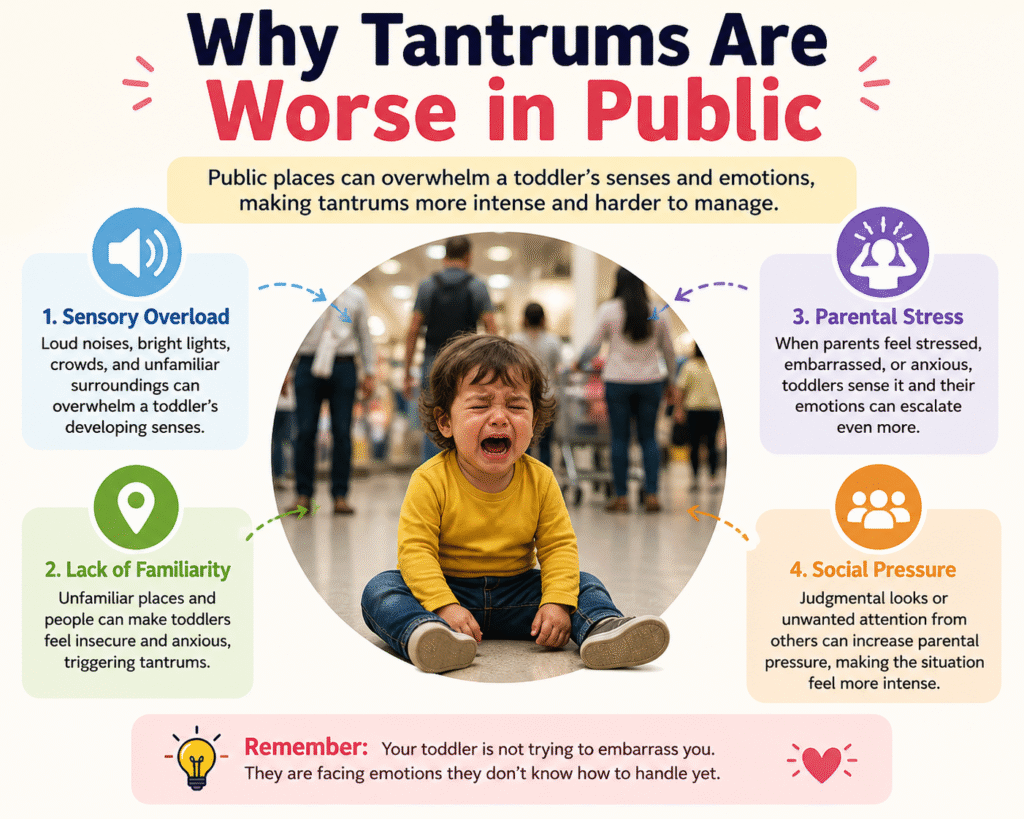
Why Tantrums Are Worse in Public
Public tantrums feel more intense because of:
1. Sensory Overload
Markets, malls, and gatherings can overwhelm toddlers.
2. Lack of Familiarity
New environments reduce their sense of security.
3. Parental Anxiety
Your stress and embarrassment can increase the child’s emotional response.
4. Social Pressure
Parents often react harshly due to fear of judgment.
How to Handle Toddler Tantrums in Public (Step-by-Step)
Step 1: Stay Calm (Your Superpower)
Your reaction sets the tone.
- Take a deep breath
- Lower your voice
- Avoid shouting
👉 A calm parent helps regulate a child’s emotions.
Step 2: Move to a Quiet Space
If possible:
- Step outside the store
- Move to a less crowded corner
Reducing stimulation can calm the child faster.
Step 3: Acknowledge Feelings
Even if the behavior is unacceptable, the emotion is valid.
Say:
- “I know you’re upset.”
- “You wanted that toy.”
This helps the child feel understood.
Step 4: Don’t Give In
Giving the child what they want during a tantrum teaches:
👉 “Crying = getting what I want”
Instead:
- Stay firm but gentle
- Repeat your boundary calmly
Step 5: Use Distraction
Redirect attention:
- Show something interesting
- Offer a snack or toy
- Change location
Toddlers have short attention spans—use that to your advantage.
Step 6: Offer Comfort (If Accepted)
Some toddlers want physical reassurance:
- Hug
- Hold hands
- Sit close
Others prefer space—observe your child’s preference.
Step 7: Wait It Out Safely
Sometimes the best approach is:
- Ensure safety
- Stay nearby
- Let the tantrum pass
Avoid excessive attention during peak meltdown.
What NOT to Do During a Tantrum
Don’t Shout or Punish Harshly
This escalates the situation and damages trust.
Don’t Bribe Repeatedly
Offering rewards every time encourages manipulation.
Don’t Lecture
Toddlers cannot process logic during emotional distress.
Don’t Feel Embarrassed
Your child’s behavior is normal—not a reflection of your parenting.
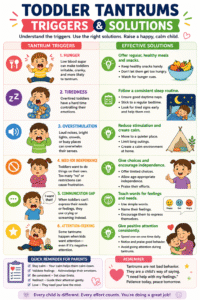
How to Prevent Toddler Tantrums (Before They Start)
Prevention is more effective than reaction.
1. Maintain a Consistent Routine
- Fixed sleep time
- Regular meals
Predictability reduces emotional instability.
2. Carry a “Tantrum Kit”
Always keep:
- Healthy snacks
- Water
- Favorite toy
- Comfort item
3. Give Limited Choices
Instead of saying “No,” offer options:
- “Do you want apple or banana?”
- “Red shoes or blue shoes?”
This satisfies their need for control.
4. Teach Emotional Expression
Help your child learn words like:
- “Angry”
- “Sad”
- “Hungry”
This reduces frustration.
5. Prepare Before Going Out
Set expectations clearly:
- “We are going to the store, not buying toys today.”
Consistency is key.
6. Use Positive Reinforcement
Praise good behavior immediately:
- “You’re walking so nicely!”
- “Thank you for listening!”
Positive attention reduces negative behaviors.
The Science Behind Tantrum Control
Understanding the science helps you parent more effectively.
Co-Regulation
Children borrow emotional stability from adults.
👉 Your calmness literally helps their brain settle.
Mirror Neurons
Children imitate your emotional responses.
- Calm parent → calm child
- Angry parent → escalated child
Cortisol (Stress Hormone)
Tantrums increase stress hormones.
Comfort and reassurance reduce them.
Secure Attachment
Consistent, responsive parenting builds emotional resilience.
Real-Life Scenario: Handling a Public Tantrum
Situation:
A toddler screams in a supermarket after being denied candy.
Response:
- Parent kneels down calmly
- Says: “I know you want candy”
- Moves child to a quieter aisle
- Offers a healthy snack
- Maintains boundary (no candy)
Outcome:
Tantrum reduces within minutes.
👉 Lesson: Calm + consistency works.
Long-Term Strategies for Better Behavior
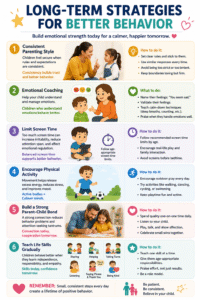
1. Consistent Parenting Style
Avoid:
- Sometimes strict, sometimes lenient behavior
Children thrive on consistency.
2. Emotional Coaching
Teach:
- “It’s okay to feel angry”
- “Let’s take deep breaths”
3. Limit Screen Time
Excessive screens can:
- Reduce emotional regulation
- Increase irritability
4. Encourage Physical Activity
Active play helps:
- Release energy
- Improve mood
5. Build Strong Parent-Child Bond
Spend quality time daily:
- Play
- Talk
- Connect
This reduces attention-seeking tantrums.
When Should You Be Concerned?
Consult a pediatrician if:
- Tantrums are extremely frequent or intense
- Child harms themselves or others
- Speech delay is present
- Tantrums continue beyond age 5
Early intervention can help.
Frequently Asked Questions (FAQs)
1. How long do toddler tantrums last?
Usually between 2 to 15 minutes.
2. Should I ignore tantrums?
Partial ignoring works—ignore behavior, not the child’s emotions.
3. Are tantrums a sign of bad parenting?
No. They are a normal developmental phase.
4. How many tantrums per day are normal?
1–3 tantrums daily can be normal in toddlers.
5. Can diet affect tantrums?
Yes. Poor nutrition and sugar spikes can worsen behavior.
Conclusion: You’ve Got This
Toddler tantrums can feel overwhelming, especially in public—but they are temporary and manageable.
The key is:
- Stay calm
- Be consistent
- Understand the cause
- Focus on prevention
Remember, your child is not trying to embarrass you—they are struggling with emotions they don’t yet understand.
With patience and the right approach, tantrums will reduce, and your child will grow into a more emotionally resilient individual.