
Introduction
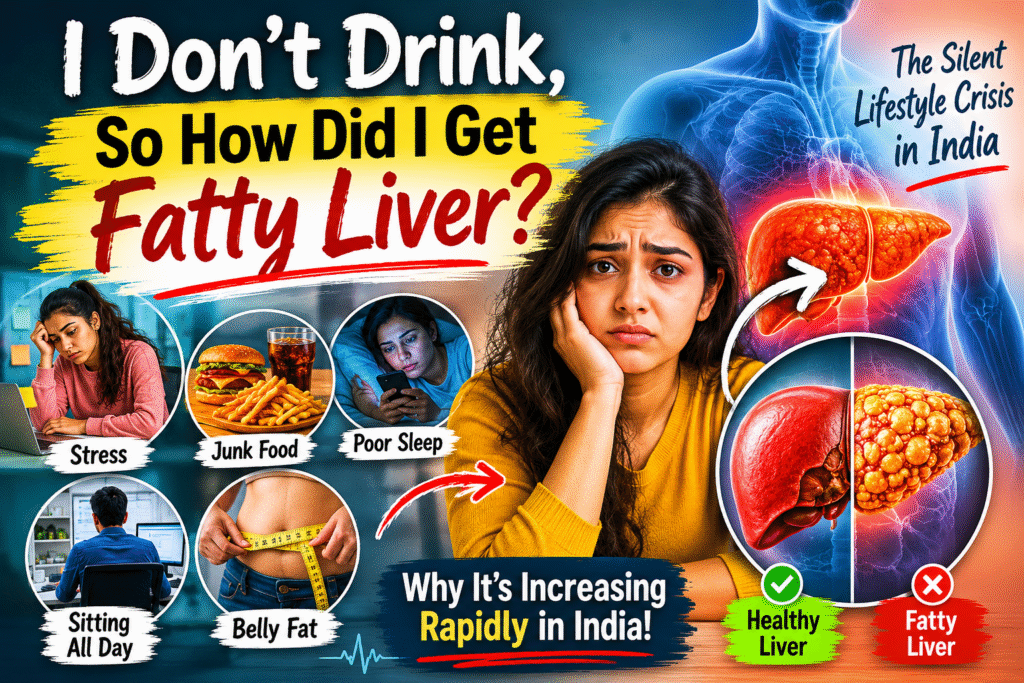
For years, most people believed that liver disease only happens to those who drink alcohol heavily. But today, a shocking health crisis is silently spreading across India — fatty liver disease in non-drinkers.
Young professionals, college students, homemakers, fitness beginners, and even teenagers are now being diagnosed with fatty liver despite never touching alcohol. Many discover it accidentally during a routine health check-up. The words from the doctor often sound confusing:
“Your liver has fat accumulation.”
And the immediate response is almost always:
“But I don’t drink.”
This emotional confusion is becoming increasingly common in India. What makes the condition more dangerous is that fatty liver often develops silently for years without obvious symptoms. By the time people notice constant fatigue, belly fat, poor digestion, or abnormal blood reports, the liver may already be under stress.
India is now witnessing a rapid rise in Non-Alcoholic Fatty Liver Disease (NAFLD) — a condition strongly connected to modern lifestyle habits, stress, emotional eating, poor sleep, processed food, and lack of movement.
The scary part? Many people still think they are “healthy” because they are not drinking alcohol.
What Exactly Is Fatty Liver Disease?
Fatty liver happens when excess fat starts accumulating inside liver cells. A small amount of fat is normal, but when it becomes too much, the liver struggles to function properly.
There are two major types:
1. Alcoholic Fatty Liver Disease
Caused mainly due to excessive alcohol consumption.
2. Non-Alcoholic Fatty Liver Disease (NAFLD)
Occurs in people who drink little or no alcohol.
Today, NAFLD is becoming one of the most common lifestyle disorders in India.
In severe cases, fatty liver can progress to:
- Liver inflammation
- Liver fibrosis
- Cirrhosis
- Liver failure
- Increased risk of liver cancer
The good news is that early-stage fatty liver can often be reversed naturally with lifestyle changes.
Why Is Fatty Liver Increasing Rapidly in India?
The rise is not happening because of one single reason. It is the result of a modern lifestyle shift affecting millions of Indians emotionally, mentally, and physically.
1. Sedentary Lifestyle Has Become Normal
Many Indians now spend:
- 8–10 hours sitting
- Working on laptops
- Scrolling on mobile phones
- Watching OTT platforms late at night
The human body was designed for movement, but modern life encourages inactivity.
When physical activity reduces:
- metabolism slows,
- fat accumulation increases,
- insulin resistance develops,
- and liver fat begins to build up.
Even people who appear “slim” may have fatty liver internally.
The Psychological Connection Nobody Talks About
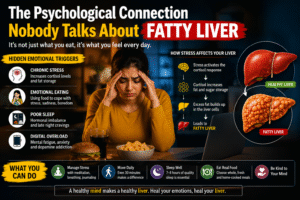
One of the biggest hidden reasons behind fatty liver is emotional stress.
Modern Indian lifestyles are filled with:
- work pressure,
- financial stress,
- relationship anxiety,
- social comparison,
- digital overload,
- and sleep deprivation.
Stress affects hormones like cortisol, which can increase fat storage around the abdomen and liver.
Many people unknowingly use food as emotional comfort.
Emotional eating patterns include:
- late-night snacking,
- stress eating during work,
- sugar cravings during anxiety,
- overeating while watching screens.
This creates a dangerous cycle:
Stress → unhealthy eating → poor sleep → weight gain → fatty liver → more stress.
The liver doesn’t only process food. It also suffers from chronic stress.
Indian Diet Patterns Are Rapidly Changing
Traditional Indian meals once included:
- fresh vegetables, seasonal fruits, homemade food, millet, dal, and physically active routines.
But modern eating habits now include: packaged snacks, sugary drinks, fast food, bakery products, refined flour, processed oils, excessive sugar, and food delivery culture.
These foods increase:
- insulin resistance,
- inflammation,
- obesity,
- and liver fat accumulation.
Even “healthy-looking” foods can sometimes be harmful if highly processed.
Belly Fat and Fatty Liver Are Deeply Connected
Many Indians ignore belly fat thinking it is only a cosmetic issue.
But abdominal fat is metabolically active and strongly linked to fatty liver disease.
A growing waistline often signals: insulin resistance, metabolic syndrome, and internal fat accumulation around organs.
In many cases, the liver starts storing fat before diabetes even develops. This is why doctors often call fatty liver:
“The warning sign before bigger lifestyle diseases.”
Why Even Young People Are Getting Fatty Liver
A decade ago, fatty liver was more common in middle-aged adults. Today, doctors are seeing: college students, teenagers, IT professionals, and people in their 20s with fatty liver. The reasons include:
- excessive screen time,
- junk food,
- energy drinks,
- poor sleep,
- gaming lifestyle,
- chronic stress,
- and low physical activity.
Children spending more time indoors and consuming processed foods are also becoming vulnerable.
Common Symptoms People Often Ignore
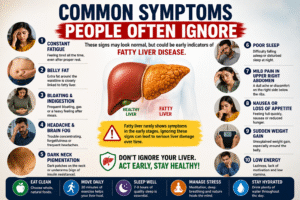
Fatty liver usually develops silently.
But some people experience early warning signs like:
- Constant tiredness
- Brain fog
- Mild pain on the upper right abdomen
- Belly fat
- Difficulty losing weight
- Dark neck pigmentation
- Acidity and bloating
- Poor digestion
- Low energy levels
- Poor sleep quality
Unfortunately, many ignore these symptoms until routine blood tests reveal liver issues.
Can Slim People Also Get Fatty Liver?
Yes.
This surprises many people. There is a condition called: “Lean Fatty Liver”
A person may appear thin externally but still have: high visceral fat, poor metabolism, insulin resistance, and liver fat accumulation.
This is increasingly common in Asian populations, including Indians.
Genetics, stress, poor diet, and inactivity all contribute.
How Sleep Affects Liver Health
Sleep is one of the most underrated factors in liver health.
Late-night sleeping patterns disrupt: metabolism, hormone balance, insulin sensitivity, and fat processing.
People who sleep less than 6 hours regularly may have a higher risk of: obesity, diabetes, and fatty liver.
Night-time scrolling, binge-watching, and mobile addiction are silently harming liver health across India.
Is Fatty Liver Reversible?
In many cases, yes, especially in early stages.
The liver is one of the few organs capable of healing itself if given proper support.
But recovery does not happen through: crash diets, detox fads, miracle drinks, or social media hacks.
It happens through consistent lifestyle improvement.
Practical Steps to Reverse Fatty Liver Naturally
1. Reduce Sugar Intake
Cut down: cold drinks, packaged juices, sweets, bakery items, excessive tea sugar.
Sugar overload strongly contributes to liver fat.
2. Walk Daily
Even 30–45 minutes of brisk walking can improve:
- insulin sensitivity,
- metabolism,
- and liver health.
Consistency matters more than extreme workouts.
3. Improve Sleep Quality
Try to: sleep before midnight,
- avoid screens before bed,
- maintain regular sleep timing.
Good sleep helps the liver repair itself.
4. Eat More Natural Foods
Focus on: fruits, vegetables, dal, salads, nuts, seeds, and fiber-rich foods.
Homemade meals are usually better than ultra-processed foods.
5. Manage Stress
This is extremely important.
Stress management methods include: yoga, meditation, breathing exercises, journaling, prayer, nature walks, and reducing digital overload. Mental health and liver health are deeply connected.
6. Lose Weight Gradually
Even losing 5–10% of body weight may significantly improve fatty liver. Rapid weight loss is not necessary. Slow and sustainable progress works better.
Why Awareness Is Still Low in India
Many people only take liver health seriously after severe complications appear.
There is still a common misconception:
“If I don’t drink alcohol, my liver is safe.”
But today’s reality is different.
Modern lifestyle habits can damage the liver even without alcohol.
The problem is no longer limited to one age group or social class.
Fatty liver is becoming a national lifestyle health challenge.
The Emotional Reality Behind Fatty Liver
Behind every fatty liver diagnosis, there is often a hidden story:
- skipped meals,
- stress,
- burnout,
- loneliness,
- emotional eating,
- lack of sleep,
- or constant pressure to keep going.
The body silently absorbs what the mind struggles to express.
Sometimes fatty liver is not just about food.
It is also about modern life exhausting the human body emotionally and physically.
Conclusion
Fatty liver in non-drinkers is rapidly increasing in India because modern lifestyles are changing faster than our bodies can adapt.
The combination of:
- stress,
- processed food,
- inactivity,
- poor sleep,
- and emotional overload
is silently damaging liver health in millions of people.
The encouraging truth is that early fatty liver can often be reversed naturally.
Small daily changes matter:
- walking more,
- sleeping better,
- eating cleaner,
- reducing stress,
- and reconnecting with healthier routines.
Your liver works silently every day to protect you.
Perhaps it’s time we start protecting it too.
FAQs
1. Can non-drinkers really get fatty liver?
Yes. Non-Alcoholic Fatty Liver Disease (NAFLD) occurs in people who consume little or no alcohol.
2. What is the main cause of fatty liver in India?
Common causes include poor diet, obesity, stress, lack of exercise, diabetes, poor sleep, and sedentary lifestyle.
3. Can fatty liver be cured naturally?
Early-stage fatty liver can often improve or reverse through healthy lifestyle changes.
4. Is fatty liver dangerous?
If ignored, fatty liver can progress to liver inflammation, fibrosis, cirrhosis, or liver failure.
5. Can slim people have fatty liver?
Yes. Even thin individuals can develop fatty liver due to poor metabolism, stress, genetics, or unhealthy lifestyle habits.
6. Which foods should be avoided in fatty liver?
Avoid:
- sugary drinks,
- junk food,
- fried foods,
- excessive sweets,
- processed snacks,
- and refined carbohydrates.
7. Does stress affect fatty liver?
Yes. Chronic stress affects hormones and eating behavior, increasing the risk of fatty liver.
8. How long does it take to reverse fatty liver?
It depends on severity and lifestyle changes. Some people may see improvement within a few months of consistent healthy habits.
More To Read:
Your Skin May Reveal Fatty Liver Disease Early: 10 Hidden Warning Signs You Should Never Ignore
What Is Your Skin Trying to Tell You? Fatty Liver Warning Signs Quiz