
Introduction
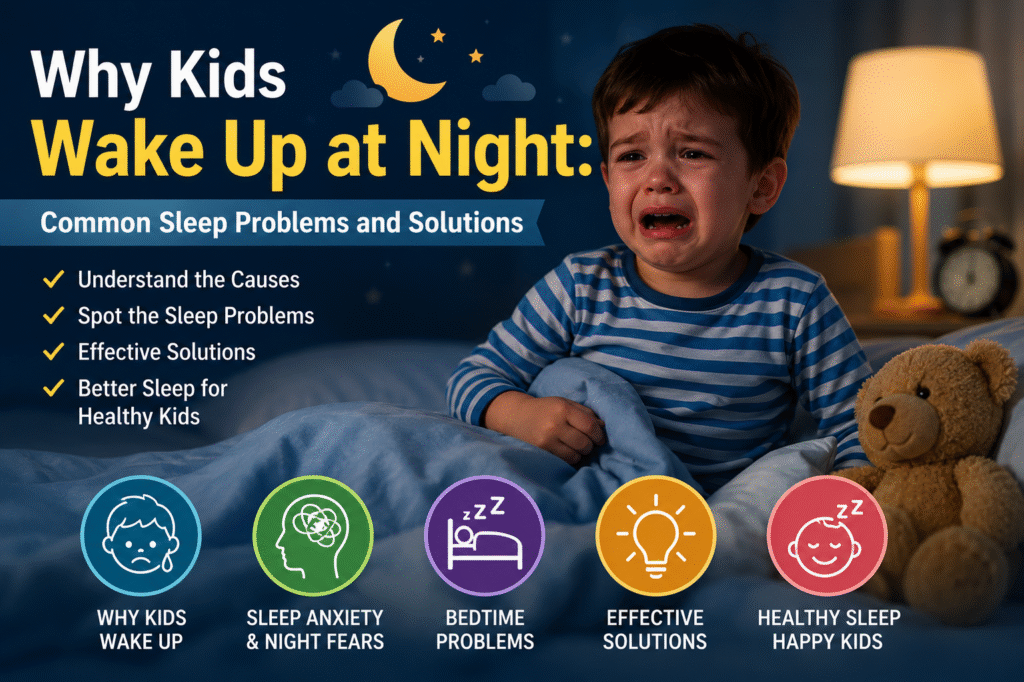
Sleep is one of the most important pillars of a child’s physical, emotional, and mental development. Yet many parents struggle with kids sleep problems, especially when their child keeps waking up during the night. From toddlers crying unexpectedly at 2 AM to school-age children refusing bedtime, sleep disturbances are common in growing children.
If you are wondering why kids wake up at night, or searching for ways to handle a child not sleeping through the night, you are not alone. Millions of parents experience bedtime battles, interrupted sleep, and exhausted mornings.
In this detailed guide, we will explore the most common sleep problems in children, the causes behind them, and practical solutions that actually work.
Why Sleep Is So Important for Children
Children need proper sleep for:
- Brain development
- Memory and learning
- Physical growth
- Emotional regulation
- Strong immunity
- Hormonal balance
Poor sleep can affect concentration, mood, school performance, and even eating habits. Long-term sleep deprivation may also contribute to anxiety, obesity, and behavioral problems.
Common Kids Sleep Problems

Understanding the type of sleep issue your child has is the first step toward solving it.
1. Difficulty Falling Asleep
Some children take hours to settle down at bedtime. They may:
- Ask for water repeatedly
- Want parents nearby
- Refuse to stay in bed
- Feel restless or anxious
This is one of the most common bedtime problems in kids.
2. Child Not Sleeping Through the Night
Many parents complain about their child not sleeping through the night. Kids may wake up multiple times and struggle to fall asleep again.
Night waking is especially common in:
- Toddlers
- Preschoolers
- Children experiencing stress or fear
3. Toddler Waking Up at Night
A toddler waking up at night may cry, scream, or call for parents. This can happen due to:
- Sleep regression
- Teething
- Hunger
- Separation anxiety
- Overstimulation before bedtime
Toddlers are still learning how to self-soothe and connect sleep cycles.
4. Nightmares and Night Terrors
Nightmares usually happen in the second half of sleep and can leave children frightened.
Night terrors are different:
- Sudden screaming
- Sweating
- Confusion
- Child may not recognize parents
These episodes can be scary but are usually harmless.
5. Child Sleep Anxiety
Child sleep anxiety is becoming increasingly common. Children may fear:
- Darkness
- Monsters
- Being alone
- Separation from parents
Anxiety can make bedtime stressful and lead to repeated night waking.
Why Kids Wake Up at Night
Parents often ask, “Why does my child wake up crying at night?”
The answer can vary depending on age, routine, health, and emotional state.
1. Overtiredness
Ironically, children who don’t sleep enough during the day may struggle more at night. Overtired children produce stress hormones that interfere with restful sleep.
Signs include:
- Hyperactivity before bed
- Irritability
- Frequent crying
- Difficulty settling down
2. Inconsistent Bedtime Routine
Irregular sleeping schedules confuse the body clock.
If bedtime changes every night, children may:
- Resist sleep
- Wake frequently
- Sleep lightly
Consistency is extremely important.
3. Too Much Screen Time
Excessive exposure to:
- Mobile phones
- Tablets
- Television
- Video games
can suppress melatonin production and delay sleep.
Blue light exposure before bedtime is one of the biggest causes of modern sleep problems in children.
4. Hunger or Poor Diet
Sugary foods and caffeine-containing drinks can disturb sleep.
Children may also wake up hungry if:
- Dinner was too early
- Meals lacked protein
- Blood sugar levels drop overnight
5. Sleep Associations
Some children depend on:
- Rocking
- Feeding
- Holding hands
- Sleeping beside parents
When they naturally wake between sleep cycles, they cannot return to sleep independently.
6. Anxiety and Emotional Stress
School pressure, family changes, bullying, or fears can trigger nighttime waking.
Children often process emotions during sleep, which may explain:
- Crying during sleep
- Nightmares
- Restlessness
Signs Your Child Is Not Getting Enough Sleep
Many parents miss the symptoms of sleep deprivation because tired children do not always appear sleepy.
Common Signs Include:
- Mood swings
- Aggressive behavior
- Difficulty concentrating
- Hyperactivity
- Poor school performance
- Frequent tantrums
- Weak immunity
- Constant yawning
If these signs appear regularly, poor sleep could be the reason.
How to Make Kids Sleep Faster
Parents constantly search for ways on how to make kids sleep faster. Fortunately, small lifestyle changes can make a huge difference.
Best Bedtime Routine for Better Sleep
A calming bedtime routine tells the brain that it is time to relax.
Ideal Bedtime Routine
1. Fixed Sleep Time
Put children to bed at the same time every night.
2. Warm Bath
A warm bath relaxes muscles and lowers stress.
3. Storytelling
Reading books helps children calm down emotionally.
4. Dim Lights
Soft lighting encourages melatonin release.
5. Quiet Activities
Avoid rough play before bedtime.
Foods That Help Children Sleep Better
Certain foods support better sleep naturally.
Sleep-Friendly Foods
- Bananas
- Warm milk
- Oats
- Almonds
- Yogurt
- Cherries
These foods contain nutrients that support melatonin and serotonin production.
Foods to Avoid Before Bed
Avoid:
- Chocolate
- Soda
- Packaged snacks
- Sugary desserts
- Energy drinks
These can overstimulate children and disrupt sleep cycles.
How Screen Time Affects Sleep
Screen addiction is one of the biggest causes of kids sleep problems today.
Effects of Excessive Screen Use
- Delayed sleep onset
- Reduced melatonin
- Hyperactive brain activity
- Shorter sleep duration
- More night waking
Experts recommend avoiding screens at least 1–2 hours before bedtime.
Child Sleep Anxiety: How Parents Can Help
Helping children feel emotionally safe at bedtime is essential.
Tips to Reduce Child Sleep Anxiety
1. Validate Their Feelings
Never mock a child’s fears.
Instead say:
“I understand you feel scared.”
2. Use a Comfort Object
Soft toys or blankets can provide reassurance.
3. Create a Calm Bedroom
Keep the room:
- Quiet
- Cool
- Dark
- Comfortable
Night lamps can help children afraid of darkness.
4. Avoid Scary Content
Scary cartoons, YouTube videos, and games can trigger nighttime fears.
5. Teach Relaxation Techniques
Simple breathing exercises help children calm their nervous system.
How to Stop Toddler Waking at Night
Parents desperately search for solutions on how to stop toddler waking at night.
The key is teaching healthy sleep habits gradually.
Effective Strategies
1. Encourage Self-Soothing
Allow toddlers a few minutes to settle themselves before rushing in.
2. Reduce Night Feeding Gradually
If age-appropriate, slowly decrease nighttime feeding.
3. Keep Interactions Calm
Avoid bright lights and stimulating conversations during nighttime waking.
4. Maintain Daytime Activity
Children who are physically active during the day usually sleep better.
5. Avoid Late Naps
Late afternoon naps may interfere with nighttime sleep.
Why Does My Child Wake Up Crying at Night?
Parents often panic when children wake crying suddenly.
Possible Reasons Include:
- Nightmares
- Separation anxiety
- Teething pain
- Gas or stomach discomfort
- Fever
- Sleep terrors
- Overtiredness
Observe patterns carefully. Frequent crying episodes may require medical evaluation.
Sleep Disorders in Children
Sometimes persistent sleep problems may indicate a medical condition.
Common Pediatric Sleep Disorders
Sleep Apnea
Symptoms:
- Loud snoring
- Pauses in breathing
- Restless sleep
Restless Leg Syndrome
Children may complain of:
- Tingling legs
- Urge to move legs
- Difficulty relaxing
Insomnia
Difficulty falling or staying asleep regularly.
Parasomnias
Includes:
- Sleepwalking
- Night terrors
- Talking during sleep
When Should Parents See a Doctor?
Consult a pediatrician if your child:
- Snores heavily
- Stops breathing during sleep
- Has severe insomnia
- Wakes screaming frequently
- Appears excessively sleepy during the day
- Shows behavioral regression
- Has persistent nightmares
Professional help can identify underlying medical or psychological causes.
Healthy Sleep Habits for Children
Building lifelong sleep habits is one of the greatest gifts parents can provide.
Healthy Habits Include:
- Regular bedtime schedule
- Limited sugar intake
- Daily outdoor activity
- Screen-free evenings
- Comfortable sleep environment
- Emotional reassurance
Small daily changes often create major improvements over time.
Sleep Requirements by Age
Recommended Sleep Duration
| Age Group | Sleep Needed |
|---|---|
| Infants | 12–16 hours |
| Toddlers | 11–14 hours |
| Preschoolers | 10–13 hours |
| School-age children | 9–12 hours |
| Teenagers | 8–10 hours |
Every child is different, but chronic sleep shortage should never be ignored.
Parenting Tips for Better Sleep

Parenting-tips-for-better-sleep
Stay Patient
Improving sleep takes time. Sudden changes rarely work overnight.
Be Consistent
Consistency is more important than perfection.
Avoid Punishment Around Sleep
Bedtime should feel safe and comforting, not stressful.
Encourage Open Communication
Ask children about fears, dreams, or worries they may be hiding.
Final Thoughts
Sleep problems are common during childhood, but they are not impossible to solve. Whether you are dealing with a toddler waking up at night, a child not sleeping through the night, or ongoing bedtime problems in kids, understanding the root cause is essential.
Most sleep issues improve with:
- Better routines
- Reduced screen time
- Emotional support
- Consistent sleep habits
Remember, healthy sleep is not just about rest — it directly affects your child’s growth, learning, emotional stability, and overall well-being.
With patience, structure, and the right strategies, peaceful nights are possible for both children and parents.
Frequently Asked Questions (FAQs)
1. Why do kids wake up at night?
Kids may wake due to hunger, nightmares, anxiety, overstimulation, or poor sleep routines.
2. How can I help my child sleep through the night?
Maintain a consistent bedtime routine, reduce screen time, and encourage self-soothing habits.
3. Why does my child wake up crying at night?
Nightmares, night terrors, anxiety, or discomfort are common causes.
4. What causes bedtime problems in kids?
Irregular schedules, fear, screen exposure, and lack of calming routines are major factors.
5. How much sleep does a toddler need?
Toddlers generally need 11–14 hours of sleep in 24 hours.
6. Can screen time cause sleep problems in children?
Yes. Blue light suppresses melatonin and delays sleep onset.
7. When should I worry about my child’s sleep?
Seek medical advice if sleep problems are severe, persistent, or affect daytime behavior and health.
My Baby is 3 months old and still wake up at night
[smartslider3 slider=”21″]