
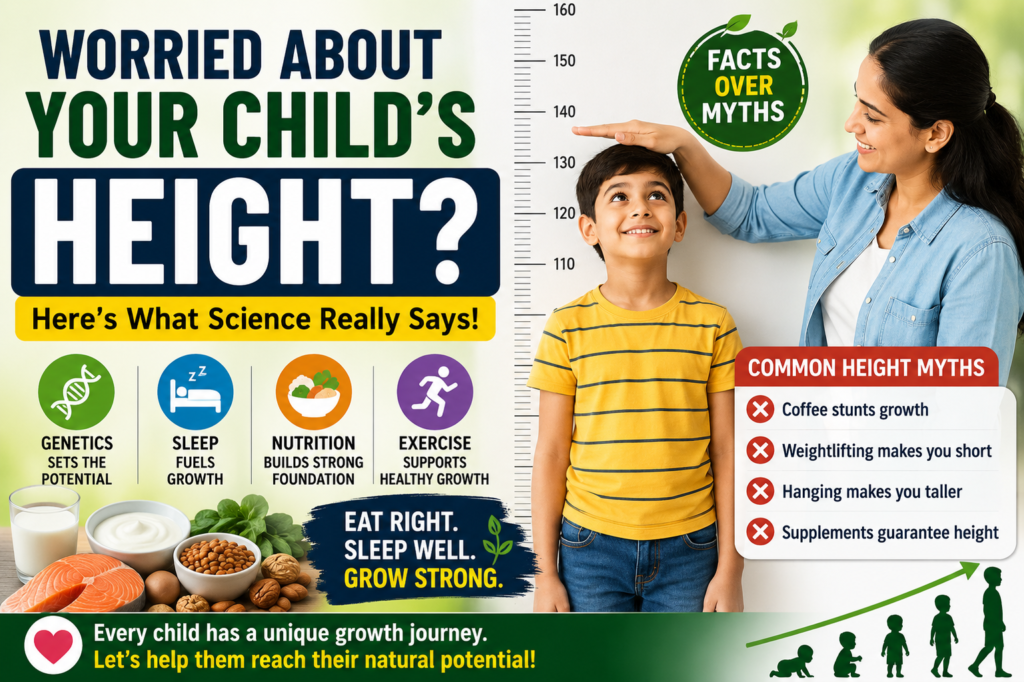
“Is my child shorter than other children? Will they catch up? Should I buy a height-growth supplement?”
These are common questions that many parents quietly worry about.
When a child appears shorter than classmates, parents may start searching for special foods, exercises, supplements or even medicines that promise faster growth. The internet is full of claims about hanging exercises, yoga, protein powders and “height-increasing” supplements.
But how much of this information is actually true?
The science of height growth is much simpler than many advertisements make it seem. Genetics plays a major role in determining height, while nutrition, sleep, physical activity and overall health can help a child reach their natural growth potential.
The important thing is not to chase every extra centimetre. It is to understand how growth works and give children the healthy foundation they need.
How Does Height Actually Grow?
Height increases mainly because the long bones of the body become longer during childhood and adolescence. At the ends of these bones are special areas called growth plates, or epiphyseal plates. These are softer areas of tissue that allow bones to lengthen while a child is growing.
As puberty progresses, these growth plates gradually harden and eventually close. Once they have closed, the bones can no longer naturally lengthen. This is one of the most important facts to understand about height.
For most people, natural height growth is largely complete by the end of adolescence. The source notes that height generally does not increase after about 18–20, although the exact timing varies between individuals.
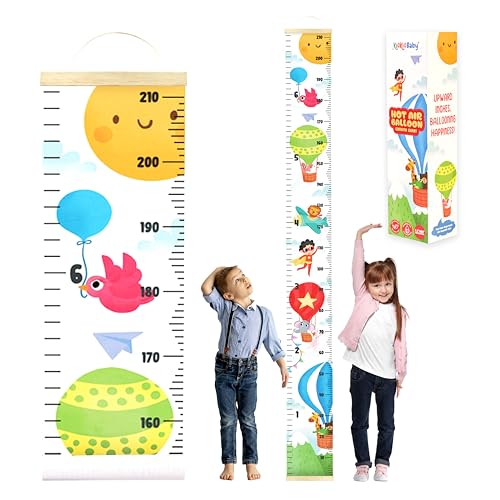
- Exclusively Premium Materials: Crafted from top-grade, thick, resilient, and waterproof canvas encased in a wooden frame…
- Easy Installation: Our wall-mounted height chart is both lightweight and sturdy, ensuring effortless hanging on any wall…
- For Babies, Toddlers, Kids and Teenagers: Our growth chart stands extra tall at 82 inches (6 feet 10 inches), which make…
Why does this matter?
Because it helps separate realistic growth support from unrealistic promises.
If a child is still growing, healthy nutrition, adequate sleep and overall health are important. But once growth plates have closed, stretching, hanging or supplements cannot simply make the long bones longer.
Genetics: How Much of Height Is Written in Your DNA?
Parents often wonder:
“If I am short, will my child also be short?”
Genetics has a strong influence on final height. According to the source document, approximately 60% to 80% of a person’s final height is determined by genetics.
However, genes are not the whole story. The remaining influence comes from environmental and lifestyle factors such as:
- Nutrition
- Sleep
- Physical activity
- General health during childhood and adolescence
Think of genetics as setting much of the potential, while a healthy lifestyle helps the body make the most of that potential.
A practical message for parents
You cannot rewrite your child’s genes, but you can create a healthy environment for growth. That means providing nutritious food, encouraging adequate sleep, allowing regular physical activity and paying attention to your child’s overall health.
Height Myths Parents Should Stop Believing
Height is surrounded by many myths. Some have been repeated for generations, while others are now promoted online. Let’s look at some of the most common ones.
Myth 1: Coffee Stunts Growth
Many people have heard the warning: “Don’t drink coffee. It will stop you from growing.”
The source document says there is no scientifically valid evidence that coffee directly stunts growth. The concern may partly come from the relationship between caffeine and calcium. Caffeine can slightly increase calcium loss, but the effect is small and can be offset by adequate calcium and vitamin D intake.
The source also points out that most human growth is already complete by the time many people regularly begin drinking coffee.
Practical advice
Instead of focusing on one food or drink, parents should focus on the bigger picture:
- Is the child’s diet balanced?
- Is the child getting enough calcium?
- Is vitamin D adequate?
- Is the child getting enough overall nutrition?
One food does not determine your child’s height.

- Gluten free with no preservatives, no additives, no added sugar & no colourants
Myth 2: Weightlifting Stops Children From Growing
Another common fear is that lifting weights will damage a child’s growth plates and make them shorter. The source describes this as a myth when referring to properly designed and supervised resistance training. Children and adolescents can participate in appropriate resistance training when exercises are suitable for their age and ability.
Problems are more likely to occur because of:
- Poor technique
- Lifting excessively heavy weights
- Lack of proper supervision
Practical advice
Children should not simply copy an adult’s gym routine. If resistance training is introduced, it should be age-appropriate, properly supervised and focused on correct technique.
The goal should be strength, fitness and healthy development—not trying to force the body to become taller.
Myth 3: Stretching, Yoga or Hanging Can Make Adults Taller
This is one of the most popular height claims online. You may see videos promising that hanging from a bar for a few minutes every day can add several centimetres to your height.
The reality is different.
Once growth plates have closed, stretching, yoga and hanging cannot lengthen the bones. However, these activities can still be useful.
What can they actually do?
Stretching and yoga may improve:
- Flexibility
- Posture
- Body alignment
Better posture can sometimes make a person appear taller. The source notes that posture correction may reveal around 1–3 cm of existing height that was previously hidden by poor alignment.
Hanging may temporarily reduce compression of the spinal discs. But this effect does not represent permanent bone growth.
Remember this simple difference:
Better posture is not the same as growing new bone.

- SPINE DECOMPRESSION & POSTURE IMPROVEMENT – Regular use of this doorway pull up bar helps decompress the spine, align th…
- SAFE & SECURE SAFETY LOCK SYSTEM – Equipped with advanced safety lock mechanism, anti-slip rubber pads, and heavy-duty s…
- ADJUSTABLE & NO DRILL INSTALLATION – Easy-to-install doorway pull up bar with adjustable length fits most door frames; n…
Myth 4: Height Supplements Can Make Children Taller
The market is full of products claiming to “boost height” or “maximize growth.”
Parents understandably want to do everything possible for their children. But the source document states that no over-the-counter supplement has been proven to make healthy children significantly taller than their genetically determined height.
Nutrients such as calcium, vitamin D and zinc can support healthy growth when a child has a deficiency. But taking more than the recommended amount does not automatically stimulate extra bone growth.
Before buying a supplement, ask:
“Does my child actually need it?” If you are concerned about nutrition or growth, it is better to discuss the issue with a qualified healthcare professional rather than relying on marketing claims.
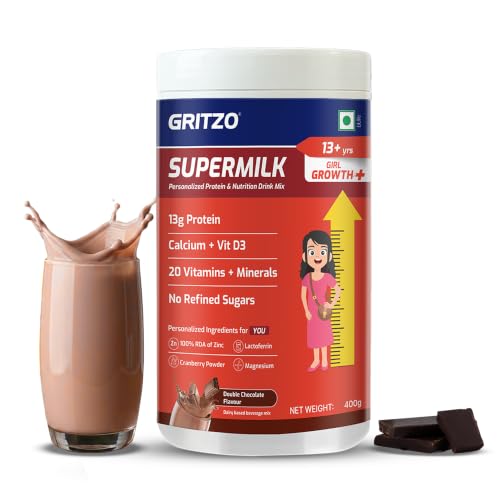
- The Growth+ variant is specially designed for 13+ year-old girls to support healthy growth and development. It provides …
- This variant is thoughtfully formulated for growing girls, it contains electrolytes for hydration and Lactoferrin to hel…
- Each serving also provides 20 essential vitamins and minerals, including Vitamins A, B1, B2, B3, B6, B12, C, E, K, as we…
Myth 5: People Keep Growing Well Into Their Twenties
It is common to hear that someone can naturally grow several inches in their twenties. For most people, this is not how normal growth works. Natural bone lengthening stops when the growth plates close. The exact timing differs between individuals, but most people reach their adult height around the end of puberty.
Rare medical conditions can produce unusual patterns of growth, but these are exceptions.
Practical advice: If an adult product promises dramatic natural height growth after growth plates have closed, approach the claim with caution.
Does Sleep Help Children Grow Taller?
Here is a simple habit that parents sometimes underestimate: Sleep. Sleep is important for children’s normal development. The source explains that human growth hormone is released primarily during deep sleep. This is one reason adequate sleep is important during childhood and adolescence.
The modern problem: Children today may sleep less because of:
- Social media
- Academic pressure
- Early school schedules
- Late-night screen use
The source identifies sleep as one of the environmental factors that can influence growth along with nutrition and physical activity.
Practical advice for parents: Instead of looking for an expensive growth product, start with something simple:
Protect your child’s sleep routine: A consistent bedtime, reduced late-night screen use and adequate age-appropriate sleep can support healthy development.
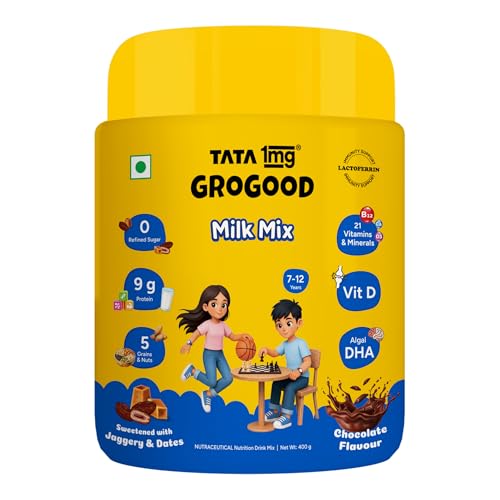
- Supports Growth and Development: Provides protein and essential nutrients required during growing years.
- Helps Support Immunity: Contains Lactoferrin along with key vitamins and minerals that support immune function.
- Supports Brain Development: Enriched with Algal DHA, which plays an important role in cognitive health and learning.
Why Are You Taller in the Morning?
Have you ever noticed that your height seems slightly different at different times of the day?
There is a simple reason. During the day, gravity and normal activity compress the spinal discs. These discs gradually lose some fluid. When you lie down and sleep, the discs rehydrate and the spine regains some of its length.
As a result, the source notes that people can measure approximately 1–2 cm taller in the morning than in the evening. This is not new bone growth. It is a normal daily change in the spine. So, if your height measurement changes slightly during the day, there is no reason to panic.
What Should Children Eat for Healthy Growth?
There is no single “magic food” that makes a child tall. Healthy growth requires a balanced diet that provides enough energy, protein and important nutrients. Protein is particularly important during growing years because the body needs it for muscle and bone development.
Good protein sources include:
Animal-source foods
- Eggs
- Milk
- Yogurt
- Cheese
- Fish
- Poultry
- Meat
Plant-source foods
- Lentils
- Chickpeas
- Beans
- Peas
- Soy
- Nuts
- Grains
The source discusses protein quality, digestibility and amino-acid profiles as important considerations during growth.
Practical advice
Instead of asking: “What one food will make my child taller?”
Ask:
“Does my child eat a varied and balanced diet every day?” That is a much more useful question.
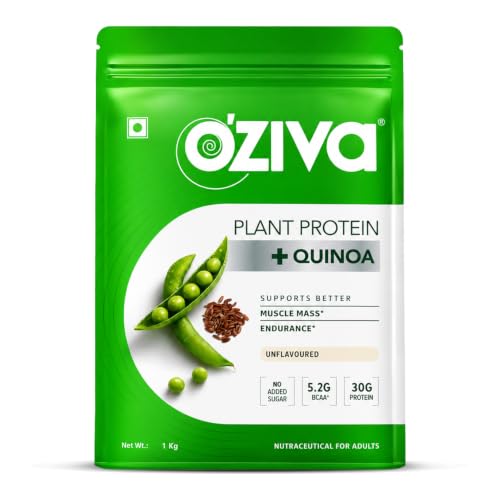
- 30G PLANT PROTEIN PER SERVING FOR EVERYDAY FITNESS: OZiva Plant Protein packs 30g complete plant protein, 5.3 BCAAs prom…
- COMPLETE BCAA PROFILE FOR DAILY PROTEIN REQUIREMENTS: All 9 essential amino acids to help meet the daily protein require…
- FOR ENHANCED IMMUNITY: A plant-based alternative to whey protein. OZiva Plant Protein helps boost immunity and aids in f…
Can Plant-Based Protein Support Healthy Growth?
Yes, plant-based foods can contribute important protein and nutrients to the diet. The key is variety and adequate nutrition. The source explains that combining different plant foods, such as cereals and legumes, can help provide a broader range of essential amino acids.
Examples include:
- Rice + dal
- Roti + dal
- Chickpeas + grains
- Beans + rice
- Soy + grains
The source also discusses studies reporting differences in height and bone density among children following strict vegan diets. However, these findings should not be interpreted as meaning that every plant-based diet causes poor growth.
The quality of the overall diet matters. A carefully planned diet needs adequate calories, protein and essential nutrients.
Calcium, Vitamin D, Zinc and Iron: The Growth Support Team: Growth is not controlled by one nutrient. The body needs many nutrients working together. Important nutritional components include:
Calcium: Important for healthy bones.
Vitamin D: Supports normal calcium-related bone health.
Zinc: Important for normal growth and development.
Iron: Important for many functions involved in healthy development.
Protein: Provides building blocks needed for muscles and other tissues.
Adequate Calories
Children need enough overall energy to support growth and development. The key lesson–More is not always better.
Taking excessive vitamins, minerals or protein powders does not automatically make a healthy child taller. The goal is to correct deficiencies and provide balanced nutrition.
Can Exercise Make You Taller?
Regular physical activity is excellent for children.
It can support:
- Bone strength
- Muscle development
- Fitness
- Flexibility
- Posture
- Overall health
But exercise should not be promoted as a guaranteed method for increasing skeletal height.
Once growth plates have closed, exercise cannot make adult bones longer.
A better goal
Encourage children to enjoy movement. Let them:
- Play outdoors
- Run
- Swim
- Cycle
- Participate in sports
- Perform age-appropriate strength exercises
The aim should be healthy development, not chasing centimetres.
Can Adults Increase Their Height Naturally?
For adults whose growth plates have closed, permanent natural height increase through stretching, yoga or hanging is not supported by the source.
However, adults can improve posture and flexibility.
Someone who normally stands with rounded shoulders or poor spinal alignment may look taller after improving posture.
But that is different from actually lengthening the bones.
Be careful with promises
If a program claims that adults can gain several inches naturally in a short period, ask:
“Is this actual bone growth, or simply posture and temporary spinal changes?”
That one question can help protect you from unrealistic claims.
When Should Parents Talk to a Doctor About Growth?
Parents should not panic simply because their child is shorter than a friend or classmate.
Children grow at different rates.
However, persistent concerns about a child’s growth should not be ignored.
Consider discussing growth with a qualified healthcare professional if you notice:
- Concerns about unusually slow growth
- A child consistently falling behind their expected growth pattern
- Poor nutrition or inadequate weight gain
- Concerns about puberty or development
- Persistent parental concern about growth
Remember: One height measurement tells you very little. Growth over time tells you much more.
A Simple Daily Growth Checklist for Parents
You don’t need an expensive program to support healthy growth.
Every day, try to:
☑ Provide balanced meals
☑ Include good protein sources
☑ Offer calcium-rich foods
☑ Ensure adequate overall nutrition
☑ Encourage regular physical activity
☑ Protect your child’s sleep routine
☑ Limit unnecessary supplement use
☑ Monitor growth over time
☑ Avoid constantly comparing your child with others
This quiz is for logged in users only.

Frequently Asked Questions
Can coffee stop a child from growing?
The source states that there is no scientifically valid evidence that coffee directly stunts growth.
Does weightlifting stunt growth?
Properly designed and supervised resistance training is not inherently a growth-stopping activity. Technique, appropriate loading and supervision are important.
Can hanging make you permanently taller?
No. Hanging may temporarily decompress the spine but does not permanently lengthen adult bones.
Can yoga increase height?
Yoga may improve posture and flexibility, but it cannot lengthen adult bones after growth plates close.
Do height supplements work?
The source does not support OTC supplements as a way to make healthy children significantly taller than their genetic potential.
Does sleep help growth?
Sleep is important for normal development, and growth hormone is primarily released during deep sleep.
What foods support healthy growth?
A varied diet containing adequate protein, calories and important nutrients supports healthy development.
Can adults grow taller naturally?
Once growth plates have closed, natural skeletal height growth is no longer expected.
Final Takeaway: Stop Chasing Inches, Start Supporting Healthy Growth
Every parent wants to see their child healthy, strong and confident.
It is completely natural to worry when your child seems shorter than others. But height should not become a source of constant comparison or anxiety.
There is no magic food, exercise or supplement that can override genetics and guarantee extra height.
What parents can do is much more meaningful.
Provide nutritious food.
Protect sleep.
Encourage physical activity.
Watch your child’s growth pattern.
Address nutritional deficiencies when they exist.
And seek professional advice when there is a genuine concern.
Most importantly, remember this:
Your child’s height is not a measure of their worth. The goal is not to make every child taller. The goal is to give every child the nutrition, sleep, activity and care they need to reach their natural potential.