
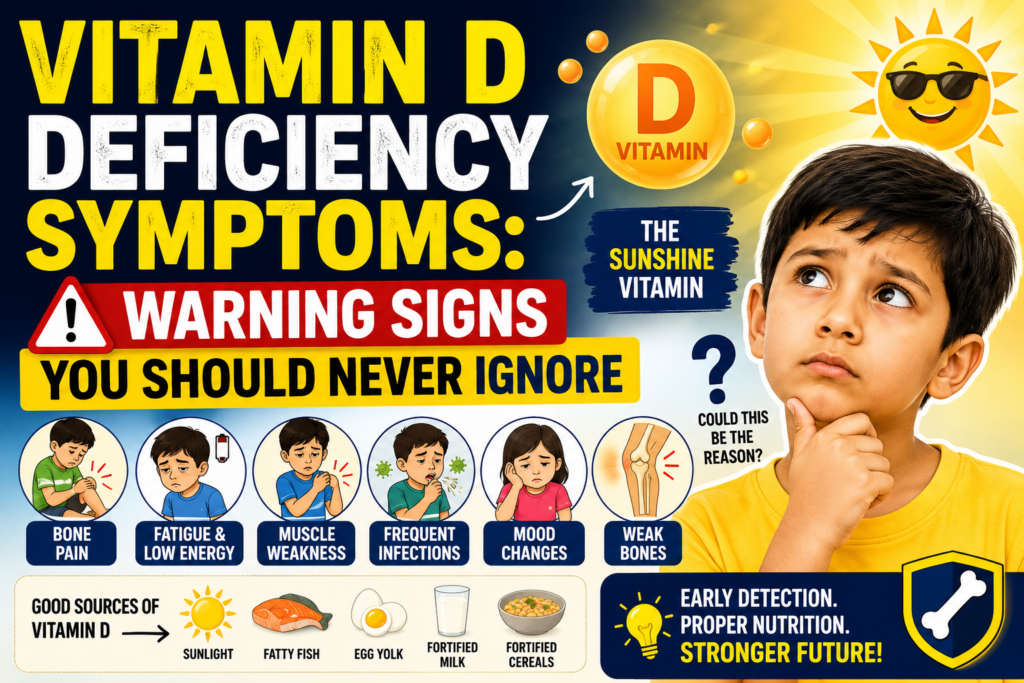
Could Your Constant Tiredness, Body Pain, or Low Mood Be Linked to One Simple Vitamin?
Imagine feeling exhausted even after a full night’s sleep. Your muscles ache, your bones feel weak, and you seem to catch every cold that comes your way. Many people blame stress, aging, or a busy lifestyle. However, there may be another reason hiding in plain sight—Vitamin D deficiency.
Often called the “sunshine vitamin,” Vitamin D is essential for strong bones, healthy muscles, a robust immune system, and overall well-being. Yet millions of people worldwide have low Vitamin D levels without even realizing it.
The tricky part is that Vitamin D deficiency often develops gradually. The symptoms can be subtle at first, making it easy to overlook until health problems become more serious.
In this comprehensive guide, we’ll explore the symptoms of Vitamin D deficiency, its causes, risk factors, health consequences, diagnosis, treatment options, and practical ways to maintain healthy Vitamin D levels.
What Is Vitamin D?
Vitamin D is a fat-soluble vitamin that helps the body absorb calcium and phosphorus, two minerals that are crucial for bone health.
Unlike most vitamins, Vitamin D can be produced naturally when the skin is exposed to sunlight.
It also supports:
- Immune function
- Muscle strength
- Brain health
- Heart health
- Bone growth and maintenance
Without adequate Vitamin D, the body cannot effectively use calcium, leading to various health problems.

Why Is Vitamin D So Important?
Vitamin D affects nearly every system in the body.
Its key functions include:
Maintaining Strong Bones
Vitamin D helps absorb calcium from food and supports bone mineralization.
Supporting the Immune System
Adequate Vitamin D helps the body fight infections.
Improving Muscle Function
Healthy Vitamin D levels contribute to muscle strength and coordination.
Promoting Growth and Development
Children need sufficient Vitamin D for proper growth and bone formation.
Supporting Mental Health
Research suggests Vitamin D may influence mood and cognitive function.

Are you Enjoying Reading this Article:
What Causes Vitamin D Deficiency?
Several factors can contribute to low Vitamin D levels.

Limited Sun Exposure
The body produces Vitamin D when exposed to sunlight.
People who spend most of their time indoors may be at greater risk.
Inadequate Dietary Intake
Few foods naturally contain Vitamin D.
A diet lacking Vitamin D-rich foods can contribute to deficiency.
Darker Skin Tone
Higher melanin levels reduce the skin’s ability to produce Vitamin D from sunlight.
Aging
Older adults produce less Vitamin D through the skin.
Obesity
Vitamin D can become trapped in body fat, reducing its availability in the bloodstream.
Certain Medical Conditions
Conditions affecting nutrient absorption may increase risk.
Examples include:
- Celiac disease
- Crohn’s disease
- Chronic liver disease
- Kidney disorders
Common Symptoms of Vitamin D Deficiency
The symptoms can vary depending on age, severity, and overall health.
1. Persistent Fatigue
One of the most common complaints is ongoing tiredness.
People may experience:
- Low energy
- Lack of motivation
- Daytime sleepiness
- Difficulty completing routine tasks
Even mild deficiency may contribute to fatigue.
2. Bone Pain
Vitamin D helps maintain bone strength.
Deficiency may cause:
- Deep aching pain
- Tender bones
- Discomfort in the lower back
- Pain in the legs
Bone pain often develops gradually.
3. Muscle Weakness
Low Vitamin D levels can affect muscle function.
Symptoms include:
- Reduced strength
- Difficulty climbing stairs
- Trouble standing up
- Frequent fatigue during exercise
Muscle weakness may increase the risk of falls.
4. Frequent Illnesses
Vitamin D plays a vital role in immune defense.
People with deficiency may experience:
- Frequent colds
- Repeated infections
- Slow recovery from illness
A weakened immune system often accompanies low Vitamin D levels.
5. Mood Changes
Some individuals experience:
- Low mood
- Irritability
- Increased stress
- Reduced emotional well-being
Although many factors influence mental health, Vitamin D may play a supportive role.
6. Hair Loss
Severe or prolonged deficiency may contribute to excessive hair shedding.
Hair loss can also result from:
- Stress
- Hormonal changes
- Nutritional deficiencies
Therefore, proper evaluation is important.
7. Slow Wound Healing
Vitamin D contributes to tissue repair and immune function.
Deficiency may lead to:
- Delayed healing
- Increased infection risk
- Poor recovery after injury
8. Joint Pain
Some people develop:
- Stiffness
- Joint discomfort
- Reduced mobility
These symptoms may resemble other conditions.
9. Increased Risk of Fractures
Weak bones are more vulnerable to injury.
Adults may develop:
- Fragile bones
- Stress fractures
- Osteoporosis
10. General Body Aches
Many people with Vitamin D deficiency describe a vague sense of physical discomfort.
Common complaints include:
- Body aches
- Muscle soreness
- Unexplained discomfort
Vitamin D Deficiency Symptoms in Children
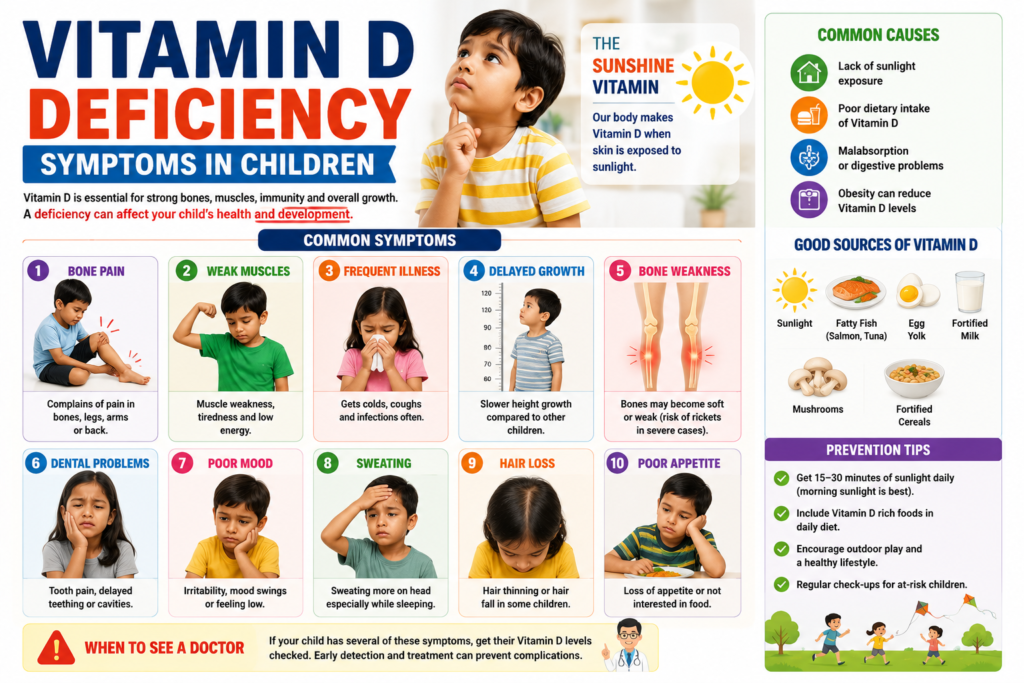
Children require Vitamin D for proper growth and bone development.
Delayed Growth
Children may grow more slowly than expected.
Bone Deformities
Severe deficiency can lead to rickets.
Possible signs include:
- Bowed legs
- Delayed walking
- Soft bones
Frequent Infections
Children with low Vitamin D may become ill more often.
Muscle Weakness
They may tire easily during physical activities.
Delayed Motor Development
Some children experience delays in sitting, crawling, or walking.
Subscribe Our News Letter
Vitamin D Deficiency Symptoms in Adults
Adults often experience symptoms that affect daily life.
Common Symptoms
- Chronic fatigue
- Back pain
- Muscle weakness
- Frequent illness
- Mood disturbances
Many adults remain undiagnosed because symptoms develop gradually.
Long-Term Health Effects of Vitamin D Deficiency
Untreated deficiency can lead to serious complications.
Osteoporosis
Bones become thinner and weaker.
Osteomalacia
Bones soften, causing pain and weakness.
Increased Fall Risk
Muscle weakness increases the likelihood of falls, especially among older adults.
Higher Fracture Risk
Fragile bones break more easily.
Reduced Quality of Life
Persistent symptoms can interfere with work, exercise, and daily activities.
Who Is Most at Risk?
Certain groups face a higher risk of deficiency.
High-Risk Individuals
- Infants
- Older adults
- Pregnant women
- People with darker skin
- Individuals with obesity
- People with digestive disorders
- Those with limited sun exposure
Regular monitoring may be beneficial for these groups.
How Is Vitamin D Deficiency Diagnosed?

The most accurate way to diagnose deficiency is through a blood test.
Healthcare providers may evaluate:
- Vitamin D levels
- Calcium levels
- Phosphorus levels
- Bone health
A medical evaluation helps determine appropriate treatment.
Best Food Sources of Vitamin D
Although sunlight is important, food also contributes.
Natural Sources
- Fatty fish
- Salmon
- Tuna
- Sardines
- Egg yolks
Fortified Foods
Many products are fortified with Vitamin D.
Examples include:
- Milk
- Yogurt
- Breakfast cereals
- Plant-based milk alternatives
Sunlight and Vitamin D
Sun exposure is the primary source of Vitamin D for many people.
Benefits include:
- Natural Vitamin D production
- Improved overall health
- Support for bone strength
The amount of sunlight needed varies depending on:
- Skin tone
- Season
- Geographic location
- Time of day
Avoid excessive sun exposure that may increase skin damage risk.
How Vitamin D Deficiency Is Treated
Treatment depends on severity and individual health needs.
Dietary Improvements
Increasing Vitamin D-rich foods may help.
Supplements
Healthcare providers may recommend Vitamin D supplements.
Dosage depends on:
- Age
- Blood test results
- Medical history
Always follow professional guidance.
Lifestyle Changes
Strategies include:
- Safe sunlight exposure
- Regular physical activity
- Balanced nutrition
How to Prevent Vitamin D Deficiency
Spend Time Outdoors
Regular outdoor activity encourages natural Vitamin D production.
Eat a Balanced Diet
Include:
- Fish
- Eggs
- Fortified foods
Follow Medical Advice
People at higher risk should discuss screening and supplementation with healthcare providers.
Monitor Health Regularly
Routine checkups help identify deficiencies early.
Common Myths About Vitamin D Deficiency
Myth 1: Only Older Adults Develop Vitamin D Deficiency
Reality: People of all ages can be affected.
Myth 2: Living in a Sunny Country Prevents Deficiency
Reality: Many people in sunny regions still have low Vitamin D levels due to indoor lifestyles.
Myth 3: Symptoms Always Appear Immediately
Reality: Deficiency often develops gradually over months or years.
Myth 4: Diet Alone Is Always Enough
Reality: Many individuals require sunlight exposure and, in some cases, supplementation.
Myth 5: More Vitamin D Is Always Better
Reality: Excessive supplementation can be harmful and should only be taken under medical guidance.
Conclusion
Vitamin D deficiency is far more common than many people realize, and its symptoms often develop so gradually that they are mistaken for everyday fatigue, stress, or aging. Persistent tiredness, bone pain, muscle weakness, frequent infections, mood changes, and slow recovery from illness may all signal low Vitamin D levels.
The good news is that Vitamin D deficiency is usually preventable and treatable. A combination of safe sunlight exposure, nutritious food choices, regular health checkups, and appropriate medical guidance can help maintain healthy levels and support overall well-being. Paying attention to early warning signs today can help protect your bones, muscles, immunity, and long-term health in the years ahead.
Frequently Asked Questions (FAQs)
1. What is the most common symptom of Vitamin D deficiency?
Fatigue and low energy are among the most commonly reported symptoms.
2. Can Vitamin D deficiency cause body pain?
Yes. Many people experience bone pain, muscle aches, and general discomfort.
3. How can I know if I have Vitamin D deficiency?
A blood test is the most reliable way to diagnose deficiency.
4. Can children develop Vitamin D deficiency?
Yes. Children can develop deficiency, especially if they have limited sun exposure or inadequate dietary intake.
5. Which foods contain Vitamin D?
Fatty fish, egg yolks, and fortified dairy products are among the best sources.
6. Can Vitamin D deficiency affect mood?
Some studies suggest low Vitamin D levels may be associated with mood changes and emotional well-being.
7. How much sunlight is needed for Vitamin D production?
The amount varies based on skin tone, location, season, and lifestyle.
8. Can Vitamin D deficiency weaken bones?
Yes. It can lead to soft, weak bones and increase fracture risk.
9. Are Vitamin D supplements safe?
They are generally safe when used according to healthcare professional recommendations.
10. Can Vitamin D deficiency be prevented?
Yes. Safe sunlight exposure, a healthy diet, and medical guidance can help maintain healthy Vitamin D levels.
