
Introduction
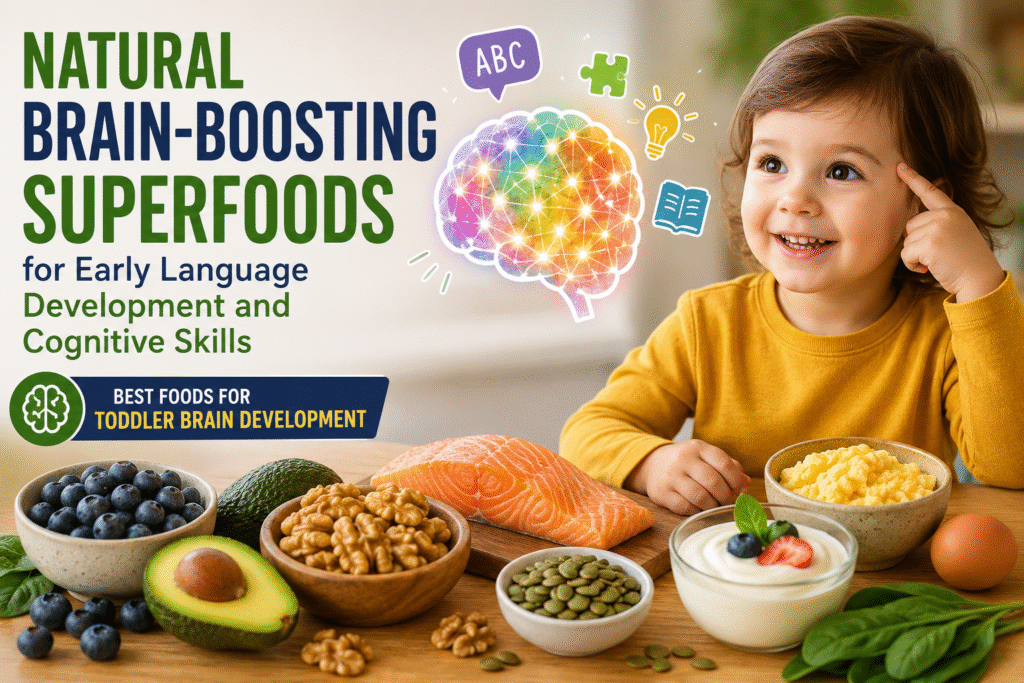
Early childhood nutrition directly shapes cognitive performance and speech development. Therefore, parents should focus on nutrient-dense foods instead of empty calories. The right superfoods strengthen memory, improve concentration, and support faster language acquisition. Moreover, healthy nutrition enhances neural connectivity during critical growth stages.
Why Nutrition Matters for Toddler Brain Development
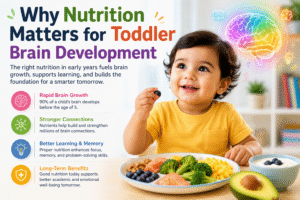
A toddler’s brain develops rapidly during the first five years. Consequently, nutritional deficiencies may affect speech, learning, and emotional regulation. Healthy fats, antioxidants, vitamins, and minerals play essential roles in neural communication.
Furthermore, balanced nutrition supports synaptic pruning. This process strengthens important brain connections while removing weaker ones. As a result, toddlers develop sharper thinking and better language comprehension.
Best Food for Toddler Brain Development
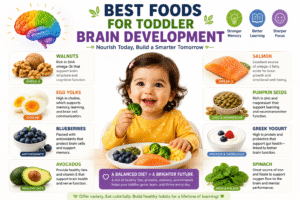
Walnuts for Omega-3 Brain Support
Walnuts contain DHA-supportive omega-3 fatty acids. These healthy fats improve neural flexibility and memory retention. Additionally, walnuts help enhance concentration and cognitive speed.
Parents can crush walnuts into oatmeal or smoothies for easy consumption.
Egg Yolks for Choline and Memory
Egg yolks provide choline, which supports neurotransmitter production. Consequently, toddlers develop stronger memory formation and faster language processing.
Moreover, eggs contain protein that supports overall brain growth.
Blueberries for Antioxidant Protection
Blueberries protect brain cells from oxidative stress. In addition, antioxidants improve communication between neurons and support long-term cognitive health.
Toddlers enjoy blueberries in yogurt, pancakes, or smoothies.
Salmon for Cognitive Function
Salmon delivers omega-3 fatty acids essential for brain structure. Therefore, regular consumption supports emotional regulation and verbal learning.
Furthermore, salmon helps improve attention span in growing children.
Avocados for Healthy Brain Fats
Avocados contain monounsaturated fats that improve blood circulation to the brain. As a result, toddlers experience better focus and mental clarity.
They also provide vitamin E, which protects brain tissue.
Pumpkin Seeds for Zinc and Magnesium
Pumpkin seeds support neurotransmitter activity and cognitive stability. Additionally, zinc helps strengthen memory and learning abilities.
Magnesium also promotes calm behavior and healthy sleep patterns.
Greek Yogurt for Brain and Gut Health
Greek yogurt supplies protein and probiotics. Therefore, it supports gut health, which directly influences brain function through the gut-brain connection.
Healthy digestion also improves nutrient absorption.
Spinach for Iron and Folate
Iron deficiency often affects concentration and speech development. However, spinach provides iron and folate that support oxygen transport to the brain.
As a result, toddlers maintain better energy and learning capacity.
Superfoods That Improve Speech and Language Skills
Speech development depends heavily on neural communication. Therefore, nutrients like omega-3 fatty acids and choline become essential.
Iron-rich foods improve auditory processing and attention. Meanwhile, antioxidants protect neurons involved in language comprehension. Consistent intake of these nutrients accelerates vocabulary growth and verbal clarity.
Additionally, parents should encourage interactive conversations during meals. This habit stimulates language pathways naturally.
Daily Toddler Meal Ideas for Brain Health
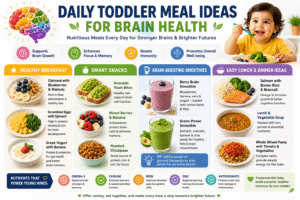
Healthy Breakfast
- Scrambled eggs with spinach
- Oatmeal topped with walnuts and blueberries
- Greek yogurt with banana slices
Nutritious Snacks
- Avocado toast bites
- Fruit smoothies with flaxseeds
- Homemade yogurt popsicles
Brain-Boosting Lunch
- Salmon rice bowls
- Whole-grain sandwiches with egg filling
- Vegetable soup with pumpkin seeds
Healthy Dinner
- Lentils with spinach
- Grilled salmon with sweet potatoes
- Brown rice with mixed vegetables
Nutrients Essential for Cognitive Development
[smartslider3 slider=”4″]
DHA and Omega-3 Fatty Acids
These nutrients strengthen brain cell membranes and improve learning ability.
Choline
Choline supports memory, attention, and language processing.
Iron
Iron enhances oxygen delivery to brain tissue. Consequently, toddlers maintain better concentration.
Zinc
Zinc supports neurotransmitter communication and cognitive stability.
Antioxidants
Antioxidants reduce inflammation and protect developing brain cells.
Foods to Avoid for Better Cognitive Function
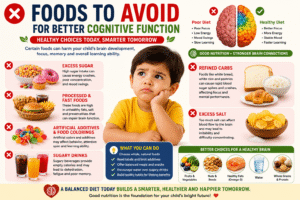
Certain foods negatively affect toddler behavior and learning capacity. Therefore, parents should limit:
- Sugary beverages
- Processed snacks
- Artificial food colorings
- Excess fast food
- Refined sugar products
These foods often contribute to mood swings and poor concentration.
Parenting Tips to Support Brain Development Naturally
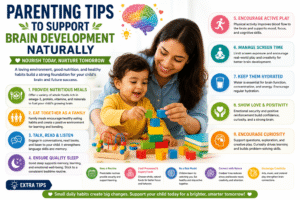
Consistent meal timing improves nutrient absorption and energy balance. Additionally, toddlers benefit from family meals and positive food environments.
Parents should also:
- Encourage hydration daily
- Reduce screen-time during meals
- Introduce colorful whole foods
- Maintain healthy sleep routines
Healthy habits support both emotional and cognitive growth.
Conclusion
Natural brain-boosting superfoods play a powerful role in toddler development. Nutrient-rich foods strengthen memory, sharpen language skills, and improve concentration. Therefore, parents should prioritize omega-3 fats, antioxidants, iron, and choline-rich meals daily.
Early nutritional choices influence long-term academic performance and emotional well-being. Consequently, healthy eating habits during childhood create a strong foundation for lifelong cognitive success.
Also Read:
[smartslider3 slider=”21″]