
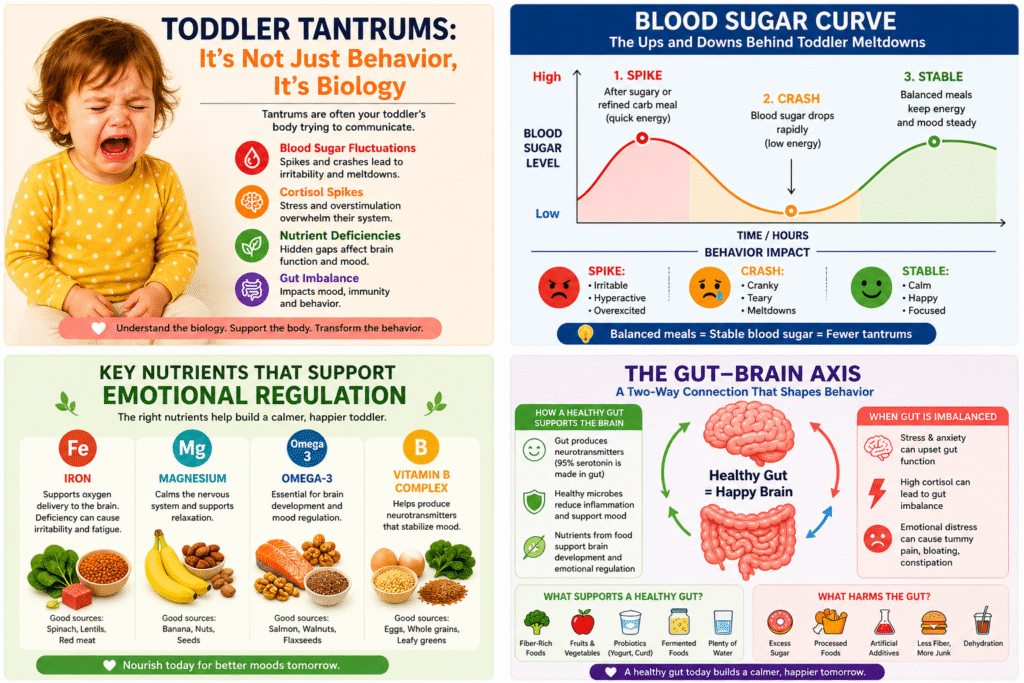
Introduction: It’s Not Just “Bad Behavior”
Every parent has faced it—the sudden screaming, crying, or emotional outburst that seems to come out of nowhere. Traditionally, toddler tantrums are seen as behavioral problems or discipline issues. But what if that assumption is incomplete?
What if your toddler’s meltdown is not defiance—but a biological response?
Emerging insights from neuroscience and pediatric nutrition suggest that tantrums are often deeply rooted in physiological imbalances, including blood sugar fluctuations, stress hormone spikes, and hidden micronutrient deficiencies. Instead of reacting with frustration, understanding these internal triggers allows parents to respond with informed, effective care.
This article decodes toddler tantrums through a nutritional and physiological lens, helping you transform chaotic moments into manageable, preventable patterns.

The Science Behind Toddler Tantrums
Why do toddlers have sudden meltdowns?
A toddler’s brain is still under construction. The prefrontal cortex, responsible for impulse control and decision-making, is immature. Meanwhile, the limbic system—the emotional center—is highly active.
This imbalance means:
- Emotions are intense
- Self-control is limited
- Reactions are immediate
Now combine this with physiological stressors like hunger or fatigue, and you have the perfect storm for a meltdown.
👉 In simple terms: Your toddler feels everything strongly but lacks the brain capacity to regulate it.
Blood Sugar Crashes: The Silent Trigger Behind Tantrums
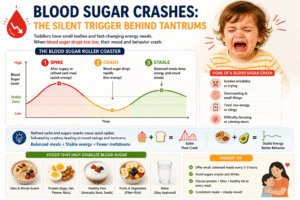
How blood sugar affects toddler behavior
The brain relies heavily on glucose for energy. Toddlers, with their high metabolic rate, experience fluctuations in blood sugar more rapidly than adults.
When a toddler consumes:
- Sugary snacks
- Refined carbohydrates (biscuits, white bread)
…it leads to:
- A rapid spike in blood sugar
- Followed by a sudden crash
www.youtube.com/@healthlivehub?sub_confirmation=1
Signs of a blood sugar crash in toddlers:
- Sudden irritability
- Crying without clear reason
- Aggressive or clingy behavior
- Fatigue or hyperactivity
These crashes directly impact mood regulation, often triggering tantrums.
👉 Key insight: Many “random tantrums” are actually energy regulation failures in the brain.
Cortisol Spikes and the Toddler Stress Response
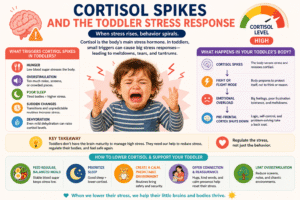
What is cortisol and why does it matter?
Cortisol is the body’s primary stress hormone. In toddlers, even small disruptions can trigger a cortisol surge:
- Hunger
- Sleep deprivation
- Overstimulation (noise, screens, crowds)
When cortisol rises:
- The body enters fight-or-flight mode
- Emotional reactivity increases
- Logical processing decreases
This is why a tired or hungry toddler reacts disproportionately to minor situations.
👉 A tantrum is often a stress response—not a behavioral choice.
Hidden Micronutrient Deficiencies and Emotional Regulation
Can nutrition affect toddler mood swings? Absolutely.
Many toddlers suffer from subtle nutrient deficiencies that are rarely detected but significantly impact behavior.
Key nutrients linked to emotional stability:
1. Iron
- Essential for oxygen delivery to the brain
- Deficiency may cause irritability, fatigue, and poor attention
2. Magnesium
- Helps regulate the nervous system
- Low levels may lead to increased emotional reactivity
3. Omega-3 Fatty Acids
- Critical for brain development
- Supports mood regulation and cognitive function
4. Vitamin B Complex
- Involved in neurotransmitter production
- Deficiency may lead to mood swings and low energy
👉 These deficiencies don’t just affect physical health—they influence how a child feels and reacts.
[smartslider3 slider=”4″]
Gut-Brain Axis: The Overlooked Factor in Toddler Behavior
How gut health influences mood
The gut is often called the “second brain” because it produces many neurotransmitters, including serotonin.
A diet high in:
- Sugar
- Processed foods
- Artificial additives
…can disrupt the gut microbiome, leading to:
- Mood instability
- Increased irritability
- Poor stress response
👉 A healthy gut supports a stable, calmer child.
Also Read: Gut Health Takes Center Stage to your mental health
Common Foods That Trigger Toddler Tantrums
Some foods can unknowingly worsen emotional instability:
Foods to limit:
- Sugary snacks (candies, chocolates)
- Packaged foods with additives
- Sweetened beverages
- Refined flour products
These cause rapid energy spikes followed by crashes.
Nutritional Strategies to Reduce Toddler Tantrums
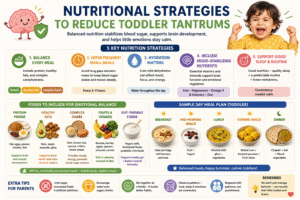
1. Balance Every Meal
Combine:
- Protein (dal, eggs, paneer)
- Healthy fats (ghee, nuts)
- Complex carbs (whole grains, fruits)
2. Offer Frequent Small Meals
Avoid long gaps between meals to maintain stable blood sugar.
3. Hydration Matters
Even mild dehydration can affect mood.
4. Include Mood-Stabilizing Foods
- Bananas (natural energy + magnesium)
- Yogurt (gut health)
- Nuts and seeds (healthy fats)
- Green vegetables (micronutrients)
Sample Toddler Meal Plan:
- Breakfast: Oats with banana and nuts
- Snack: Fruit + yogurt
- Lunch: Khichdi with ghee
- Evening: Boiled corn or peanuts
- Dinner: Chapati with dal and vegetables
👉 These strategies stabilize the internal environment, reducing tantrum triggers.
Daily Routine for Emotional Stability
Consistency plays a key role in reducing physiological stress.
Build a stable routine:
- Fixed meal timings
- Regular sleep schedule
- Limited screen exposure
- Calm, predictable environment
👉Toddlers thrive on routine and predictability.
When to Look Beyond Nutrition
While nutrition plays a major role, some situations require medical attention.
Consult a pediatrician if:
- Tantrums are extremely frequent or severe
- There are developmental delays
- Sleep disturbances are persistent
- The child shows signs of chronic fatigue or poor growth
Conclusion: Reframing Tantrums as Biological Signals
Toddler tantrums are not just emotional outbursts—they are often biological messages.
Instead of asking: “Why is my child behaving like this?”
Start asking: “What is my child’s body trying to communicate?”
By addressing:
- Blood sugar stability
- Nutritional balance
- Stress regulation
…you shift from discipline to support-based parenting.
Because when the body is balanced, behavior naturally follows.
Frequently Asked Questions (FAQs)
1. What causes toddler tantrums biologically?
Toddler tantrums can be triggered by blood sugar fluctuations, cortisol spikes, immature brain development, and nutrient deficiencies. These factors disrupt emotional regulation, leading to sudden outbursts.
2. Can low blood sugar cause tantrums in toddlers?
Yes. Low blood sugar can lead to irritability, crying, aggression, and mood swings. Toddlers are especially sensitive to glucose fluctuations due to their high energy needs.
3. What foods help reduce toddler tantrums?
Balanced meals with protein, healthy fats, and complex carbohydrates help stabilize blood sugar. Foods like bananas, yogurt, nuts, dal, and whole grains are beneficial.
4. How does sleep affect toddler behavior?
Poor sleep increases cortisol levels, making toddlers more emotionally reactive and prone to tantrums. Consistent sleep routines are essential.
5. Can nutrient deficiencies affect a child’s mood?
Yes. Deficiencies in iron, magnesium, omega-3 fatty acids, and B vitamins can impact brain function and emotional stability.
6. How can I calm toddler tantrums naturally?
Ensure regular meals, proper hydration, adequate sleep, and a calm environment. Addressing physiological needs often reduces the intensity and frequency of tantrums.
7. Are tantrums normal in toddlers?
Yes, tantrums are a normal part of development due to immature emotional regulation. However, their frequency and intensity can be influenced by physiological factors.
[smartslider3 slider=”17″]