

Introduction
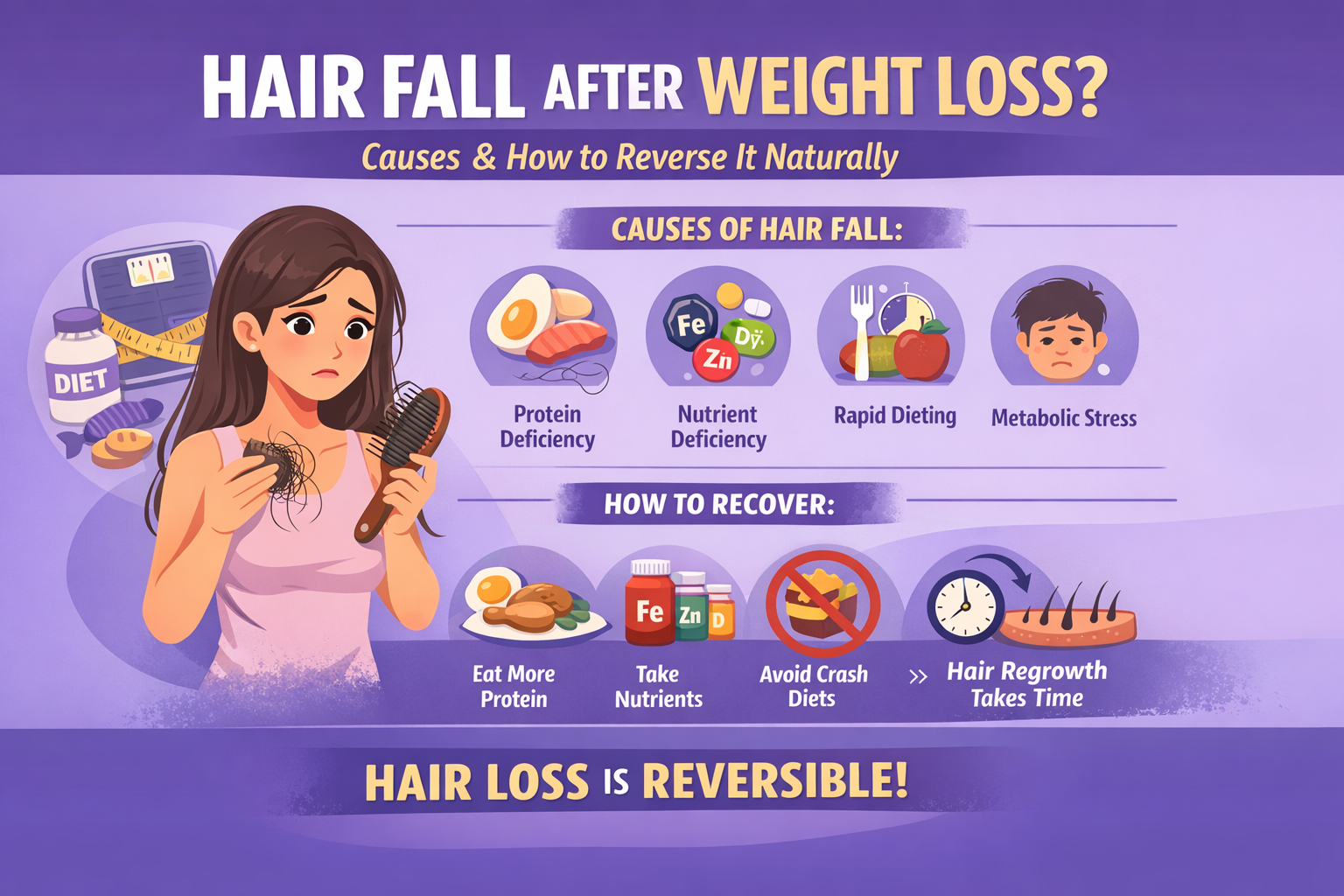
Hair fall after rapid weight loss can feel alarming, but in most cases, it’s a temporary biological adjustment rather than permanent damage.
If you’ve recently gone through a crash diet or rapid fat loss journey, your body may respond with increased hair shedding.
The reassuring part- This type of hair fall is completely reversible once your body regains nutritional and metabolic balance. To get better understanding we first have to know about growth cycle of hair as it is influenced by nutrition.
Understanding the Hair Growth Cycle
To understand why hair fall occurs, it’s essential to know the hair growth cycle, which consists of four natural phases:
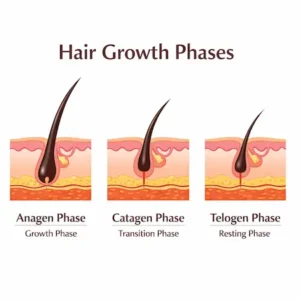
- Anagen (Growth Phase)
- Lasts 2–9 years
- Active hair growth phase
- Catagen (Transition Phase)
- Lasts 2–3 weeks
- Hair stops growing and detaches from blood supply
- Telogen (Resting Phase)
- Lasts 2–3 months
- Hair remains dormant
- Exogen (Shedding Phase)
- Hair falls out naturally
Normally, only 5–10% of hair is in the telogen phase
Daily hair fall of 100–150 strands is considered normal
Why Hair Fall Increases After Weight Loss
Rapid weight loss or crash dieting puts the body under metabolic stress, disrupting the natural hair cycle.
Main Causes of Hair Fall After Weight Loss
-
Protein Deficiency
Hair is made of keratin, a protein-derived structure.
- Crash diets often lack sufficient protein
- Body prioritizes essential organs over hair growth
- Hair follicles enter resting phase prematurely.
-
Micronutrient Deficiencies
Rapid weight loss can lead to deficiencies in:
- Iron
- Zinc
- Biotin
- Folic acid
- Vitamin D
These nutrients are essential for:
- Hair follicle nourishment
- Hair strength and growth
- Preventing excessive shedding
3. Rapid Calorie Restriction
- Sudden drop in calorie intake forces the body into energy conservation mode
- Hair growth becomes a non-essential function
- More hair enters the telogen phase → leading to diffuse hair loss.
What Is Telogen Effluvium?
Telogen Effluvium is a temporary hair loss condition characterized by:
- Diffuse hair shedding across the scalp
- Triggered by physical or metabolic stress
- Begins 2–3 months after the trigger
- Completely reversible with proper care.
Up to 30% of hair shifts into the telogen phase ( resting phase).
Hair fall may increase to around 300 strands per day
Shedding typically begins 2–3 months after dieting
This condition is medically known as Telogen Effluvium, a temporary form of hair loss.
Telogen Effluvium vs Androgenic Alopecia
| Feature | Telogen Effluvium | Androgenic Alopecia |
| Cause | Stress, diet, deficiencies | Hormonal, genetic, insulin resistance |
| Pattern | Diffuse hair fall | Frontal thinning, pattern baldness |
| Duration | Temporary | Progressive |
| Reversibility | Yes | Partial |
How to Recover from Hair Fall After Weight Loss
Recovery is possible with the right approach and consistency.
- Increase Protein Intake
Include:
- Eggs
- Paneer
- Lentils
- Chicken
- Fish
Ensure adequate daily protein intake to support keratin production.
- Correct Nutrient Deficiencies
Focus on:
- Iron
- Zinc
- Vitamin D
- Biotin
- Folic acid
Supplements may help if dietary intake is insufficient (consult a doctor).
- Avoid Crash Dieting
- Choose gradual and sustainable weight loss
- Maintain a balanced, nutrient-rich diet
- Avoid extreme calorie restriction
- Be Patient
- Hair regrowth takes time
- The hair cycle gradually normalizes
- Shedding reduces over weeks to months
Final Thoughts
Hair fall after weight loss can be distressing, but it is usually temporary and reversible.
It is simply your body’s response to nutritional deficiency and metabolic stress—not permanent damage.
With proper nutrition, a balanced diet, and patience, your hair will return to its natural growth cycle.
FAQs
- Is hair fall after weight loss permanent?
No, it is usually temporary and resolves once nutritional balance is restored.
- How long does hair fall last after a crash diet?
Hair fall typically lasts 2–3 months, while full recovery may take 3–6 months.
- How much hair fall is normal during telogen effluvium?
Up to 300 strands per day can fall during this phase.
- Can protein deficiency cause hair fall?
Yes, low protein intake reduces keratin production, leading to increased hair shedding.
- Which vitamins help reduce hair fall?
Important nutrients include:
- Biotin
- Iron
- Zinc
- Vitamin D
- Folic acid
- Should I stop my weight loss journey if I have hair fall?
No. Instead, avoid crash dieting and switch to a balanced, sustainable weight loss plan.



Very informative