
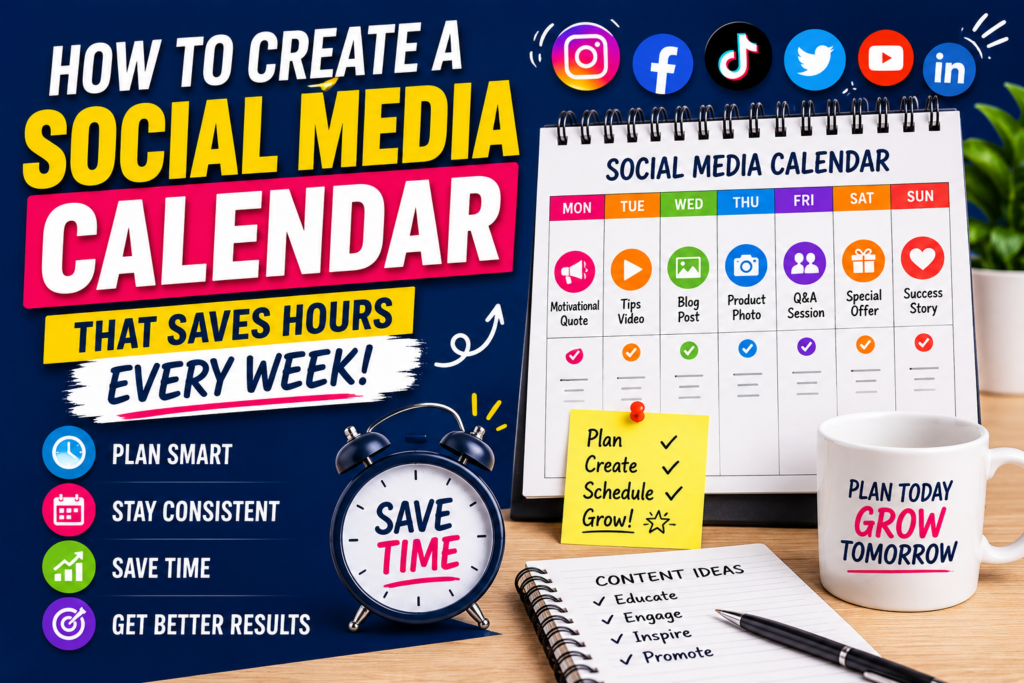
The Secret Behind Consistent Social Media Success
Have you ever wondered why some brands always seem active on social media? Their posts appear on time, their content feels organized, and their audience stays engaged. Surprisingly, the secret is not working harder. Instead, it is having a well-planned social media calendar.
Many creators and businesses struggle with last-minute posting. As a result, they miss opportunities, forget important dates, and lose audience engagement. However, a social media calendar solves these problems.
A social media calendar helps you organize, schedule, and manage content in advance. Consequently, you save time, reduce stress, and create a stronger online presence.
In this guide, you will learn how to create a social media calendar that keeps your content organized and your audience interested.
What Is a Social Media Calendar?
A social media calendar is a planning tool that outlines what content you will publish and when you will publish it.
It includes:
- Post dates
- Content topics
- Captions
- Images or videos
- Hashtags
- Publishing platforms
- Campaign schedules
Therefore, instead of thinking about content every day, you can plan weeks or even months ahead.
Why Every Content Creator Needs a Social Media Calendar
Without a calendar, content creation becomes chaotic. On the other hand, a structured plan offers several benefits.
Improves Consistency
Consistency builds trust. When followers see regular updates, they remain connected to your brand.
Saves Valuable Time
Planning content in batches reduces daily workload. As a result, you spend less time worrying about what to post.
Reduces Stress
No more scrambling for content ideas at the last minute. Everything is already prepared.
Supports Marketing Goals
A calendar aligns your content with promotions, launches, and seasonal campaigns.
Boosts Engagement
Well-planned content reaches the audience at the right time. Consequently, engagement rates often improve.
Step 1: Define Your Social Media Goals
Before creating content, identify your objectives.
Ask yourself:
- Do you want more followers?
- Are you looking for website traffic?
- Do you want more sales?
- Are you building brand awareness?
- Do you want higher engagement?
Your goals will determine the type of content you create.
For example, a business seeking sales may focus on product demonstrations. Meanwhile, a blogger may prioritize educational content.
Step 2: Understand Your Target Audience
A social media calendar works only when content matches audience interests.
Research:
- Age group
- Gender
- Location
- Interests
- Online behavior
- Preferred platforms
Additionally, study your existing analytics.
Look at which posts receive the most likes, comments, shares, and saves. Then create similar content more often.
Step 3: Choose Your Content Pillars
Content pillars are the main themes you regularly discuss.
Most successful brands use 3 to 5 content pillars.
Examples include:
Educational Content
Tips, tutorials, and how-to guides.
Entertainment Content
Memes, quizzes, challenges, and fun videos.
Promotional Content
Product launches, discounts, and offers.
Behind-the-Scenes Content
Daily operations, team activities, and work culture.
User-Generated Content
Customer reviews, testimonials, and success stories.
These pillars make content planning much easier.
Step 4: Select the Right Platforms
Not every platform suits every business.
Choose platforms based on your audience.
Best for photos, reels, stories, and lifestyle content.
Ideal for community building and local businesses.
Perfect for professional networking and B2B marketing.
X (Twitter)
Suitable for quick updates and trending discussions.
YouTube
Excellent for long-form educational and entertainment videos.
Focus on quality rather than trying to dominate every platform.
Are You Enjoying reading this Article
Step 5: Create a Monthly Content Plan
Start by viewing the entire month.
Mark important dates such as:
- Holidays
- Festivals
- Industry events
- Product launches
- Awareness days
- Special campaigns
After that, distribute content around these events.
This approach ensures relevant and timely posts.
Step 6: Use the 80/20 Content Rule
Many brands make the mistake of selling constantly.
Instead, follow the 80/20 rule.
- 80% valuable content
- 20% promotional content
As a result, your audience stays engaged without feeling overwhelmed by advertisements.
Step 7: Build Your Calendar Structure
Create columns for:
| Date | Platform | Content Type | Topic | Caption | Status |
|---|---|---|---|---|---|
| July 1 | Reel | Productivity Tips | Draft Ready | Scheduled | |
| July 2 | Image Post | Customer Story | Approved | Scheduled |
You can create this calendar using:
- Google Sheets
- Microsoft Excel
- Notion
- Trello
- Asana
- Airtable
Choose the tool that matches your workflow.
Step 8: Plan Content in Batches
Batch creation is a game changer.
Instead of creating one post daily, create multiple posts together.
For example:
- Monday: Content research
- Tuesday: Writing captions
- Wednesday: Graphic design
- Thursday: Video editing
- Friday: Scheduling
Consequently, productivity improves significantly.
Step 9: Schedule Posts in Advance
Scheduling tools automate publishing.
Popular tools include:
- Meta Business Suite
- Buffer
- Hootsuite
- Later
- SocialBee
Once scheduled, your content goes live automatically.
Therefore, you remain consistent even during busy periods.
Step 10: Track Performance and Adjust
A calendar should never remain static.
Review analytics regularly.
Monitor:
- Reach
- Impressions
- Engagement rate
- Click-through rate
- Follower growth
- Shares and saves
Then refine your strategy based on actual performance.
What works should be repeated. What fails should be improved or removed.
Common Mistakes to Avoid
Posting Without Strategy
Random posting rarely produces long-term results.
Ignoring Analytics
Data reveals what your audience truly wants.
Over-Promoting Products
Too much promotion reduces audience interest.
Not Planning Ahead
Last-minute content often lacks quality.
Skipping Seasonal Opportunities
Trending events can increase visibility significantly.
Best Practices for an Effective Social Media Calendar
- Plan content at least one month ahead.
- Leave space for trending topics.
- Maintain a consistent brand voice.
- Use a mix of content formats.
- Include calls to action.
- Repurpose top-performing content.
- Review results every week.
These practices help maximize content performance.
Join Our Weekly NewsLetter
Final Thoughts
A social media calendar transforms content creation from stressful to strategic. Instead of guessing what to post each day, you follow a clear roadmap. Moreover, planning ahead improves consistency, engagement, and productivity.
The most successful creators do not rely on inspiration alone. They rely on preparation. Therefore, start building your social media calendar today. Once you develop the habit, managing social media becomes faster, easier, and far more effective.
Frequently Asked Questions (FAQs)
1. What is the main purpose of a social media calendar?
A social media calendar helps organize and schedule content in advance.
2. How far ahead should I plan content?
Most marketers plan content one month ahead.
3. Can small businesses benefit from a social media calendar?
Yes, it saves time and improves consistency.
4. Which tool is best for creating a social media calendar?
Google Sheets, Notion, and Trello are popular options.
5. How often should I post on social media?
Posting frequency depends on your platform and audience.
6. Should I schedule all content in advance?
Most content should be scheduled, but leave room for trends.
7. What are content pillars?
Content pillars are the main topics your brand consistently covers.
8. How do I find content ideas?
Use audience feedback, analytics, trends, and industry news.
9. How often should I review my calendar?
Weekly reviews help keep content relevant and effective.
10. Does a social media calendar improve engagement?
Yes, consistent and strategic posting often increases engagement.
More to Read:
10 Social Media Trends That Will Dominate 2026: What Every Creator Must Know