
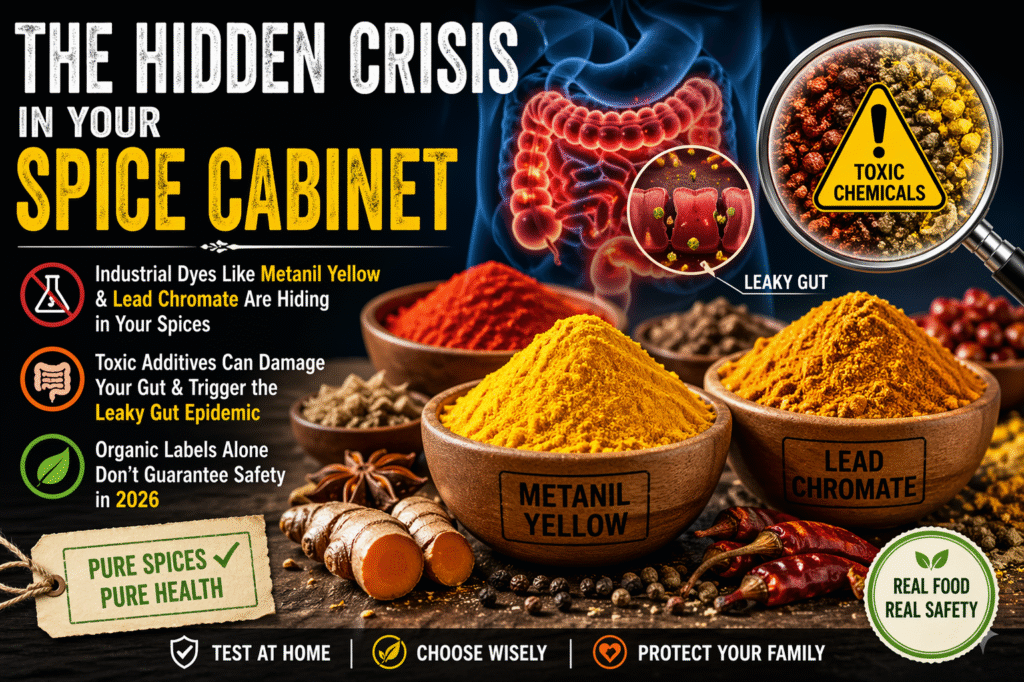
Introduction: Your Spice Box May Not Be Safe Anymore
Spices are more than flavor enhancers—they are powerful medicinal ingredients that once shaped global trade routes. But today, in 2026, your spice cabinet may be hiding a silent health threat.

According to recent insights and traditional observations, adulterated spices can harm health gradually and even become fatal over time . What looks vibrant and appealing may actually be laced with industrial chemicals like Metanil Yellow and Lead Chromate.

Why Spice Adulteration Is Increasing
The global spice industry is under pressure from rising demand, climate stress, and cost competition. This has led to increased use of artificial enhancers to improve color and weight.
Key Drivers:
- High demand for visually “perfect” spices
- Cheap industrial dyes replacing natural quality
- Weak supply chain monitoring
- Consumer bias toward brighter colors
These practices allow low-quality or spoiled spices to be “revived” artificially—putting consumers at risk.
[smartslider3 slider=”5″]
The Hidden Health Risks of Adulterated Spices
Daily consumption of adulterated spices introduces toxic chemicals into the body. Over time, these toxins accumulate and trigger multiple health issues.


Major Health Effects:
- Chronic inflammation
- Hormonal imbalance
- Liver and kidney stress
- Increased toxin load in the body
[smartslider3 slider=”9″]
The Link to Leaky Gut
One of the most concerning outcomes is Leaky Gut Syndrome.

Toxic additives can:
- Damage intestinal lining
- Disrupt gut microbiota
- Increase permeability of the gut wall
This allows harmful substances to enter the bloodstream, contributing to:
- Autoimmune disorders
- Skin conditions
- Fatigue and brain fog
How to Test Spice Purity at Home (Simple Kitchen Methods)

1. Red Chili Powder Test
- Add to water
- Pure: floats briefly, then settles
- Adulterated: sinks immediately
 2. Turmeric Powder Test
- Add to water
- Pure: floats and releases light yellow color
- Fake: sinks quickly or releases intense artificial color
 3. Cumin Seeds (Jeera)
- Rub between palms
- Pure: no residue
- Adulterated: leaves black dust/stains

4. Black Pepper Test
- Put in water
- Pure: sinks
- Fake (papaya seeds): floats

5. Asafoetida (Hing)
- Try burning a small piece
- Pure: burns easily
- Adulterated: does not ignite
These traditional methods remain highly practical and effective for everyday households .
Why “Organic” Labels Are Not Enough


Many consumers assume “organic” equals safe—but this is not always true.
The Reality:
- Adulteration can occur after certification
- Fake labeling is increasing
- Not all batches are tested for toxins
[smartslider3 slider=”15″]
What to Do Instead:
- Choose whole spices over powders
- Buy from trusted and transparent brands
- Look for third-party lab testing
- Avoid unnaturally bright colors
Detoxification: Why Your Body Needs Support
Given constant exposure to toxins—from food, environment, and lifestyle—detoxification becomes essential.
The Role of Panchakarma
Panchakarma is a traditional Ayurvedic method designed to eliminate toxins and restore balance.
Benefits:
- Removes accumulated toxins
- Supports gut healing
- Enhances natural immunity
- Helps in chronic disease recovery
The source suggests periodic detox (every 6 months) to counter continuous toxin exposure .
Additionally, modern healthcare systems are increasingly recognizing its benefits, with wider accessibility in specialized centers.
10 Best Panchkarma retreat in India
How to Choose Safe, High-Quality Spices

To protect your health:
- Buy from reliable sources
- Avoid extremely cheap products
- Prefer whole spices and grind at home
- Perform quick home purity tests
- Stay informed about food safety
Remember: your daily diet is your long-term medicine—or your slow poison.
Conclusion: A Crisis Hidden in Plain Sight
The spices you trust for healing and flavor may now be contributing to silent health damage. From industrial dyes to gut disruption, the risks are real—and rising.
But awareness is your strongest defense.
By combining traditional knowledge, smart buying habits, and simple home tests, you can safeguard your kitchen—and your health—in 2026.
FAQs
1. How do I know if my turmeric is adulterated?
If it sinks quickly in water or releases a very bright yellow color, it may contain artificial dyes.
2. Can adulterated spices cause serious diseases?
Yes, long-term consumption can contribute to inflammation, toxin buildup, and gut disorders.
3. Is organic spice always safe?
Not always. Adulteration can occur even after certification.
4. What is the safest way to consume spices?
Use whole spices, grind them fresh, and test purity at home.
[smartslider3 slider=”16″]