
Obesity-A Hormonal and Neurometabolic Crisis: HealthLiveHub
For many years, obesity was viewed simply as a result of overeating and lack of physical activity. However, modern medical science now recognizes obesity as a complex metabolic, hormonal, and neurometabolic condition rather than merely a lifestyle issue.
Obesity involves intricate interactions between the brain, hormones, metabolism, and body fat tissues. The body’s hormonal system that regulates hunger, satiety, metabolism, and stress often becomes dysregulated, making weight management far more complicated than “eat less and move more.”
Understanding the hormonal and metabolic basis of obesity is crucial for developing effective strategies to manage and prevent this growing global health challenge.
Obesity: More Than Just Excess Fat
Obesity is defined as an abnormal or excessive accumulation of body fat that may impair health. According to global health research, obesity significantly increases the risk of:
- Type 2 diabetes
- Cardiovascular diseases
- Hypertension
- Fatty liver disease
- Hormonal imbalance
- Certain cancers
However, the most critical scientific discovery in recent decades is that body fat is not just passive storage tissue. It is biologically active.
Body Fat as an Endocrine Organ
Adipose tissue (body fat) functions as an endocrine organ. This means it actively produces and releases hormones and signaling molecules known as adipokines.
These hormones influence:
- Appetite and satiety
- Insulin sensitivity
- Inflammation
- Metabolic rate
- Energy balance
When excess fat accumulates, these hormones become dysregulated, triggering metabolic disturbances and chronic inflammation.
Some key adipose-derived hormones include:
- Leptin
- Adiponectin
- Resistin
- Inflammatory cytokines
The imbalance of these hormones contributes to metabolic syndrome and obesity-related complications.
The Hormonal Drivers of Obesity
Obesity is closely linked with disruptions in several hormones that regulate hunger, metabolism, and stress.
-
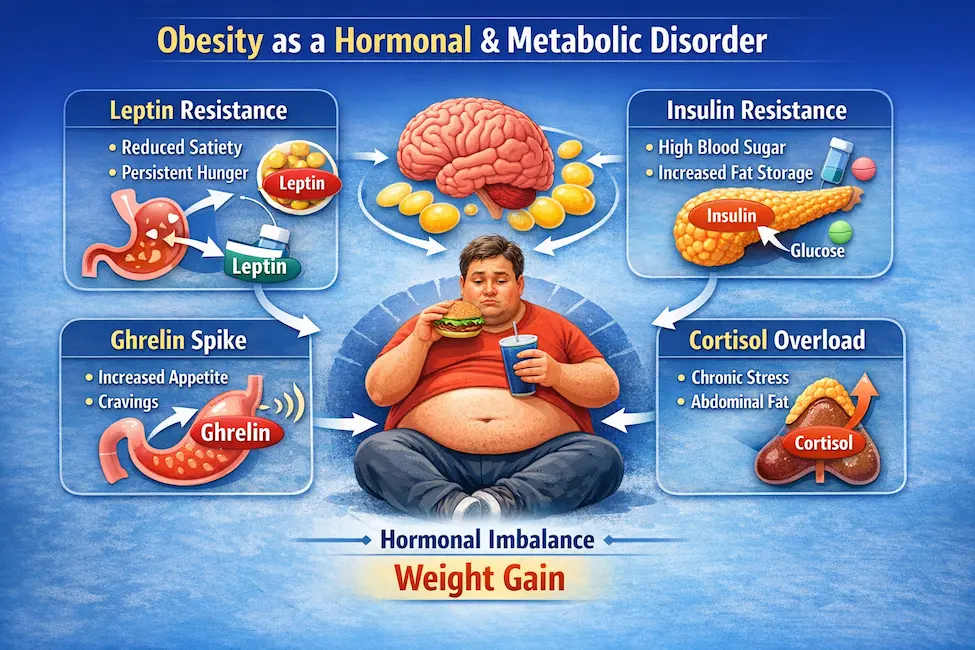
Leptin Resistance
Leptin is known as the satiety hormone. It is produced by fat cells and signals the brain—particularly the hypothalamus—that the body has enough energy stored.
In a healthy system:
- Increased fat → more leptin → brain reduces appetite.
However, in obesity, the body develops leptin resistance.
Despite high leptin levels, the brain fails to recognize the signal, resulting in:
- Persistent hunger
- Reduced energy expenditure
- Continued weight gain
Leptin resistance is now considered a major neurometabolic component of obesity.
-
Insulin Resistance
Insulin is a hormone responsible for regulating blood glucose levels. It also influences fat storage.
In obesity, cells gradually become resistant to insulin. This leads to:
- Elevated blood sugar levels
- Increased fat storage
- Higher risk of type 2 diabetes
Insulin resistance also stimulates the body to produce more insulin, which further promotes fat accumulation, creating a vicious metabolic cycle.
-
Ghrelin Spike – The Hunger Hormone
Ghrelin is known as the “hunger hormone.” It is secreted primarily by the stomach and signals the brain to stimulate appetite.
In obesity and disrupted eating patterns:
- Ghrelin levels may spike frequently
- Hunger signals increase
- Cravings for calorie-dense foods rise
Sleep deprivation and stress can further increase ghrelin levels, making appetite control more difficult.

-
Cortisol Overload – The Stress Hormone
Cortisol is released by the adrenal glands during stress. While it is essential for survival, chronic cortisol elevation can contribute to weight gain.
High cortisol levels may cause:
- Increased abdominal fat
- Sugar cravings
- Insulin resistance
- Slower metabolism
Modern lifestyles involving chronic stress, poor sleep, and sedentary habits amplify cortisol-related weight gain.
Obesity as a Neurometabolic Disorder
Recent research highlights that obesity is also a brain-metabolism disorder.
The hypothalamus, a critical brain region regulating hunger and energy balance, becomes less responsive to hormonal signals such as leptin and insulin.
This leads to:
- Increased hunger signals
- Reduced satiety perception
- Altered reward pathways related to food
Thus, obesity is not merely a matter of willpower—it is a biological dysregulation of metabolic and neurological systems.
What Can Be Done to Control Obesity?
Managing obesity requires a holistic approach targeting metabolism, hormones, lifestyle, and psychological factors.
-
Improve Dietary Quality
Focus on nutrient-dense foods that support hormonal balance.
Recommended dietary strategies:
- High-fiber foods (vegetables, fruits, whole grains)
- Lean proteins
- Healthy fats (nuts, seeds, olive oil)
- Reduced refined sugar and ultra-processed foods
Protein-rich meals can help regulate ghrelin and improve satiety.
-
Regular Physical Activity
Exercise plays a key role in improving insulin sensitivity and metabolic health.
Effective exercise strategies include:
- Aerobic exercise (walking, cycling, swimming)
- Strength training
- High-intensity interval training (HIIT)
Regular physical activity also helps regulate leptin and insulin pathways.
-
Improve Sleep Quality
Sleep is a powerful regulator of metabolic hormones.
Poor sleep increases:
- Ghrelin (hunger hormone)
- Cortisol (stress hormone)
- Insulin resistance
Adults should aim for 7–8 hours of quality sleep daily.
-
Stress Management
Chronic stress leads to persistent cortisol elevation.
Stress-reduction techniques include:
- Yoga
- Meditation
- Deep breathing exercises
- Nature exposure
Mind-body practices can significantly improve hormonal balance.
-
Medical and Behavioral Support
In some cases, medical intervention may be required.
These may include:
- Nutritional counseling
- Behavioral therapy
- Pharmacological treatment
- Bariatric surgery (in severe obesity)
Early intervention is essential to prevent long-term complications.
Final Thoughts
Obesity is far more than a cosmetic concern. It is a complex hormonal, metabolic, and neurometabolic condition driven by disruptions in hormones such as leptin, insulin, ghrelin, and cortisol.
Recognizing obesity as a biological disorder helps shift the conversation away from blame and toward scientifically informed prevention and treatment strategies.
By addressing hormonal balance, lifestyle habits, stress, and metabolic health, individuals can take meaningful steps toward sustainable weight management and improved overall well-being.
FAQ: “People Also Ask About Obesity”
- Is obesity only caused by overeating?
No. Obesity is not simply the result of eating too much. It is now recognized as a complex metabolic and hormonal disorder influenced by genetics, hormones, brain signals, stress, sleep patterns, and lifestyle factors. Hormonal imbalances such as leptin resistance and insulin resistance can disrupt the body’s natural regulation of hunger and metabolism.
- How does body fat act as an endocrine organ?
Body fat, also known as adipose tissue, functions as an endocrine organ because it releases hormones and chemical messengers called adipokines. These substances influence appetite, metabolism, inflammation, and insulin sensitivity. When fat accumulates excessively, these hormones become dysregulated and can contribute to metabolic diseases.
- What is leptin resistance in obesity?
Leptin is a hormone produced by fat cells that signals the brain to stop eating when enough energy is stored. In obesity, the brain becomes resistant to leptin signals, meaning the body continues to feel hungry even when sufficient energy is present. This condition is called leptin resistance and plays a key role in persistent weight gain.
- How does insulin resistance contribute to obesity?
Insulin resistance occurs when the body’s cells no longer respond effectively to insulin. This causes higher blood sugar levels and increased fat storage. Over time, insulin resistance can lead to weight gain, metabolic syndrome, and type 2 diabetes.
- What role does ghrelin play in weight gain?
Ghrelin is known as the hunger hormone because it stimulates appetite. Higher ghrelin levels increase food cravings and hunger signals. Lack of sleep, irregular eating patterns, and stress can increase ghrelin levels, making it harder to control body weight.
- Can stress cause obesity?
Yes. Chronic stress increases the production of cortisol, a hormone that promotes fat storage, especially around the abdomen. High cortisol levels also increase cravings for sugary and high-calorie foods, contributing to weight gain.
- Is obesity considered a metabolic disease?
Yes. Many health experts now classify obesity as a metabolic and neurometabolic disorder because it involves disruptions in hormonal signaling, brain appetite regulation, and energy metabolism.
- What are the most effective ways to control obesity?
Managing obesity requires a holistic approach, including:
- Balanced and nutrient-dense diet
- Regular physical activity
- Adequate sleep
- Stress management
- Limiting processed and high-sugar foods
- Medical guidance when necessary
These strategies help restore hormonal balance and improve metabolic health.
- Can obesity be reversed naturally?
Yes, in many cases obesity can be improved through sustainable lifestyle changes, including healthy eating, regular exercise, adequate sleep, and stress reduction. However, some individuals may require medical treatment depending on the severity of obesity and associated health conditions.
- Why is understanding hormones important in obesity management?
Hormones regulate hunger, metabolism, fat storage, and energy balance. Understanding how hormones like leptin, insulin, ghrelin, and cortisol influence body weight helps in designing more effective and sustainable weight management strategies.