Introduction
In recent years, news headlines have reported rare but frightening cases of the “brain-eating amoeba”. The scientific name for this deadly parasite is Naegleria fowleri. Although extremely rare, the infection it causes—Primary Amoebic Meningoencephalitis (PAM)—is almost always fatal.
Most cases occur when people swim or dive in warm freshwater lakes, rivers, or poorly maintained swimming pools. The amoeba enters the body through the nose and travels to the brain, destroying brain tissue. With a fatality rate of more than 97%, awareness is critical.
In this blog, we’ll explain what the brain-eating amoeba is, how it spreads, its symptoms, recent cases reported worldwide, treatment options, and most importantly, how you can protect yourself and your family.
What is the Brain-Eating Amoeba?
- Naegleria fowleri is a free-living amoeba found in warm freshwater and soil.
- It thrives in temperatures between 25°C to 46°C (77°F to 115°F), especially during the summer.
- Common habitats include:
- Warm lakes and ponds
- Hot springs
- Rivers with low water flow
- Poorly chlorinated or unmaintained swimming pools
- Water heaters and pipes in households
Importantly, it is not found in saltwater (seas or oceans).
Though this amoeba is common in the environment, human infections are very rare. According to the Centers for Disease Control and Prevention (CDC), only a few hundred cases have been reported globally since the first discovery in the 1960s.
How Does it Infect Humans?
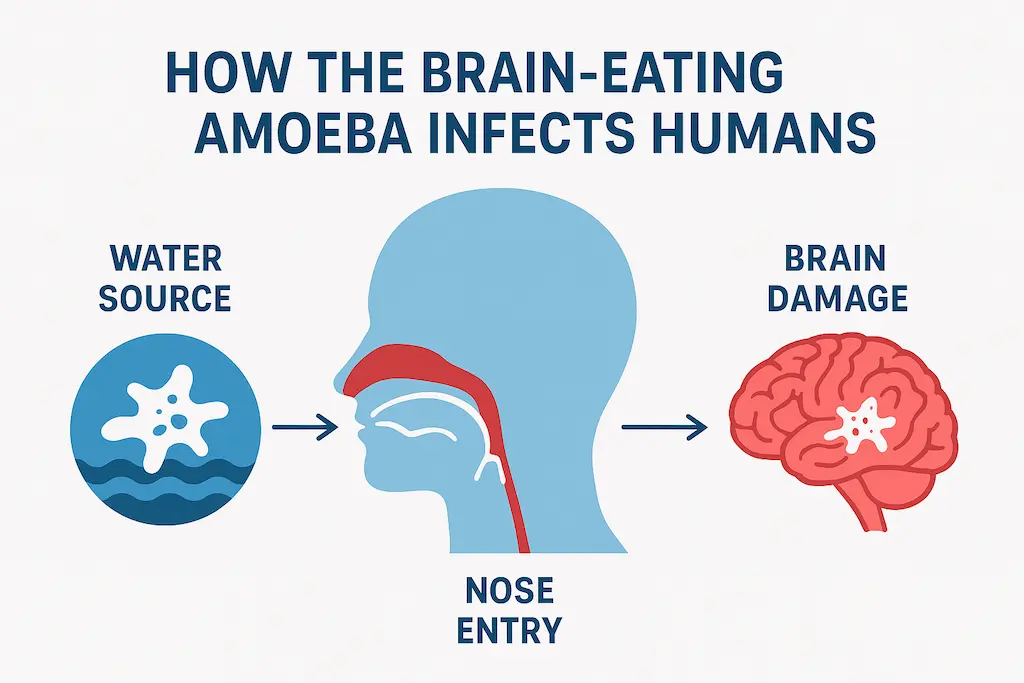
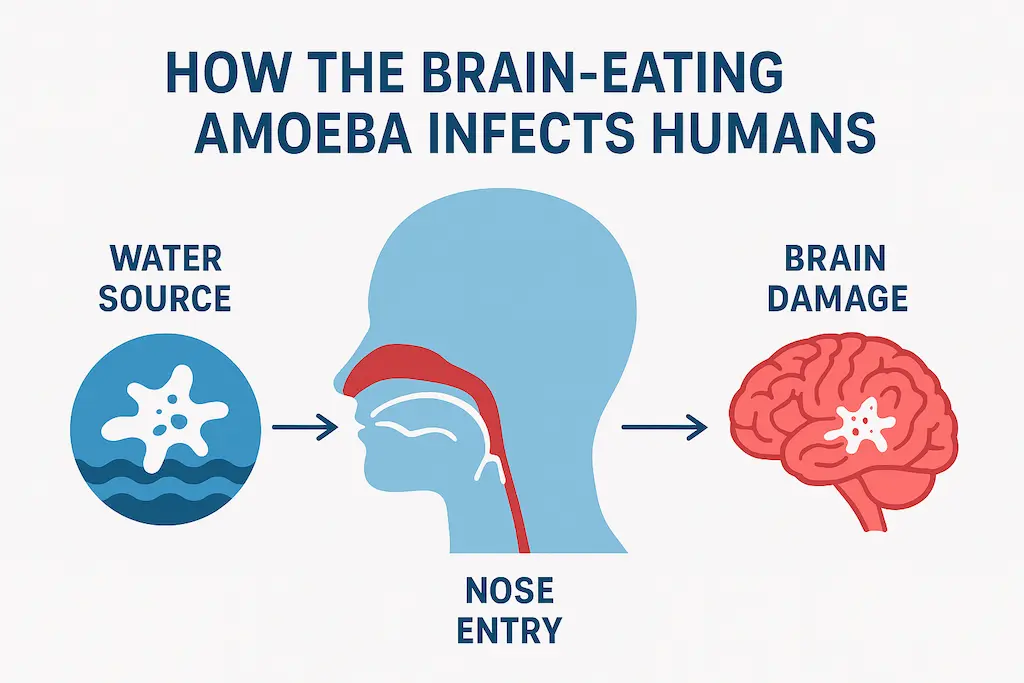
Naegleria fowleri infects humans when contaminated water enters the nose. From there, it travels along the olfactory nerve to the brain, where it causes severe inflammation and tissue destruction.
Key facts to remember:
- You cannot get infected by drinking contaminated water.
- The infection does not spread from person to person.
- The only known entry route is through the nose.
This is why swimming, diving, or even using contaminated tap water for nasal rinsing (e.g., neti pots) poses a risk

Symptoms of Brain-Eating Amoeba Infection
The disease caused by Naegleria fowleri is called Primary Amoebic Meningoencephalitis (PAM).
Timeline of Symptoms
- 1–9 days after exposure: Initial signs appear.
- Death usually occurs within 5–12 days after symptoms start.
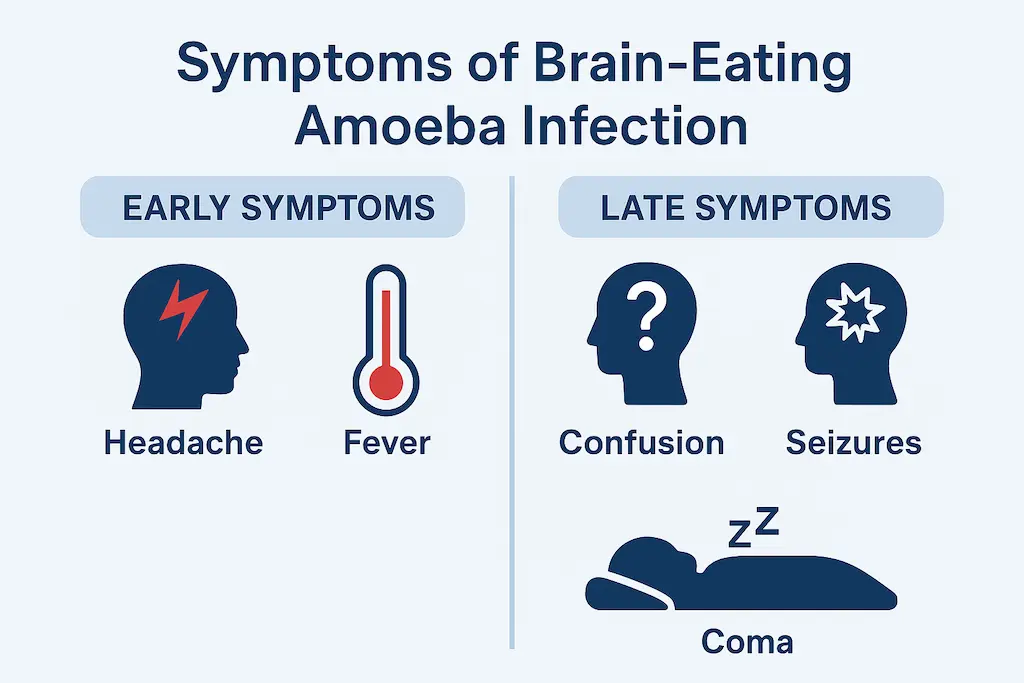
Early Symptoms (often mistaken for meningitis):
- Severe headache
- Fever
- Nausea and vomiting
- Stiff neck
Later Symptoms:
- Confusion
- Loss of balance
- Seizures
- Hallucinations
- Coma
Because symptoms progress rapidly, early detection and treatment are critical—but unfortunately, very difficult.
Recent Cases and News Updates
The brain-eating amoeba often makes headlines because of its severity. Some recent examples:
- India (2024–2025): A few suspected cases were reported in Kerala and Delhi during summer months when freshwater bodies were warm and stagnant. (Hindustan Times)
- United States: Between 1962 and 2023, 157 cases were reported, mostly in southern states like Texas and Florida, according to the CDC. Only 4 people survived.(NCBI)
- Pakistan: Karachi has reported multiple deaths over the past decade due to poor chlorination of water supplies.(NCBI)
- Other Countries: Sporadic cases have been reported in Thailand, Australia, and Latin America.(NCBI)
Experts warn that climate change—which warms freshwater sources—may increase the risk of future infections.
Diagnosis and Treatment
Diagnosis
PAM is hard to diagnose because symptoms mimic bacterial or viral meningitis.
Tests include:
- Cerebrospinal fluid (CSF) analysis
- PCR tests to detect amoeba DNA
- Microscopic examination of fluid samples

Treatment
There is no guaranteed cure. Some drugs have shown limited success, such as:
- Amphotericin B (an antifungal medication, injected into the bloodstream and brain)
- Miltefosine (used in combination therapy, considered promising in a few survivors)
- Other drugs: azithromycin, rifampicin, fluconazole (used experimentally)
Even with aggressive treatment, the survival rate is extremely low.
Prevention Tips
Since treatment is uncertain, prevention is the best protection. Here are some evidence-based tips:
- Avoid swimming or diving in warm, untreated freshwater, especially during summer.
- Use nose clips or keep your head above water if you enter such water bodies.
- Do not use tap water for nasal rinsing (e.g., neti pots) unless it is sterilized or boiled and cooled.
- Maintain swimming pools properly with correct chlorine levels (1–3 mg/L free chlorine).
- Flush pipes and water heaters regularly to avoid stagnant warm water.

Why Awareness Matters
- Infections are rare but deadly.
- Climate change may expand the amoeba’s habitat.
- Public health departments issue seasonal advisories during summer.
- Knowing the risks helps families make informed choices about water safety.
Spreading awareness is important because many people still think they can get infected by drinking water, which is not true. The real danger is water entering the nose.
Conclusion
The brain-eating amoeba Naegleria fowleri is one of the deadliest organisms known to humans. While infections are extremely rare, the fatality rate is alarmingly high. By understanding how it spreads and following simple preventive measures, we can greatly reduce the risk.
This is not a reason to panic, but a reminder to stay cautious when swimming in warm freshwater, especially in regions where cases have been reported. Public awareness, proper water safety, and early medical attention are the keys to staying safe.
Frequently Asked Questions (FAQ)
Q1. Can you get brain-eating amoeba from drinking water?
No. Drinking contaminated water does not cause infection. The amoeba must enter through the nose.
Q2. Is brain-eating amoeba common?
No, it is extremely rare. In the US, fewer than 10 cases are reported each year.
Q3. How fast does the disease progress?
Symptoms usually appear within 1–9 days of exposure, and death occurs in about 5–12 days.
Q4. Can it spread from person to person?
No, the infection is not contagious.
Q5. How can I stay safe?
Avoid swimming in warm untreated freshwater, use sterilized water for nasal rinsing, and ensure swimming pools are well-chlorinated.

Air Doctor
Easily Access Medical Care Abroad. Air Doctor connects travelers to private doctors worldwide. From Germany to New York, we can help you find a doctor.