Introduction: Why Ozone Day Matters for Health
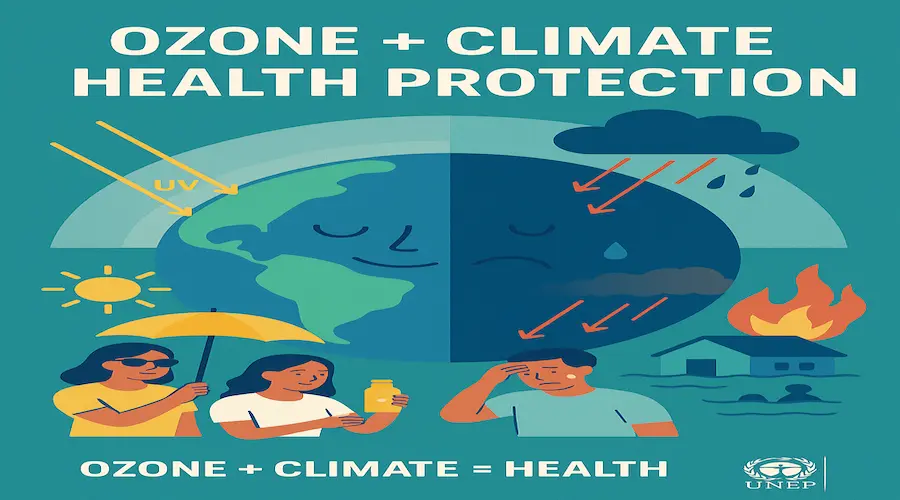
Every year on September 16th, the world observes International Ozone Day, reminding us how crucial the ozone layer is for human survival. In 2025, the theme focuses on protecting health, climate, and the environment together. The connection between ozone depletion, climate change, and health is stronger than ever.
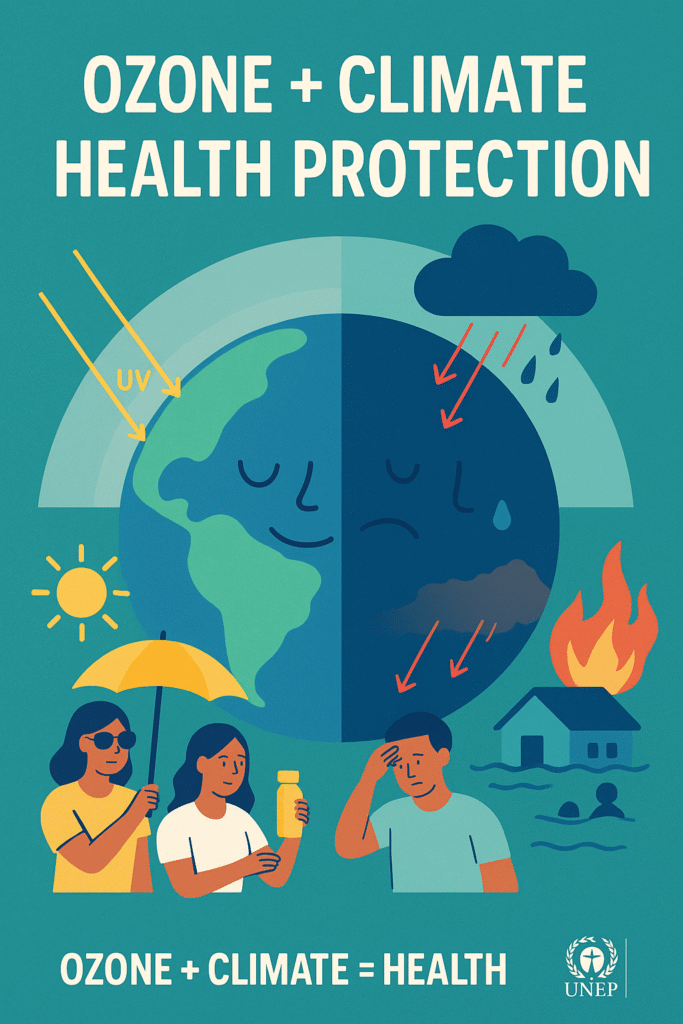
The ozone layer acts as a protective shield against harmful ultraviolet (UV) radiation. Without it, rates of skin cancer, cataracts, and immune system disorders would rise sharply. At the same time, climate change – caused by greenhouse gas emissions – worsens health by increasing air pollution, heat waves, and vector-borne diseases.
When we combine these issues, the challenge becomes a global health crisis.
What is the Ozone Layer and Its Role in Human Health
The ozone layer is a fragile shield of gas in the Earth’s stratosphere that absorbs most of the sun’s UV-B radiation. Without it, life on Earth would face:
- Higher skin cancer risks
- Increased cataract cases
- Suppressed immune responses
- Damage to crops and marine ecosystems, indirectly affecting food security and nutrition
Buy SunScreen for UV Protection

Ozone Day 2025 Theme and Global Awareness Campaigns
This year, Ozone Day 2025 highlights the importance of continuing efforts under the Montreal Protocol and how protecting ozone also benefits climate health. Schools, universities, and health organizations are organizing:
- Health awareness webinars
- Eco-friendly product drives
- Workshops on sustainable living
Spread awareness with eco-friendly educational posters. Buy Environmental Posters Online.
Health Risks of Ozone Depletion
The health consequences of ozone depletion are well-documented:
- Skin Cancer & Sunburn – More UV radiation means higher chances of melanoma and non-melanoma cancers.
- Eye Damage – UV exposure increases cataracts and other vision issues.
- Immune System Weakening – Overexposure suppresses immunity, making people prone to infections.
- Respiratory Illness – Ozone depletion indirectly contributes to climate change and air pollution, worsening asthma and bronchitis.
Get UV-protection sunglasses. Shop Best Sunglasses
Montreal Protocol: A Global Health Success Story
Signed in 1987, the Montreal Protocol phased out harmful substances like CFCs (chlorofluorocarbons) that damaged ozone. It is hailed as the most successful environmental treaty, showing how global collaboration improves health.
- Reduction of UV-related diseases
- Recovery signs in the ozone layer
- Co-benefits in climate change mitigation
Learn more with eco-health books. Buy Environmental Books on Amazon.
Ozone and Climate Change: Double Impact on Public Health
While ozone depletion is healing due to the Montreal Protocol, climate change adds new risks:
- Heatwaves → Heatstroke, dehydration, heart strain
- Air pollution → Asthma, lung disease
- Vector-borne diseases → Malaria, Dengue expanding to new regions
- Food insecurity → Malnutrition due to crop failure
Affiliate suggestion: Switch to eco-friendly household items.

How Communities Can Contribute to Ozone and Health Protection
Communities play a key role in reducing health risks:
- Use public transport, cycles, or EVs
- Reduce single-use plastics
- Plant more trees for oxygen and cooling
- Spread awareness about Ozone Day
📌 Long-tail keyword: Simple lifestyle changes to protect ozone layer and human health
Start with eco-friendly reusable bottles. Buy Copper Bottles.

Ozone Day in India: Health Awareness and Policy Updates
India observes Ozone Day with health campaigns, student activities, and public lectures. The Ministry of Environment, Forest and Climate Change (MoEFCC) focuses on promoting:
- Cleaner technology adoption
- Awareness about UV health risks
- Collaboration with schools and hospitals

Future Outlook: Ozone Recovery and Human Wellbeing
Scientists predict the ozone layer will fully recover by mid-21st century if current policies continue. This will:
- Reduce skin cancer and cataract risks
- Improve immune health
- Benefit ecosystems and agriculture
- Strengthen climate resilience
Conclusion + Call to Action
The connection between ozone depletion, climate change, and health is undeniable. Protecting ozone means protecting human health and the environment.
👉 On this Ozone Day 2025, take a pledge:
- Use eco-friendly products
- Spread awareness
- Support climate and health policies
Together, we can build a healthier planet and healthier lives.
FAQs
Q1. Why is the ozone layer important for human health?
The ozone layer blocks harmful UV rays, reducing risks of skin cancer, cataracts, and immune suppression.
Q2. How is ozone depletion linked to climate change?
Both are caused by human activities. Ozone-depleting substances are also greenhouse gases, worsening global warming.
Q3. What are the health impacts of climate change?
It causes heat stress, worsens respiratory diseases, and spreads vector-borne diseases.
Q4. What was the role of the Montreal Protocol in ozone recovery?
It successfully phased out ozone-depleting chemicals and set a model for global climate agreements.
Q5. How can individuals contribute on Ozone Day?
By using eco-friendly products, reducing car use, avoiding plastics, and spreading awareness.
Also Read