

Introduction
Weight gain after 40 is one of the most frustrating experiences many women face. You may notice that despite eating the same and staying active, your body begins to change—especially around the abdomen.
But here’s the truth: this is not just about calories—it’s about hormones, metabolism, and lifestyle shifts.
Let’s break down the real science-backed reasons and the practical solutions that actually work.
-
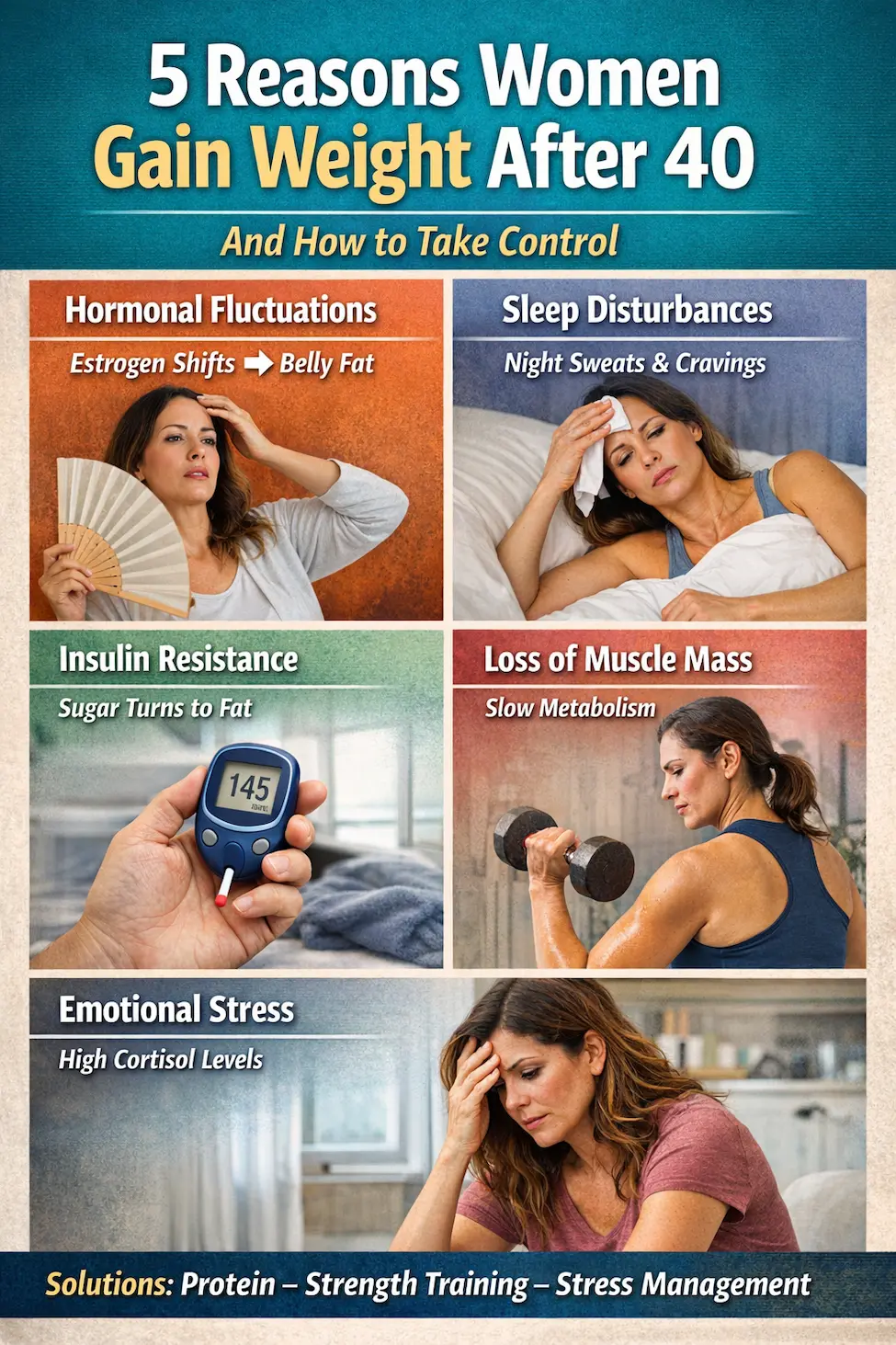
Hormonal Fluctuations (Estrogen Rollercoaster)
During the perimenopausal phase, estrogen levels don’t just decline—they fluctuate unpredictably. Some days they spike, other days they crash.
- Estrogen typically promotes fat storage in the hips and thighs
- When estrogen drops, fat redistribution occurs toward the abdomen (visceral fat)
- This type of fat is metabolically active and linked to health risks
Solution:
- Increase high-protein intake (supports metabolism and satiety)
- Start resistance training (preserves muscle and improves fat burning)
- Maintain sleep discipline (helps regulate hormones)
👉 Key Insight: You can’t stop hormonal changes, but you can adapt your lifestyle to work with them.
-
Sleep Disturbances (The Hidden Weight Gain Trigger)
Hot flashes, night sweats, and restless sleep are common after 40—and they silently disrupt metabolism.
Poor sleep leads to:
- Increased cortisol (stress hormone)
- Elevated ghrelin (hunger hormone)
- Reduced leptin (satiety hormone)
This creates a cycle of cravings, binge eating, and fat storage.
Solution:
- Prioritize sleep before diet
- Maintain a fixed sleep schedule
- Consider safe sleep-support supplements
- Add a morning walk to reset your circadian rhythm
👉 Key Insight: Fat loss begins with good sleep, not extreme dieting.
-
Insulin Resistance (The Silent Metabolic Shift)
Estrogen plays a key role in maintaining insulin sensitivity. As it fluctuates, your cells may start ignoring insulin signals.
Result:
- Glucose is not efficiently used for energy
- Excess calories are stored as fat (especially belly fat)
Solution:
- Follow structured nutrition
- High protein
- Controlled carbohydrates
- Healthy fats in moderation
- Take a short walk after meals
- Incorporate strength training daily
👉 Key Insight: Managing insulin is more important than just cutting calories.
-
Loss of Muscle Mass (Slower Metabolism)
After 40, women naturally begin to lose muscle mass—a condition known as sarcopenia.
Why it matters:
- Muscle is your body’s metabolic engine
- Less muscle = slower metabolism
- More fat storage even with the same diet
Solution:
- Engage in strength training
- Dumbbells
- Resistance bands
- Bodyweight exercises
- Aim for at least 3–4 sessions per week
👉 Key Insight: Building muscle is the most powerful fat-loss tool after 40.
-
Emotional & Psychological Stress (The Cortisol Effect)
The 40s often bring:
- Career pressure
- Family responsibilities
- Emotional transitions
- Feelings of isolation or reduced self-worth
Chronic stress increases cortisol, which:
- Promotes fat storage (especially abdominal)
- Triggers emotional eating
- Disrupts sleep and metabolism
Solution:
- Practice stress management as metabolic therapy
- Deep breathing
- Meditation
- Yoga
- Build strong social support systems
- Prioritize mental well-being
👉 Key Insight: Emotional health directly impacts physical health.
Final Takeaway: Work With Your Body, Not Against It
Weight gain after 40 is not a failure—it’s a biological transition.
Your Winning Formula:
- Discipline over restriction
- High-protein nutrition
- Strength training to build muscle
- Quality sleep
- Stress management
Stop fighting your body. Start understanding it.
When you align your lifestyle with your biology, fat loss becomes sustainable—not stressful.
FAQs
Q1. Is weight gain after 40 inevitable?
No, but it requires different strategies than in your 20s—especially focusing on hormones and muscle mass.
Q2. What is the best diet for women over 40?
A high-protein, balanced diet with controlled carbs and healthy fats works best.
Q3. How often should women over 40 exercise?
At least 3–5 times per week, combining strength training and walking.
Q4. Why is belly fat common after 40?
Due to estrogen decline, insulin resistance, and cortisol increase.