
Sleep is essential for our physical and mental health. But for many people, stress and anxiety stand in the way of getting enough rest. Worries about work, relationships, finances, or health can keep the brain active at night, making it harder to fall asleep or stay asleep. Over time, this creates a frustrating cycle: stress and anxiety disturb sleep, and poor sleep makes stress and anxiety worse.
In this article, we’ll explore how stress and anxiety affect sleep, why this cycle is so harmful, and practical ways you can break free to enjoy more peaceful nights.
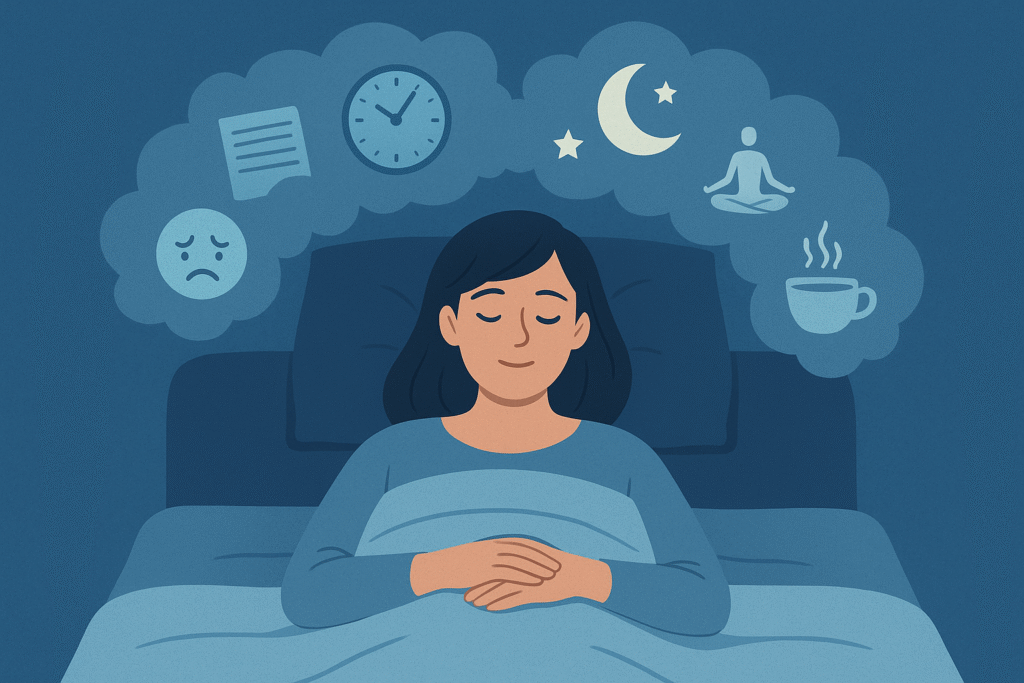
Understanding the Link Between Stress, Anxiety, and Sleep
What Happens in the Body During Stress?
When you feel stressed, your body activates the “fight-or-flight” response. The brain releases stress hormones like cortisol and adrenaline. These chemicals make your heart beat faster, increase alertness, and prepare your body for action.
This response is helpful in dangerous situations, but when it continues for a long time—due to work deadlines, exams, family issues, or even overthinking—it keeps your body in a state of high alert. That makes it difficult to relax enough to fall asleep.
Anxiety and Sleep Disturbances
Anxiety takes stress one step further. It often brings:
- Racing thoughts at bedtime
- Overthinking small details
- Restlessness and muscle tension
- Nightmares or vivid dreams
These symptoms can delay sleep (insomnia) or cause frequent awakenings during the night.
How Stress and Anxiety Affect Sleep Quality
Trouble Falling Asleep (Sleep Onset Insomnia)
When you’re anxious, your brain doesn’t “switch off.” You may find yourself tossing and turning for hours, replaying conversations or worrying about tomorrow.
Frequent Night Waking
Stressful dreams or a racing heartbeat can wake you up in the middle of the night. Once awake, it can be difficult to fall back asleep.
Shortened Sleep Duration
Chronic stress often leads to shorter nights, leaving you feeling tired and unrefreshed in the morning.
Poor Sleep Quality
Even if you get enough hours in bed, stress and anxiety can reduce the time spent in deep sleep and REM sleep—the most restorative stages. This leaves you feeling groggy and mentally drained.

The Vicious Cycle: Poor Sleep Worsens Stress and Anxiety
It’s not just one way. Poor sleep increases the body’s stress response, raises cortisol levels, and reduces emotional resilience. That means the less you sleep, the more sensitive you become to stress.
This creates a cycle of sleeplessness and worry:
- Stress and anxiety make it hard to sleep.
- Lack of sleep makes stress and anxiety worse.
- The cycle repeats, leading to chronic insomnia, irritability, and even long-term health problems.
Ways to Break the Cycle
The good news is that there are practical strategies to reduce stress, manage anxiety, and improve sleep quality.
1. Create a Relaxing Bedtime Routine
A consistent pre-sleep routine signals your body that it’s time to unwind. Try:
- Taking a warm shower or bath
- Reading a calming book
- Listening to soft music or guided meditation
- Practicing gentle yoga stretches
2. Manage Stress During the Day
Don’t wait until bedtime to deal with stress. Daily stress management can improve nighttime rest. Techniques include:
- Mindfulness meditation – focusing on the present moment reduces overthinking.
- Deep breathing exercises – slow, deep breaths calm the nervous system.
- Journaling – writing down worries before bed clears the mind.
3. Limit Stimulants and Screens
- Avoid caffeine and nicotine at least 6 hours before bed.
- Reduce screen time—especially phones, laptops, and TVs—an hour before sleep. The blue light from screens delays melatonin (the sleep hormone).
4. Build Healthy Sleep Habits (Sleep Hygiene)
- Go to bed and wake up at the same time every day.
- Keep your bedroom cool, dark, and quiet.
- Use your bed only for sleep and relaxation (not work or scrolling on your phone).
5. Exercise Regularly
Physical activity reduces stress hormones and improves sleep quality. Aim for 30 minutes of moderate exercise most days, but avoid heavy workouts right before bedtime.
6. Seek Professional Help When Needed
If stress, anxiety, or insomnia continues for weeks, don’t ignore it. A doctor or therapist can help with:
- Cognitive Behavioral Therapy for Insomnia (CBT-I)
- Counseling for anxiety management
- Medications in severe cases (only under medical guidance)
Lifestyle Tips for Calmer Nights
Nutrition and Sleep
- Eat a balanced diet rich in fruits, vegetables, and whole grains.
- Avoid heavy meals late at night.
- Try calming herbal teas like chamomile or lemon balm.
Mind-Body Practices
- Progressive muscle relaxation: tightening and relaxing each muscle group to release tension.
- Visualization: imagining a peaceful scene, like a beach or forest, to distract from racing thoughts.
Social and Emotional Support
Talking to friends, family, or support groups reduces loneliness and eases anxious thoughts. Feeling connected helps calm the mind.
Long-Term Benefits of Breaking the Stress-Sleep Cycle
When you manage stress and improve sleep, the benefits extend far beyond better rest:
- Improved concentration and memory
- Better mood and emotional balance
- Stronger immune system
- Lower risk of chronic diseases like heart problems and diabetes
- More energy and motivation for daily activities
Frequently Asked Questions (FAQ)
1. How do I know if stress is affecting my sleep?
If you struggle to fall asleep, wake up often at night, or feel tired despite spending enough time in bed, stress and anxiety may be interfering with your sleep.
2. Can meditation really help me sleep better?
Yes. Mindfulness and meditation lower stress hormones, slow racing thoughts, and prepare the body for relaxation, making it easier to fall asleep.
3. What’s the best time to exercise for better sleep?
Morning or afternoon exercise is best. Avoid intense workouts close to bedtime, as they can make you more alert.
4. Should I take sleeping pills for stress-related insomnia?
Sleeping pills should only be used under medical advice and as a short-term solution. It’s better to address the root causes—stress and anxiety—through lifestyle changes and therapy.
5. How long does it take to see improvements in sleep after reducing stress?
It varies from person to person. Some notice improvement within days, while others may take weeks. Consistency in healthy habits is key.
Final Thoughts
Stress and anxiety are natural parts of life, but when they interfere with sleep, they can create a harmful cycle. The good news is that by understanding the connection and taking proactive steps—like managing stress, practicing relaxation techniques, and improving sleep hygiene—you can break the cycle and enjoy healthier, more restorative sleep.
Remember: small daily changes can make a big difference in both your mental health and your sleep quality.