
Introduction
Getting a good night’s sleep is no longer just a luxury—it’s a necessity for overall health and well-being. Yet, millions of people struggle with falling asleep or staying asleep due to stress, irregular schedules, or poor diet. While meditation, exercise, and lifestyle adjustments are essential, what you eat before bedtime can significantly affect how well you rest.
Research shows that certain nutrients—like magnesium, tryptophan, and melatonin—play an important role in promoting better sleep quality. By including foods rich in these nutrients, you can naturally relax your body, regulate your sleep-wake cycle, and wake up feeling refreshed.
In this blog, we’ll explore the top foods that help you sleep better at night, how they work, and simple ways to include them in your daily meals.
1. Magnesium-Rich Foods: Your Natural Relaxant
Magnesium is a mineral often called the “relaxation mineral.” It helps regulate neurotransmitters and reduces stress hormones like cortisol, which makes it easier to drift off to sleep. A deficiency in magnesium can lead to insomnia, anxiety, and restlessness.
Best Magnesium Foods for Sleep:
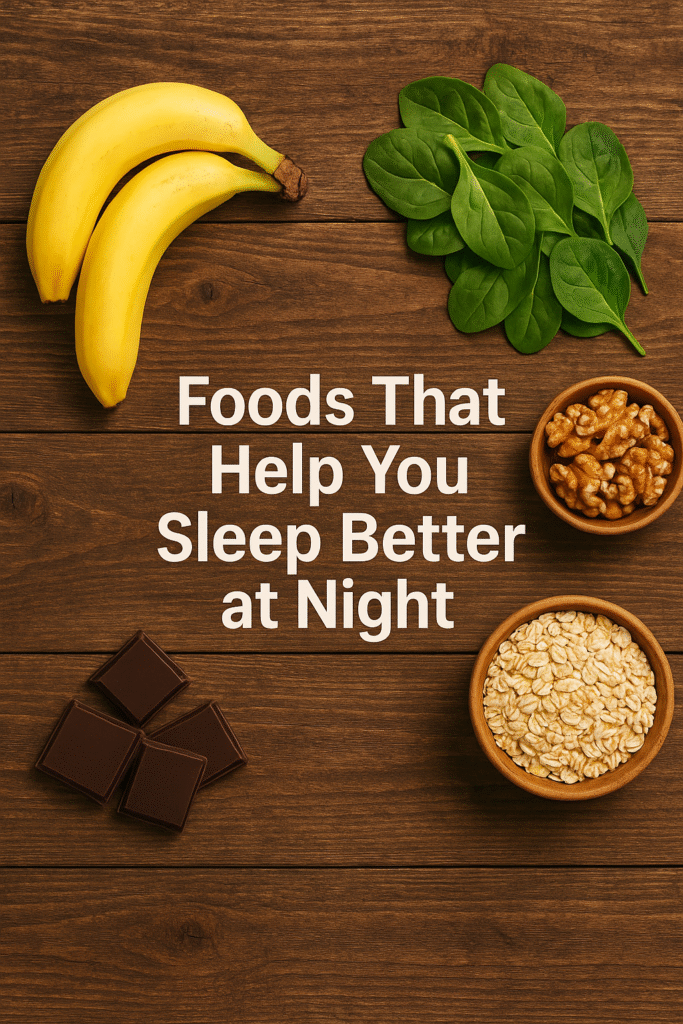
- Spinach and Kale – Add them to salads or smoothies.
- Pumpkin Seeds – A crunchy evening snack packed with sleep-supporting minerals.
- Almonds & Cashews – Handful of nuts before bed can relax muscles and nerves.
- Dark Chocolate (70% and above) – In moderation, it provides magnesium and a calming effect.
💡 Pro Tip: Try a warm glass of almond milk with a pinch of nutmeg before bedtime.
Buy: Pure Nutrition Magnesium Glycinate + Zinc
2. Tryptophan Foods: Building Blocks of Sleep Hormones
Tryptophan is an essential amino acid that helps produce serotonin (the “happy hormone”), which is later converted into melatonin—the hormone that regulates sleep.
Best Tryptophan Foods for Sleep:
- Turkey & Chicken – The classic “sleepy food” after a big dinner.
- Milk – That old-school advice of drinking warm milk before bed actually works!
- Oats – A light oat porridge before bedtime can boost melatonin levels.
- Bananas – Packed with both tryptophan and magnesium.
💡 Pro Tip: Make a simple banana-oat smoothie at night for a natural sleep-friendly snack.
3. Melatonin Foods: Direct Support for Sleep Cycles
Melatonin is the hormone of sleep, controlling your body’s circadian rhythm (internal clock). While the body produces melatonin naturally, you can also get it from certain foods.
Best Melatonin Foods for Sleep:
- Tart Cherries & Cherry Juice – One of the richest natural sources of melatonin.
- Grapes – Snack on fresh grapes for a sleep-friendly dessert.
- Tomatoes – Add to dinner salads or soups.
- Walnuts & Pistachios – Nuts that pack a melatonin punch.
💡 Pro Tip: Drinking a small glass of tart cherry juice before bed may help you fall asleep faster.
4. Herbal Teas and Sleep-Inducing Drinks
Sometimes, it’s not just food but also what you drink that helps. Herbal teas such as chamomile, valerian root, and passionflower tea are well-known for their calming properties.
These teas contain antioxidants like apigenin, which binds to brain receptors, promoting relaxation and reducing insomnia symptoms.
💡 Pro Tip: Replace your evening coffee with chamomile tea for a soothing pre-sleep ritual.
Also Read: Safe Detox Teas for Weight Loss and Bloating: A Complete Guide with the Best Picks for 2025
5. Complex Carbohydrates and Whole Grains
Complex carbs help make tryptophan more available in the brain. Pairing carbs with protein-rich foods enhances serotonin and melatonin production.
Great Sleep-Supporting Carbs:
- Sweet potatoes
- Brown rice
- Quinoa
- Whole wheat bread
💡 Pro Tip: Try a light dinner bowl with quinoa, veggies, and grilled chicken for the perfect sleep-friendly meal.
6. Natural Sleep Boosters: Honey & Warm Milk
A spoon of honey in warm milk before bed is a traditional remedy in India for better sleep. Honey helps transport tryptophan to the brain faster, while warm milk provides calcium and tryptophan.
This combination is not only comforting but also scientifically proven to aid sleep.
7. Omega-3 Rich Foods
Omega-3 fatty acids, found in fatty fish and seeds, help regulate serotonin and reduce anxiety—both crucial for good sleep.
Best Omega-3 Sources:
- Salmon and mackerel
- Flaxseeds and chia seeds
- Walnuts
💡 Pro Tip: If you’re vegetarian, a flaxseed smoothie or chia pudding before dinner can help.
Buy: Veg Omega 3
🛑 Foods to Avoid Before Bed
While the above foods help you sleep, some can actually keep you awake. Avoid:
- Caffeine (coffee, tea, cola, chocolate) after 4 PM
- Spicy foods (may cause indigestion and acid reflux)
- Heavy fried meals late at night
- Alcohol (disrupts REM sleep cycles)
🌙 Simple Meal Plan for Better Sleep
Here’s how you can add foods that help you sleep better at night into your routine:
- Breakfast: Oats with bananas and walnuts
- Lunch: Brown rice with spinach curry and grilled chicken
- Evening Snack: Pumpkin seeds with chamomile tea
- Dinner: Quinoa with salmon (or paneer for vegetarians) and steamed veggies
- Before Bed: Warm milk with honey or tart cherry juice
Lifestyle Tips Alongside Sleep-Friendly Foods
- Keep a regular sleep schedule.
- Reduce screen time 1 hour before bed.
- Practice light stretching or yoga before bedtime.
- Keep your room cool and dark.
When you combine these habits with a diet rich in magnesium, tryptophan, and melatonin, your chances of restful sleep increase dramatically.
✅ Final Thoughts
Sleep is as important as nutrition and exercise for a healthy life. Instead of relying only on pills or supplements, nature already provides us with foods that help you sleep better at night.
From magnesium-packed nuts to melatonin-rich cherries, these simple dietary choices can help you relax, restore your body, and wake up feeling truly refreshed.
FAQs on Foods That Help You Sleep Better at Night
1. What should I eat before bed to sleep better?
Foods like bananas, almonds, oats, tart cherries, and a glass of warm milk are excellent bedtime snacks. They are rich in magnesium, tryptophan, and melatonin, which support relaxation and sleep.
2. Do bananas really help with sleep?
Yes, bananas contain both magnesium and tryptophan, making them a natural sleep-friendly fruit. Eating one in the evening can relax your muscles and promote melatonin production.
3. Which drink is best for better sleep at night?
Herbal teas such as chamomile, valerian, and passionflower tea are excellent for promoting calmness. Warm milk with honey and tart cherry juice are also proven bedtime drinks.
4. How long before bed should I eat sleep-friendly foods?
Ideally, eat your dinner 2–3 hours before bedtime and enjoy a light sleep-promoting snack (like nuts, milk, or fruit) about 30–60 minutes before bed.
5. What foods should I avoid before going to sleep?
Avoid caffeine (coffee, tea, cola, dark chocolate), spicy foods, heavy fried meals, and alcohol close to bedtime as they can disrupt sleep cycles.
6. Can diet alone cure insomnia?
Diet plays a huge role in improving sleep quality, but lifestyle changes such as maintaining a regular sleep schedule, reducing screen time, and managing stress are equally important. In chronic cases, consulting a doctor is recommended.